
Lieferung heute & morgen

Qualitätsgarantie

Willkommens-Angebote freischalten: KOSTENLOSE Lieferung | Bis zu 80 % RABATT | Kostenlose 30-Tage-JoyPlus-Testphase
App herunterladen
An AMD Ryzen processor can be the foundation for a new gaming PC, a quiet work computer or a professional workstation. Choosing one, however, is about more than just the model number. If you focus only on the maximum clock speed or number of cores, you can easily overlook important extra costs and compatibility issues.
Three common purchasing mistakes are:
The CPU socket determines whether the processor is physically compatible with the motherboard. For current desktop systems, AM5 and AM4 are particularly relevant.
Before buying, check the motherboard manufacturer’s CPU compatibility list and the required BIOS version. A compatible socket alone doesn’t guarantee the system will boot.
Cores process tasks physically, while threads describe how the operating system handles tasks in parallel. Depending on the game and graphics card, a Ryzen 5 or Ryzen 7 is often enough for gaming. Video encoding, 3D rendering, simulation and virtual machines benefit more from a higher number of cores and threads.
A Ryzen 5 with 6 cores and 12 threads can be a good choice for a well-balanced gaming PC. Ryzen 7 models with 8 cores and 16 threads offer more headroom for streaming and multitasking. Ryzen 9 processors with 12 or 16 cores are aimed at users who combine gaming with productivity applications.
TDP is a technical guide for thermal design, not a guaranteed maximum power draw for the whole system. A 65 W processor has different cooling and case ventilation requirements from a model rated at 120, 170 or 350 W.
If you’re buying a CPU without a cooler, you’ll need to budget separately for a suitable air or liquid cooler and thermal paste. This is particularly important with tray models. Check the product description for boxed processors too, as not every boxed option includes a cooler.
An AMD AM4 processor is particularly suitable for an existing AM4 system if you want to keep using your motherboard and DDR4 memory. The AMD Ryzen 5 5600X or Ryzen 7 5700X could be worth considering for this kind of upgrade. You won’t need to change platforms as long as the BIOS, chipset and cooler are compatible.
An AMD AM5 processor is a better choice for a new PC with DDR5. Models such as the Ryzen 5 7600X, Ryzen 5 8400F or Ryzen 9 9900X support modern AM5 motherboards. You should also check whether PCIe 4.0 or PCIe 5.0 is actually needed for your graphics card and SSD.
Depending on the model, an F-series processor may not have integrated graphics. You’ll therefore need a separate graphics card for the Ryzen 5 8400F and Ryzen 7 8700F. The Ryzen 5 7600X, by contrast, has integrated AMD Radeon Graphics for basic display output. For demanding gaming, a dedicated graphics card is still a good idea.
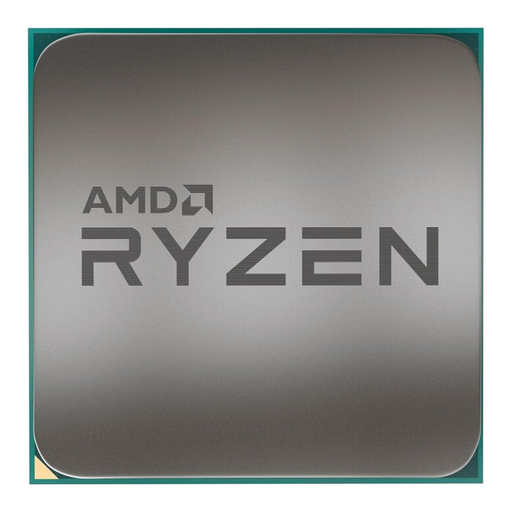
Why this product suits this profile: This AM4 processor is designed for existing DDR4 systems and offers 6 cores and 12 threads with a 65 W TDP.
The listing clearly identifies this as a tray version and states that no cooler is included. This means you can budget for the extra costs before buying.
6 cores, 12 threads, boost speeds of up to 4.6 GHz, and support for DDR4-3200 and PCIe 4.0.
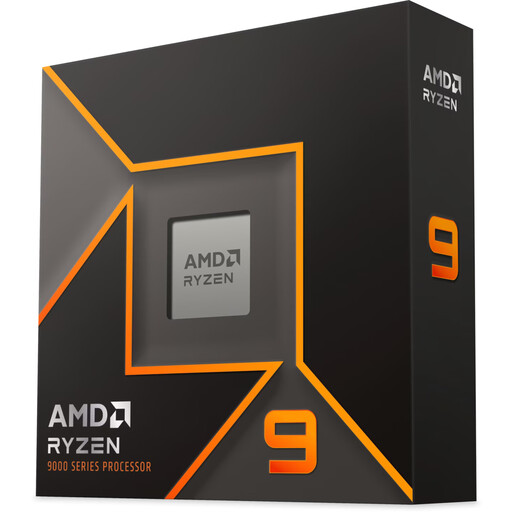
Why this product suits this profile: With 12 cores and 24 threads, it’s well suited to demanding gaming, content creation and running applications in parallel on a modern AM5 platform.
The platform specifications state that it uses AM5, DDR5 and PCIe 5.0. Before ordering, check your motherboard BIOS and cooler requirements.
12 cores, 24 threads, boost speeds of up to 5.6 GHz, integrated Radeon Graphics and a 120 W TDP.
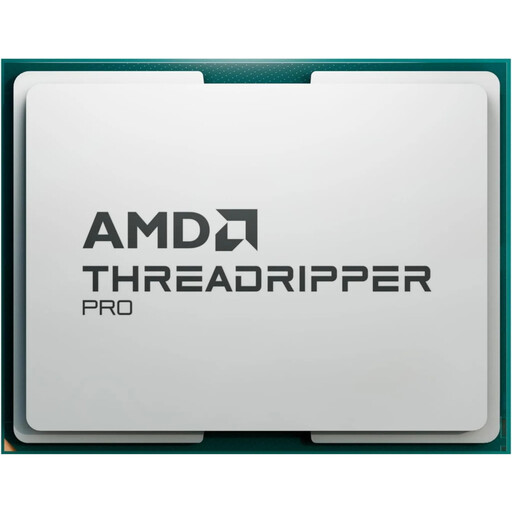
Why this product suits this profile: With 32 cores and 64 threads, it’s built for rendering, simulation, data processing and professional workstations.
The specifications clearly state that it uses an sTR5 socket, supports eight-channel DDR5 and requires cooling suitable for a 350 W TDP.
32 cores, 64 threads, 128 MB L3 cache, PCIe 5.0 and 148 PCIe lanes for expandable workstations.
We’ve put together a complete, regularly updated list of products that meet these strict selection criteria and the safety regulations in force in the EU.
Depending on your graphics card and budget, Ryzen 5 or Ryzen 7 models could be a good fit for a well-balanced gaming PC. Alongside the number of cores and clock speed, you should also consider the resolution, graphics card and frame rate you want. A Ryzen 5 7600X or Ryzen 5 5600X may suit different platforms: the 7600X requires AM5 and DDR5, while the 5600X uses AM4 and DDR4.
How long a processor remains suitable depends on software requirements, cooling, platform and upgrade plans. You can use a processor for several years if you choose a compatible motherboard, BIOS, memory and cooler. When changing platforms, you’ll often need to replace the CPU, motherboard and memory together.
A higher TDP can mean greater power consumption and a greater need for cooling. Actual power use depends on the workload, BIOS settings, cooling and the rest of your hardware. To estimate running costs, consider the whole system and how many hours you use it each day, not just the processor.