
Lieferung heute & morgen

Qualitätsgarantie
App herunterladen
Kategorien
The AMD Ryzen X3D CPU series represents a specialised line of desktop processors, primarily engineered to maximise performance in video games. The core feature of these processors is AMD's proprietary 3D V-Cache technology. This process involves vertically stacking an additional L3 cache die on top of the processor die. This design significantly expands the high-speed memory directly available to the CPU cores. The result is reduced data access latency, which can boost frame rates (frames per second) in many cache-sensitive applications, especially games.
This article provides a technical analysis of the available AMD 3D V-Cache CPU models for the AM5 platform and presents selection criteria to help users make an informed purchasing decision.
Choosing the right processor for a gaming system requires balancing several technical parameters. The relevance of each specification depends on the primary use case and the rest of the system's configuration.
The number of processor cores and threads is an indicator of a CPU's multitasking capabilities.
Clock speed, measured in gigahertz (GHz), defines the operating speed of the cores. A higher clock speed generally correlates with better performance in applications that benefit from single-core speed (single-core performance), which applies to many games. On X3D processors, maximum clock speeds are sometimes slightly lower than their non-X3D counterparts due to the thermal and electrical demands of the additional cache die.
This is the defining feature of the Ryzen X3D series. A large L3 cache (e.g., 96 MB or more) allows the processor to hold a larger amount of game data directly, avoiding the need to access slower system memory (RAM). This minimises latency and can lead to a significant increase in gaming performance in CPU-bound scenarios.
The TDP, specified in watts, is a measure of the processor's maximum heat output under load. A higher TDP requires a more robust cooling solution (e.g., a large air cooler or an all-in-one liquid cooler) to maintain optimal operating temperatures and prevent performance throttling (thermal throttling).
All current Ryzen 7000 X3D and Ryzen 9000 X3D processors are designed for the AM5 socket. This requires a compatible motherboard (e.g., with an X670, B650, X870, or B850 chipset) and DDR5 memory. Technologies like AMD EXPO enable simplified configuration of memory overclocking profiles.
Based on technical specifications and intended use cases, we present a selection of standout models.
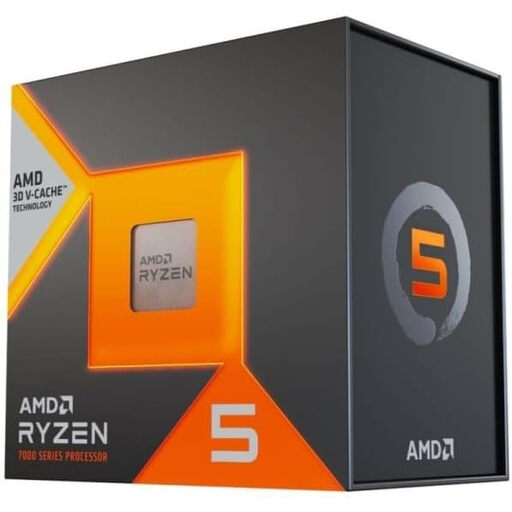
Why we're analysing this product: The Ryzen 5 7500X3D represents the entry point into X3D technology on the AM5 platform. It combines the benefits of a large L3 cache with a power-efficient architecture.
Advantages:
Who it's for: Users looking to build a powerful and efficient gaming system on the AM5 platform who want to leverage the advantages of X3D technology at an accessible price point.
View Product: AMD Ryzen 5 7500X3D
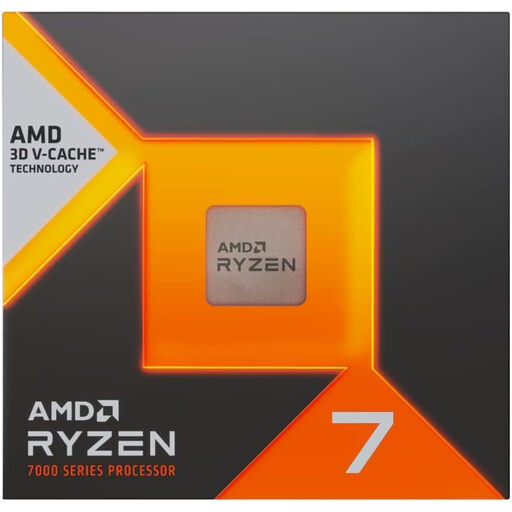
Why we're analysing this product: The Ryzen 7 7800X3D is widely regarded as the definitive CPU for gaming due to its 8-core configuration and full L3 cache. Its 8 cores are optimally sized for modern games, and every core benefits directly from the large cache.
Advantages:
Who it's for: Hardcore gamers and PC enthusiasts whose primary focus is achieving maximum frame rates and minimum latency in games.
View Product: AMD Ryzen 7 7800X3D
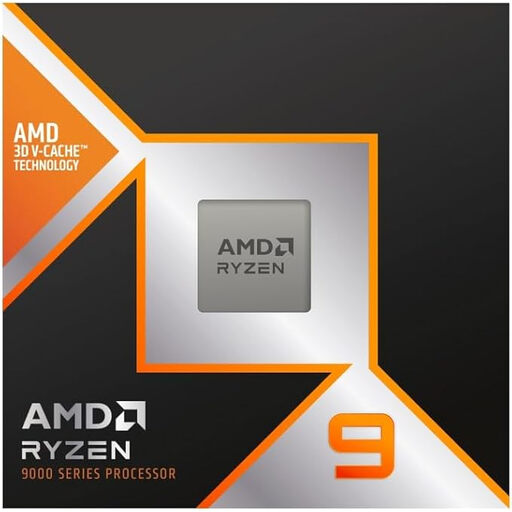
Why we're analysing this product: As part of the Ryzen 9000 X3D series, the 9950X3D combines the latest "Zen 5" architecture with a massive core count and an even larger cache. It is designed for users who refuse to compromise between gaming and application performance.
Advantages:
Who it's for: Enthusiasts and professional users who need a system for both high-end gaming and extremely compute-intensive productivity tasks like 4K video editing, streaming, and 3D modelling.
View Product: AMD Ryzen 9 9950X3D
While X3D models are specialised for maximum gaming performance, other options exist for different use cases or budgets. For instance, processors without 3D V-Cache can offer higher all-core clock speeds for pure productivity workloads. You can find a comprehensive overview in our Gaming CPU Components category.
1. What exactly is AMD 3D V-Cache technology? AMD 3D V-Cache is a manufacturing process where an additional L3 cache chip is mounted directly onto the CPU's Core Complex Die (CCD). This vertical stacking ("3D") drastically increases the directly accessible memory, which shortens data paths and reduces latency compared to accessing system RAM.
2. Which motherboard is recommended for a Ryzen X3D processor? All processors featured here use the AM5 socket. A motherboard with a B650(E), X670(E), B850, or X870(E) chipset is recommended. For high-end models like the Ryzen 9 9950X3D, a motherboard with a robust power delivery system (VRM) is advisable to ensure stable performance under load.
3. Is an AMD Ryzen X3D processor the right choice for every gamer? The performance advantage of an X3D processor is most significant in games that heavily benefit from large cache sizes and low memory latency. These often include simulations, strategy games, or competitive esports titles played at high frame rates. In GPU-bound scenarios (e.g., gaming at 4K resolution with maximum graphics settings on a mid-range graphics card), the benefit may be less pronounced, as the graphics card becomes the limiting factor.