Listeners who sit upright and want to reduce background noise
If you listen to longer chapters while sitting up, fit and noise isolation matter. Sony Germany points out that ANC does not reduce all sounds equally, and voices may still be audible.


If you mainly listen sitting upright in bed, well-fitting closed-back ANC over-ear headphones can combine passive isolation with active noise cancellation. If you often lie on your side, compact ANC in-ear headphones may be an alternative, although you should also check how they fit and whether they press against the pillow. ANC does not necessarily block out changing voices, so test how clearly you can hear speech and at what volume in your usual listening situation.
If you listen to longer chapters while sitting up, fit and noise isolation matter. Sony Germany points out that ANC does not reduce all sounds equally, and voices may still be audible.
When you listen on your side, earcups or in-ear headphones may press against your pillow. soundcore also notes that its Sleep A30 may cause pressure and come into contact with your pillow, so check the fit in your usual sleeping position.
If you share a room, you’ll want to hear the narration clearly at a low volume without disturbing the other person. According to Sony Germany, someone speaking may still be audible despite ANC, so check how they sound while you’re in bed.
Suitable if: you mainly listen sitting upright and prefer headphones that fit around your ears.
Consider: the earcups may press against your pillow when you lie on your side, and ANC does not necessarily block out voices completely.
Suitable if: you often lie on your side and want to try a compact design.
Consider: even small in-ear headphones may press or rub against your pillow; wearing them for extended periods may irritate your ears.
| Buying priority | What to look for | Who is it important to? |
|---|---|---|
| Background noise | Check the fit and ANC against the sounds in your room; don’t expect complete silence. | If everyday noise distracts me while I’m listening, I want to hear the story without turning up the volume to drown it out. Around 31% of consumers prioritise reducing background noise. |
| Comfort when lying down | Check the housing shape, ear tips and pillow contact in your usual side-sleeping position. | If I listen on my side, I don’t want my headphones to press uncomfortably against my ear or pillow. Around 25% of consumers prioritise a comfortable fit when lying down. |
| Consideration for the other person | Test at a low volume where the other person sleeps; ANC alone does not tell you how much sound can be heard by others. | If someone next to me wants to sleep, I want to listen to my audiobook quietly and check whether any sound carries to their side of the bed. Around 19% of consumers make consideration for others their main priority. |
| Clear speech | Test a familiar spoken-word recording at your usual volume and check that you can operate the headphones in the dark. | If I want to listen to narration quietly, I need to understand the words without turning the volume up unnecessarily. Around 13% of consumers pay particular attention to speech clarity at low volumes. |
| Cost and features | Check whether the specific model has ANC and which features you’ll actually want to use. | If audiobooks are my main reason for buying, I want to pay for the features I need for listening to them. Around 12% of consumers base their choice primarily on cost and the features they need. |
A changing voice may still be audible even when noise cancellation is switched on.
Check the fit and ANC against the sounds that actually distract you when listening to an audiobook. Don’t simply turn up the playback volume to drown them out.
soundcore notes that the Sleep A30 may cause pressure in the ears and rubbing noises when they come into contact with a pillow.
Test the fit, ear tips and pillow contact in your usual side-sleeping position.
According to the manufacturer, the stated battery life of the soundcore Space One Pro is based on specific music, 50% volume and an iPhone; extra features may reduce it.
Compare battery life claims only when ANC, volume and test conditions are taken into account.
JBL distinguishes between versions of the Tune models mentioned, with some featuring adaptive ANC and others not.
Before buying, check the full model name and ANC specification for the exact version.
The WH-1000XM6 is a closed-back ANC over-ear headphone for listening while sitting upright.
The QuietComfort Ultra Headphones (2nd Gen.) are an around-ear ANC option for listening while sitting upright.
The Sleep A30 and Space One Pro take different approaches: one model to try when lying on your side, and a separate over-ear option.
The Tune range includes different designs and feature sets.
The Headphone (1) is an ANC over-ear headphone with several connection options for listening while sitting up.
This selection includes ANC over-ear headphones for listening while sitting upright, and in-ear headphones as a compact alternative. Check the fit in bed and how clearly you can hear speech at the volume you actually plan to use.
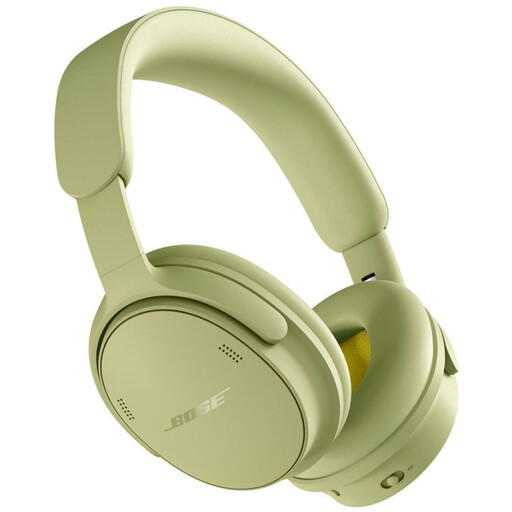 No image available
The over-ear design and adaptive ANC modes may suit listening while sitting upright in bed; voices may still be audible despite ANC.
The product description lists Quiet, Aware, 360-degree and Cinema modes, as well as button controls.
Bluetooth 5.4, USB-C audio and up to 24 hours of battery life are listed in the product name.
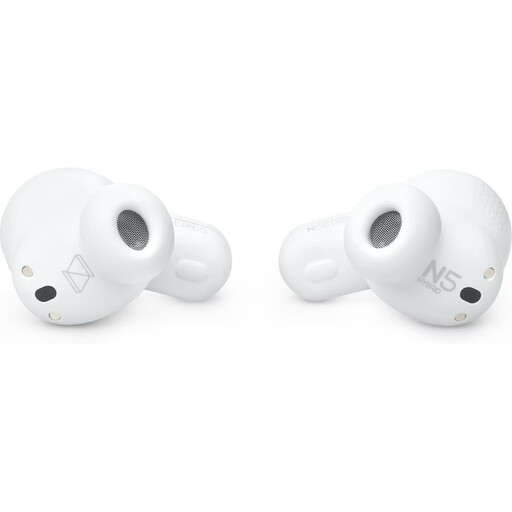 No image available
The compact in-ear design is an alternative to over-ear headphones; check for pressure and fit against your pillow, as this style is not guaranteed to suit every side-sleeping position.
The product description lists adaptive ANC, touch controls and an app for adjusting the settings.
Bluetooth 5.3 and a 2.4 GHz USB-C dongle are listed in the product name.
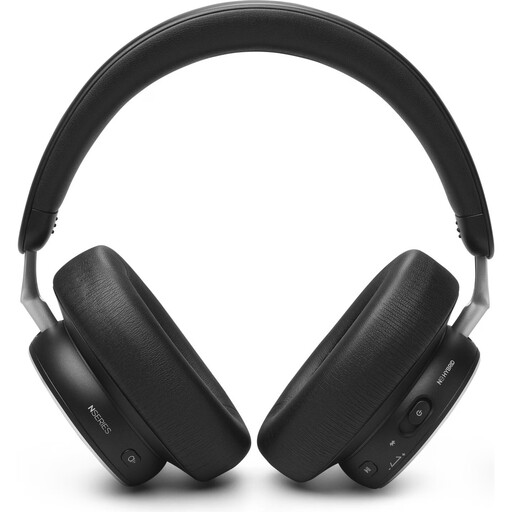 No image available
The closed-back over-ear design with ANC may suit listening while sitting upright in bed; check how firmly the headphones press against your head if you lie on your side.
Bluetooth 5.3 with Multipoint and a 3.5 mm cable connection are listed in the product name.
The product name claims up to 55 hours of battery life; actual battery life may depend on how you use them.
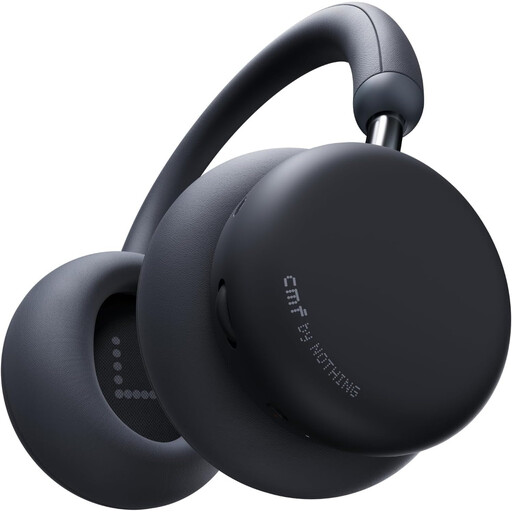 No image available
The closed-back over-ear design and several ANC modes are relevant for listening while sitting upright; try them out to see if the fit and speech playback work for you in your room.
The product description lists adaptive ANC modes, replaceable ear cushions and a connection to two devices.
Up to 100 hours of battery life and a 5-minute quick charge are listed in the product name; battery life depends on how the headphones are used.
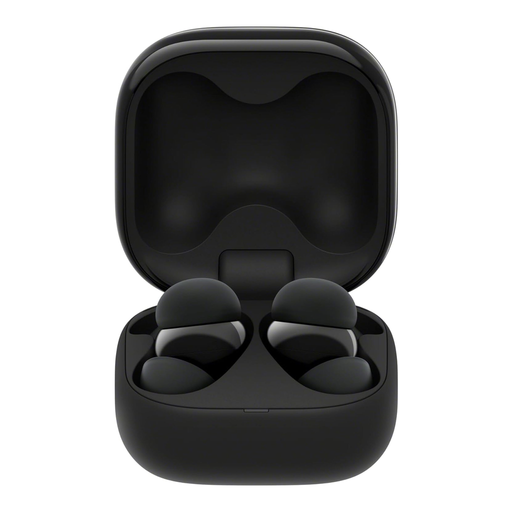 No image available
The in-ear design is a compact alternative to over-ear headphones. Check the fit when lying on your side rather than assuming the design will be comfortable against your pillow.
The product description lists hybrid ANC, touch controls and app customisation.
The stated total battery life of 21 hours includes the charging case.
No, ANC does not guarantee that voices will be completely blocked out. Sony Germany explains that noise cancellation works best with lower- and mid-pitched sounds, and that someone speaking may still be audible. So check the fit and ANC against the sounds in your room.
Switch on ANC if you want to use it: according to soundcore, the feature is off by default and can be turned on via the app or the headphone controls. Try different ear tips and ear wings, and check for pressure and pillow contact in your usual side-sleeping position.
Sony recommends taking in-ear headphones out regularly during extended wear and keeping them clean. If you experience itching or discomfort, stop wearing them and also follow the care instructions for your particular model.
For most goods ordered online, you generally have a 14-day right to cancel from the date you receive them. If a product is faulty, the seller is generally responsible; statutory consumer rights are separate from a voluntary manufacturer’s warranty. Before buying, check the cancellation information for your specific order.
The World Health Organization gives 90 dB as a guideline for a maximum of four hours of listening per week. This describes sound exposure and cannot be translated directly into a particular volume setting.