Comparing recordings on the train
You want to hear the differences between orchestral recordings without having to turn the volume up ever higher to drown out train noise.


A closed-back ANC over-ear headphone is a natural starting point if train noise bothers you and longer listening matters more than keeping your luggage light. F.A.Z. Kaufkompass describes ANC as a way to listen to music on the train without turning it up full blast. Compact ANC in-ears are a space-saving alternative if they fit well. For a more meaningful comparison, keep the volume, sound settings and ANC settings the same – spatial effects and ANC alone don’t guarantee neutral playback.
You want to hear the differences between orchestral recordings without having to turn the volume up ever higher to drown out train noise.
If you listen for a long time, consider fit, ease of use and battery life together.
You want to stow your headphones quickly and weigh up whether compact in-ears or larger over-ears are better suited to your needs for fit and noise isolation.
A good fit if: You listen for longer periods and want to reduce train noise when comparing quieter passages.
The trade-off: Over-ears take up more room in your luggage; ANC and sound settings can affect what you hear.
A good fit if: You have limited storage space and the eartips fit securely and comfortably.
The trade-off: Passive isolation depends particularly on how well they fit your ears. Adjust the eartips before comparing recordings.
| Buying consideration | What to look for | Who particularly values it |
|---|---|---|
| Comparing sound | Listen to the same short passages at matched volumes; keep EQ and spatial audio settings the same for every listen. | If I want to compare instruments and dynamics, I want to avoid changes in sound processing. Roughly 29% of consumers put sound comparison first. |
| Blocking out train noise | Test ANC and ambient mode in the kind of train environment you normally travel in; don’t rely on a highly isolating mode alone for important announcements. | I want to reduce train noise without turning the volume up unnecessarily. Roughly 29% of consumers who prioritise noise isolation most say the same. |
| Fit on longer journeys | Wear the headphones for longer than just a few minutes and check for pressure from the headband or eartips. | On a long journey, I need them to stay comfortable over time. Around 18% of consumers prioritise long-term comfort. |
| Connectivity and playback | Check whether your player supports your preferred Bluetooth codec or wired connection, and whether the right operating mode is available. | I want my headphones to connect reliably to the player I already own. Around 12% of consumers put source compatibility first. |
| Luggage space and cost | Compare the packed size, what’s included and the price of the specific variant, rather than relying on the product range name alone. | When luggage space and budget are limited, I need the design to suit both. Roughly 12% of consumers prioritise packed size and cost. |
Changing EQ or spatial audio settings can alter how instruments and dynamics sound – as can background noise.
Keep the settings the same for both recordings, and assess ANC separately in the kind of train environment you normally travel in.
A codec is only usable if your playback device supports it too. Sony lists SBC, AAC, LDAC and LC3 for the Sony WH-1000XM6; aptX isn’t on that list.
Check the formats and connections supported by both devices, and see what’s included with the specific variant.
Packed size and the type of noise isolation vary, but the actual fit is personal.
If possible, try the design for as long as a typical journey, rather than comparing specifications alone.
The WH-1000XM6 is a closed-back ANC over-ear headphone with an ambient mode and audio connection for different listening situations.
The MOMENTUM 5 Wireless is an ANC over-ear headphone with transparency mode. Information about this model should be kept separate from test results for other Sennheiser models.
The QuietComfort Ultra Headphones (2nd Gen) are over-ear ANC headphones with adjustable EQ and spatial audio.
The Ace is an ANC headphone that is also listed as supporting USB-C music playback.
This selection includes closed-back ANC over-ears for longer listening sessions and an ANC in-ear option for situations when luggage space is limited.
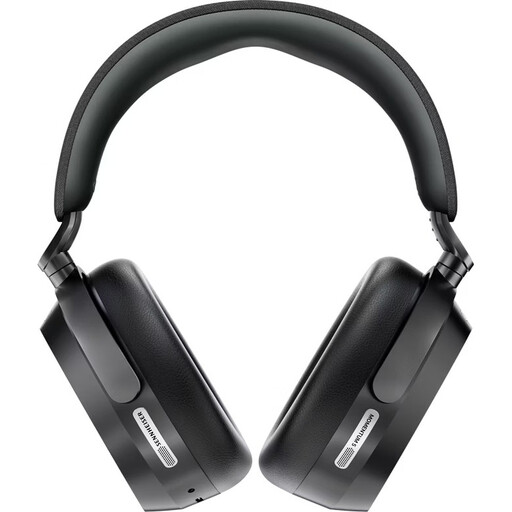 No image available
For longer train journeys if you prefer closed-back over-ears with ANC.
Closed-back design with ANC; up to 57 hours of playback with ANC according to Sennheiser; Bluetooth 5.4 according to the product description.
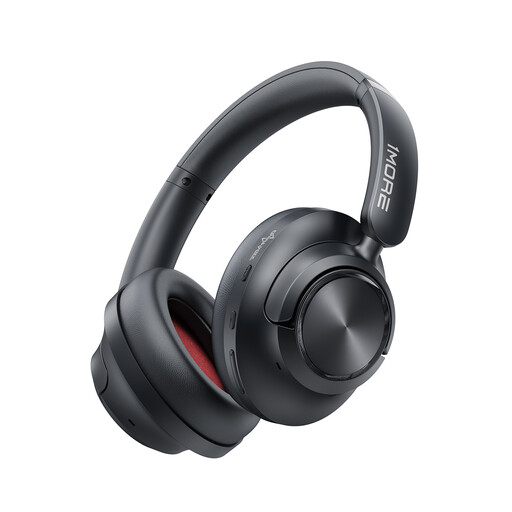 No image available
An over-ear ANC option for longer journeys; check whether you can turn off spatial effects before comparing recordings.
The product description lists 50 dB ANC, THX Spatial Audio and up to 105 hours of battery life.
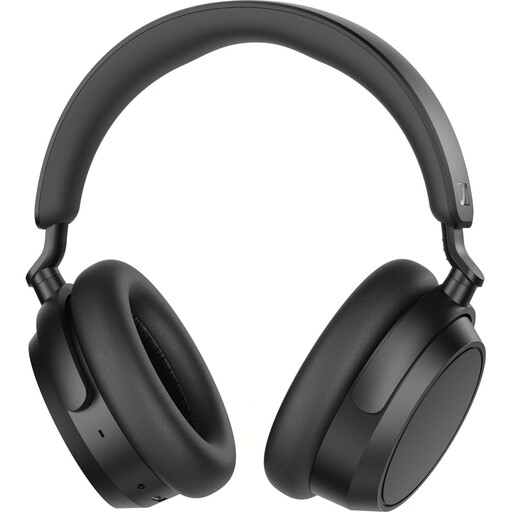 No image available
For journeys when you want ANC and the option of a wired connection.
Over-ear headphones with ANC; Bluetooth 5.2, aptX, Multipoint, detachable cable and up to 50 hours of battery life according to the product description.
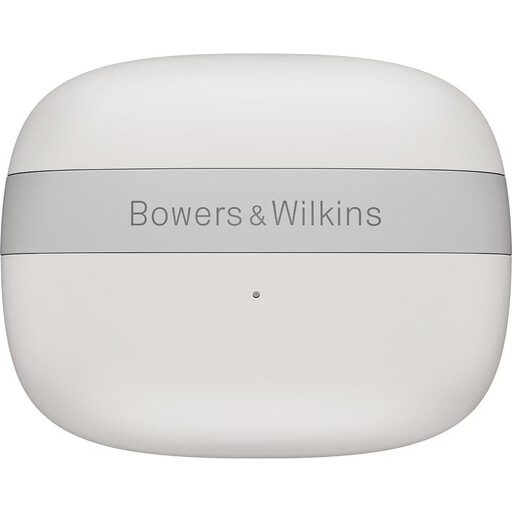 No image available
A compact ANC in-ear option if luggage space is limited and the eartips fit well.
True wireless in-ear headphones with ANC, Bluetooth 5.4 and up to 8 hours of battery life according to the product description.
 No image available
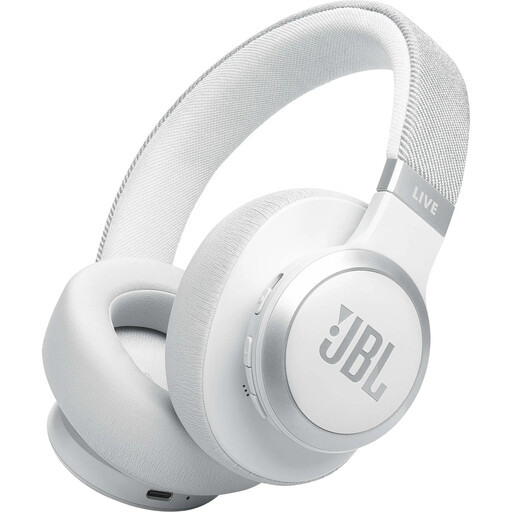
For train journeys if you prefer wireless over-ear headphones with ANC.
Wireless over-ear headphones with noise cancellation and a microphone; the listed variant is white.
Listen to the same short passages at matched volumes, keeping EQ, ANC and, if applicable, spatial audio settings the same for both listens. A high-resolution codec alone doesn’t prove you’ll hear a difference with your playback device.
Connect your headphones to the playback device you’ll actually use and check your preferred wired or Bluetooth connection. Try the ear cushions or eartips and controls before a longer listening session, and practise switching to ambient mode.
Check whether the cable or case you need for your connection is included; Bose lists both for the QuietComfort Ultra Headphones (2nd Gen). For a consumer purchase from a trader in the EU, you have a legal guarantee of at least two years from the date you receive the goods, as Your Europe explains. This is separate from any voluntary manufacturer’s warranty.
Deutsche Bahn explicitly says that listening to music loudly in the ICE quiet zone is not permitted, even when using headphones. This is a rule for that area, not evidence of a general legal ban on headphones; take care not to disturb others with sound from your headphones.