
Lieferung heute & morgen

Qualitätsgarantie
App herunterladen
Kategorien
Choosing an Android tablet involves analysing its technical specifications in relation to your intended use case. Key parameters include display size, processor performance, RAM capacity, and connectivity options. These components are crucial in determining a device's suitability for tasks such as media consumption, e-learning, or mobile productivity.
A tablet should be evaluated based on objective technical data. The following criteria provide a foundation for making an informed decision.
The display's diagonal, measured in inches, is a primary selection criterion.
The processor (CPU) is the central processing unit. An octa-core processor is standard today, enabling efficient distribution of computing tasks for smooth, responsive operation.
RAM (Random Access Memory) is crucial for running multiple applications simultaneously. A tablet with ample RAM (e.g., 8 GB or more) can keep more apps running in the background without performance degradation. Some models feature virtual RAM expansion, which temporarily allocates a portion of the internal storage (ROM) to act as RAM. This can further enhance multitasking capabilities.
The internal storage (ROM) determines how many apps, photos, videos, and documents can be stored directly on the device. A capacity of 64 GB is sufficient for basic use, while 128 GB or 256 GB offers more flexibility for larger amounts of data. A TF or microSD card slot is an essential feature, as it allows for cost-effective storage expansion of up to 2 TB.
All tablets feature Wi-Fi for internet connectivity. A tablet with 4G LTE also includes a SIM card slot, enabling a mobile data connection independent of Wi-Fi networks. This is particularly relevant for users who are frequently on the go and require a constant internet connection for work, navigation, or communication.
Battery capacity is measured in milliampere-hours (mAh). Capacities of 6000 mAh or more are common for all-day use under moderate load. Models with 8000 mAh or more offer extended battery life, which is especially beneficial for gaming or intensive video streaming. The charging speed (measured in watts) determines how quickly the battery recharges. Fast charging capabilities of 18W or higher significantly reduce charging times.
A tablet with a stylus and keyboard transforms the device into a productivity tool. A stylus allows for precise handwritten notes and drawings, while a dockable keyboard makes it easier to type long texts. The compatibility with or inclusion of such accessories is an important factor for students and professional users.
Based on the technical criteria above, we have curated a selection of models that stand out for their specific features and excellent price-performance ratio.
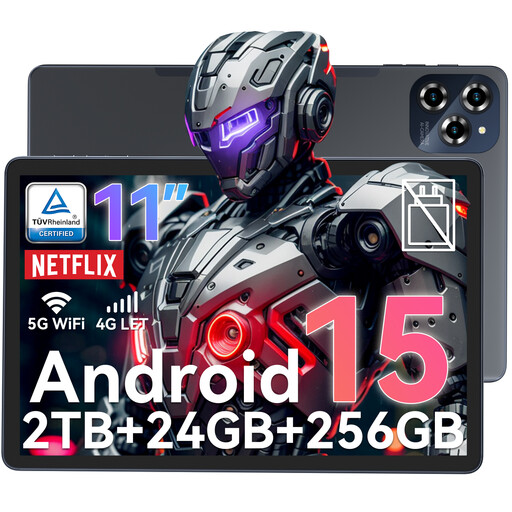
Why we recommend this product: The TABWEE W90 combines a large 11-inch FHD display with solid performance specs. Its T615 octa-core processor and high RAM capacity enable smooth multitasking. The TÜV certification for Netflix HD is a specific advantage for streaming enthusiasts.
Pros:
Who it's for: Users looking for a versatile tablet for media consumption, browsing, and everyday productivity tasks who value a large display and long battery life.
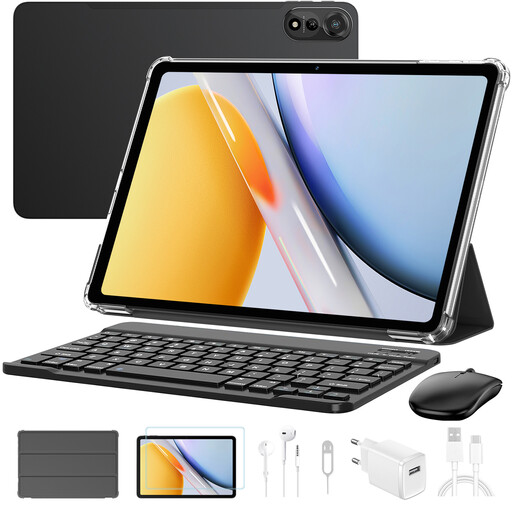
Why we recommend this product: The Blackview Mega2 is designed as an all-in-one package. With its very large 12-inch 2K display, massive RAM capacity, and comprehensive accessory bundle (keyboard, mouse, stylus), it targets users seeking maximum productivity and flexibility. The 4G LTE connectivity ensures you're always online.
Pros:
Who it's for: Students, mobile professionals, and families who want a device as a laptop replacement for e-learning, office applications, and entertainment, and are looking for an affordable all-in-one package.
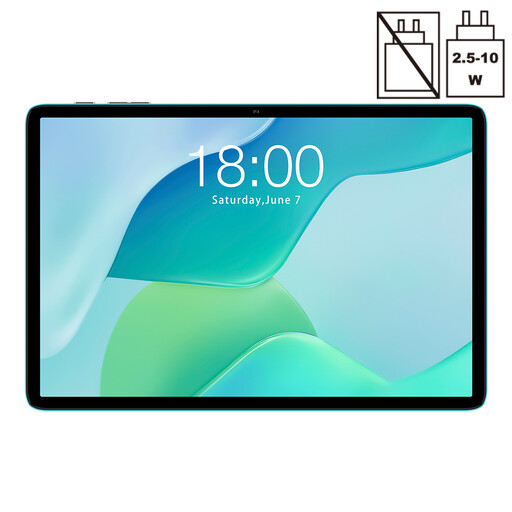
Why we recommend this product: The Teclast P33 is positioned as a particularly budget-conscious, entry-level model. With its 10.1-inch display and feature set, it provides a solid foundation for everyday tasks like web browsing, reading e-books, and light multimedia use. The inclusion of Android 15 is a clear advantage in this price category.
Pros:
Who it's for: Budget-conscious buyers, children, or users who need a secondary device for simple tasks and do not require high-end specifications.
The models presented cover specific user profiles. If your requirements differ, a wide range of other devices is available. For an overview of models with high-resolution screens, please visit our HD Display Tablet category.
1. How much RAM should a good Android tablet have? For basic tasks like browsing and video streaming, 4 GB of RAM is sufficient. For smooth multitasking, more demanding apps, or light gaming, 6 GB to 8 GB of physical RAM is recommended. Models with virtual RAM expansion can further stabilise performance when many apps are running in parallel.
2. Is a tablet with 4G LTE worthwhile? A tablet with 4G LTE is a good choice if you plan to use the device frequently outside of Wi-Fi networks, such as while travelling, commuting, or working outdoors. It provides independence and a constant internet connection. For purely stationary use at home or in the office, a Wi-Fi-only model is usually sufficient.
3. What is the ideal display size for a tablet? The ideal size depends on the primary use case. 10-inch tablets are portable and well-suited for media consumption. 11- to 12-inch models offer more comfort for working, drawing, or when the tablet is intended to be a laptop replacement. For maximum portability and e-book reading, smaller 8-inch models can also be an option.