
Lieferung heute & morgen

Qualitätsgarantie

Willkommens-Angebote freischalten: KOSTENLOSE Lieferung | Bis zu 80 % RABATT | Kostenlose 30-Tage-JoyPlus-Testphase
App herunterladen
An angle valve 1/2" x 3/8" connects the wall outlet to a tap, vanity unit or other fixture. At the same time, it allows you to manually shut off the water supply during maintenance work. For private households, DIY enthusiasts, plumbers and property managers, choosing the right model is more important than its compact size might suggest.
The 1/2" connection usually refers to the side that goes to the wall outlet. The 3/8" outlet, on the other hand, leads to the tap or flexible hose. A valve with swapped or mismatched threads cannot be installed reliably. So before you buy, check both the wall thread and the existing hose.
A self-sealing angle valve, according to the product description, does not require additional sealing material at the relevant connection. However, it does not shut off the water automatically. Automatic water shut-off is not a typical feature of a manually operated angle valve: you turn the handle by hand to close the valve. If you are unsure about the sealing technology or the thread, consult a qualified professional.
A chrome-plated body may be easy to clean, but it doesn't replace information about the base material or the connection design. For products labelled chrome-plated brass angle valve, you should check whether the valve body is actually made of brass and which components are made of plastic or stainless steel. The term "corrosion-resistant" is only meaningful when considered alongside the material, installation and water quality.
For many basin and vanity unit installations, the combination of G1/2 wall connection and G3/8 outlet is standard. The abbreviation BSP refers to a British standard pipe thread. It should not automatically be assumed to match every similar-looking thread.
Before ordering, we recommend this quick check:
An angle valve for a basin or an isolation valve for a vanity unit must also leave enough space for the handle. The angled design can be helpful in tight installation spaces, but it doesn't replace taking actual measurements.
Chrome-plated brass is a popular choice because the surface can be easily cleaned with a soft, damp cloth. Abrasive cleaners, harsh acids and stiff brushes can damage the coating. When choosing a product, the following details are relevant:
For a heating system angle valve, there are additional requirements for temperature, pressure and connection type. A valve designed for a basin is not automatically suitable for every heating circuit. The technical specifications of the heating system and the valve must match.
A 2-pack of angle valves is ideal, for example, for two separate connections at a vanity unit or for multiple installation points. Before buying, check whether you are actually getting two complete valves or a single valve with accessories. Seals, fixing materials and flexible hoses are not included with every model.
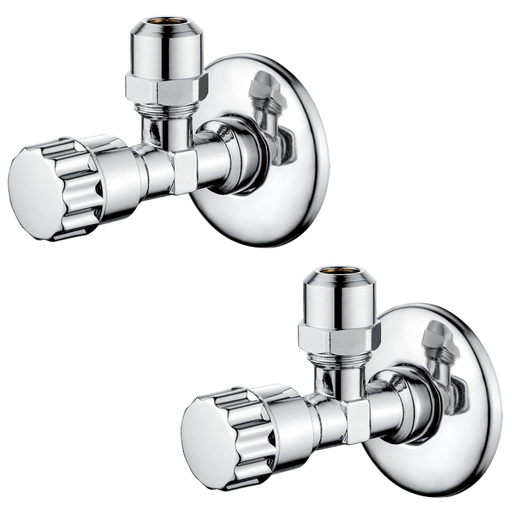
Why this product fits the profile: This 2-pack is aimed at users who want to equip two basin, cistern or general plumbing connections with the right sizes. The large handle is designed for manual operation.
The product details clearly state the 1/2-inch wall connection, the 3/8-inch outlet and the self-sealing design. This makes it easy to match the key buying criteria before installation.
Two valves per set; chrome-plated surface; large handle according to the product description.
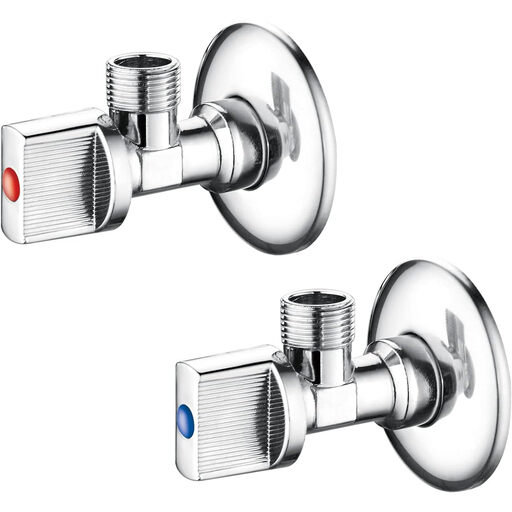
Why this product fits the profile: The chrome-plated brass design is intended for wall-mounted basins and, according to the product description, also for hot water systems. It is suitable for renovations and installations requiring two shut-off points.
The technical details list both connection sizes and the material specification. According to the product information, a DVGW specification is also met; you should still verify its suitability for your existing installation.
Brass body with chrome finish; angled design; 2-pack with 1/2-inch BSP inlet and 3/8-inch BSP outlet.
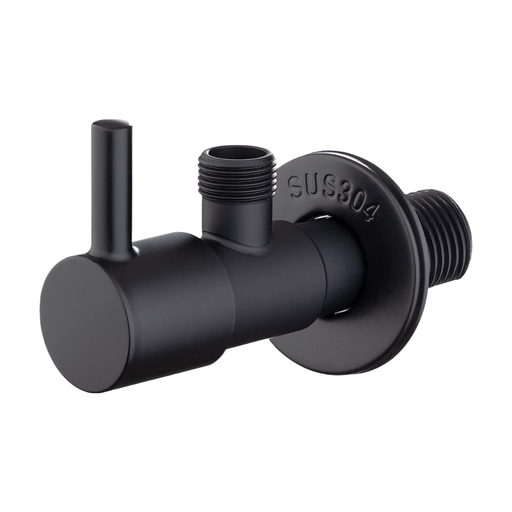
Why this product fits the profile: The compact, angled design is ideal for tight installation spaces. The product description mentions basins and heating systems as areas of use; you should check the pressure and temperature ratings before installation.
The details list the G1/2 wall connection and the G3/8 outlet separately. This makes it easier to compare the connection orientation with your existing installation.
Brass and stainless steel components according to the product description; angled design; chrome and matt black finish.
We have put together a complete, regularly updated list of products that fully meet these strict selection criteria and the safety regulations in force in the EU.
Before installation, turn off the main water supply. Only loosen the old valve once there is no pressure left in the pipe. Do not overtighten the threads, as this could damage the connection, seal or wall installation. After fitting, slowly pressurise all connections and check for drips.
For cleaning, a soft, damp cloth is sufficient. If you notice a leak, shut off the water supply immediately. Work on heating or hot water systems should be left to a qualified professional if you lack experience.
No. The wall connection, the flexible hose and the thread type are all critical. The sizes must be in the correct order: 1/2" to the wall and 3/8" to the fixture. You also need to check the installation space and connection orientation.
It is not possible to give a general lifespan. It depends on factors including the material, water quality, operating pressure, temperature, installation and frequency of use. Regular visual checks help you spot early signs of leaks.
Only if the manufacturer specifies this application and the technical values of the heating system are compatible. For a heating system angle valve, the temperature, pressure, medium and thread must all match in particular. The product description alone is no substitute for checking your specific system.