Students working with 3D animation
If you regularly model and render in Blender, check that the specific GPU supports Cycles and has enough graphics memory. The Blender Foundation recommends 8 GB of VRAM for Blender on Windows.


For frequent GPU rendering of complex Blender scenes, a Windows tower with a dedicated GPU is likely to be the better choice, provided you have enough space and the GPU, graphics memory and RAM are right for the specific configuration. If space is limited and your software and peripherals are compatible with macOS, a Mac mini is worth considering; make sure its memory and SSD capacity suit the size of your projects. The specifications alone don’t tell you how fast it will render or how noisy it will be.
If you regularly model and render in Blender, check that the specific GPU supports Cycles and has enough graphics memory. The Blender Foundation recommends 8 GB of VRAM for Blender on Windows.
If your computer has to fit into a shared living and working space, consider not only its dimensions but also its ports and the room needed for your screen and input devices. Apple lists the Mac mini’s footprint as 12.7 × 12.7 cm.
If you use animation software alongside several other applications, choose RAM and SSD capacity to suit the software you actually use and the size of your project files. The Blender Foundation recommends 32 GB of RAM for Blender on Windows; this isn’t a general recommendation for other programmes.
A good fit if: GPU rendering and larger 3D scenes are your main priorities, and you have room for the case.
The trade-off: Tower configurations vary in their RAM and graphics memory, so the specifications alone don’t allow you to compare render times.
A good fit if: Space is limited and your animation software and peripherals are compatible with macOS.
The trade-off: Unified memory isn’t directly comparable with the separately stated VRAM of a graphics card.
For Blender on Windows, the Blender Foundation recommends 32 GB of RAM and 8 GB of VRAM; these aren’t general minimum requirements. Also check the requirements of the software you actually use.
| Priority | What to check before buying | Who is it most important to? |
|---|---|---|
| GPU rendering and 3D scenes | Check that the GPU supports your render device, and verify the VRAM and RAM in the exact configuration. For Blender on Windows, the Foundation recommends 8 GB of VRAM and 32 GB of RAM. | If I render complex 3D scenes, I first check that the GPU works with my render device and suits my projects. Around 31% of consumers are likely to prioritise GPU rendering. |
| Desk space and living space | Allow for the case dimensions, the ports you need, and space for your screen, cables and peripherals. For noise comparisons, use measurements taken under comparable workloads. | If my desk is also part of my living space, the computer, cables and screen all need to fit comfortably. Around 25% of consumers are likely to put available space first. |
| RAM and project storage | Check the RAM and SSD in the complete configuration against the software you use and the storage space your local projects need. | If I work with large files or several applications, I need enough RAM and SSD space for my projects. Around 25% of consumers are likely to prioritise memory and project storage. |
| Total cost of your setup | Check what’s included, which peripherals you already have and what software you need. Don’t estimate additional power requirements from the power supply rating alone. | If my budget has to cover the whole setup, I factor in a screen and input devices, then choose specifications to suit my projects. Around 19% of consumers are likely to consider the total cost first. |
GPU model, graphics memory and RAM vary even between the tower configurations mentioned here. A product name is no substitute for checking whether the specifications suit your software and projects.
Check the full model number and the specifications of the exact variant before comparing it with your software requirements.
According to the manufacturer, the Lenovo configuration mentioned here doesn’t include a keyboard or mouse.
Check what’s included with the exact variant against the accessories you already own.
Depending on the accessories you already have, you may also need a screen, keyboard, mouse and other peripherals.
A small footprint doesn’t mean a computer will run quietly. The German Environment Agency warns that oversized computers can lead to additional purchase and electricity costs.
Choose specifications to suit the tasks you have planned, and compare noise or power consumption figures only under similar usage conditions.
Actual power consumption depends on the configuration and how you use it; the power supply rating alone won’t tell you what it is.
The Mac mini is a compact macOS desktop for projects using software and peripherals that are compatible with the platform.
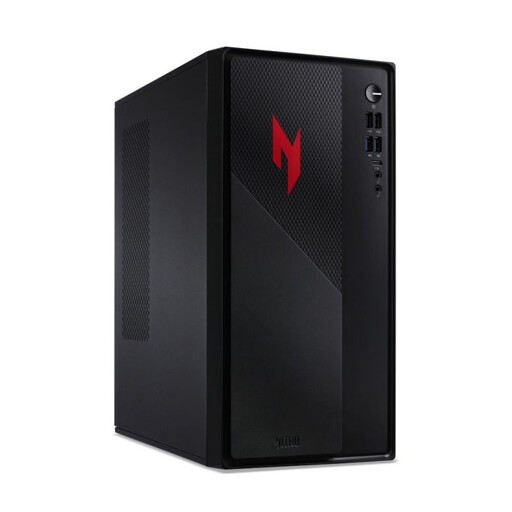
The Legion Tower 5 Gen 10 is an example of a Windows tower with a dedicated GPU.
OMEN 35L configurations are tower options for those comparing dedicated graphics with higher memory capacity.
The Tower Plus EBT2250 is a Windows tower configuration for more demanding projects.
This selection includes Windows towers with a dedicated GPU and compact Mac mini desktops. The key considerations are your project requirements, available space and software compatibility.
 No image available
For GPU rendering and multiple displays, check that the specifications suit your projects and monitor connections.
Listed specifications include 32 GB of RAM, 8 GB of GDDR7, a 1-TB SSD and a 1-TB HDD, Wi-Fi 6E, HDMI and three DisplayPort connections. Leave at least 10 cm of clearance on all sides for ventilation.
 No image available
This tower configuration is worth considering if dedicated graphics and space for project files are important to you.
Listed specifications include an RTX 5080 with 16 GB of GDDR7, 32 GB of DDR5 and a 2-TB SSD. Keep the ventilation openings clear.
 No image available
This compact desktop is worth considering if your animation software and peripherals are compatible with macOS.
Listed specifications include a 12-core CPU, a 12-core GPU, 16 GB of unified memory, a 256-GB SSD, Thunderbolt 4 and HDMI. Check that your programmes are compatible before buying.
 No image available
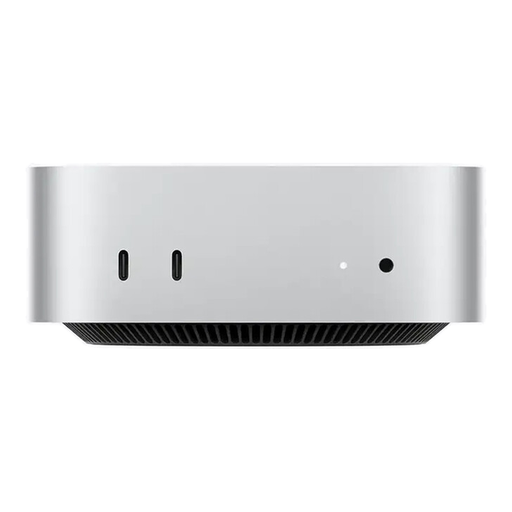
This variant is worth considering for a compact setup if macOS works with the applications and devices you use.
Listed specifications include a 12-core CPU, a 12-core GPU, 16 GB of unified memory, a 512-GB SSD, Thunderbolt 4 and HDMI. Check that your programmes and peripherals are compatible.
 No image available
If you’re looking for a compact macOS desktop, check that its unified memory and SSD capacity suit your projects.
Listed specifications include a 12-core CPU, a 12-core GPU, 24 GB of unified memory, a 512-GB SSD, Thunderbolt 4 and HDMI. Your software and peripherals need to be compatible with macOS.
It depends on your scenes and how you work. For Blender on Windows, the Blender Foundation lists 8 GB as the minimum and recommends 32 GB. 16 GB falls between the two, but may not be equally suitable for every project.
Choose a supported render device for Cycles in the system settings. The Blender Manual lists CUDA and OptiX for compatible NVIDIA GPUs, HIP for compatible AMD GPUs, and Metal for compatible Apple GPUs. Check that your specific hardware is supported.
Allow space for your screen, input devices, cables and airflow. To compare noise levels, you’ll need measurements of the specific configurations taken under comparable conditions; CPU or GPU specifications don’t give you a reliable sound level.
When you buy faulty goods from a trader in the EU, you’re generally entitled to a legal guarantee of at least two years from the date you receive them; this is separate from any additional manufacturer’s warranty. Online purchases generally come with a 14-day right to cancel, subject to legal exceptions. The European Union provides information about legal guarantees, while the consumer advice centre explains the right to cancel.
No. Electrical and electronic waste must be collected separately. The German Federal Ministry for the Environment lists local collection points as one option. Separate conditions apply to returns to retailers, so check with the retailer first.