
Lieferung heute & morgen

Qualitätsgarantie

Willkommens-Angebote freischalten: KOSTENLOSE Lieferung | Bis zu 80 % RABATT | Kostenlose 30-Tage-JoyPlus-Testphase
App herunterladen
For professionals and frequent travellers, a dead battery is more than just an annoyance—it can disrupt workflows and sever critical connections. A high-performance power bank seems like the simple solution, yet the market is flooded with products making inflated claims. Many users invest in a model only to find it can't keep up with the demands of modern devices like a MacBook Pro. This guide will help you identify the key features and avoid common purchasing pitfalls.
Before making a purchase, it's crucial to understand the typical discrepancies between marketing and reality. These three points often lead to disappointment:
To make an informed decision, focus on these three technical specifications. They determine the actual performance and utility of a power bank in daily use.
Capacity indicates how much energy can be stored, while power (watts) determines how quickly that energy is delivered. For demanding users, both are equally important. An Anker 25000mAh power bank offers a large energy reserve, but it only becomes a true powerhouse when combined with a high output, such as 165W. Pay attention to the maximum wattage per port and the total output when charging multiple devices simultaneously. This is the only way to ensure your laptop and smartphone are both powered up at high speed.
The USB-C port is now standard for most high-performance devices. However, the supported charging protocol is the deciding factor. Power Delivery (PD) enables intelligent communication between the power bank and the device to negotiate the optimal charging voltage and current. A fast-charging power bank with the latest PD standard can supply a compatible notebook with up to 100 watts or more, which drastically reduces charging times. Check that the power bank supports the PD standard your devices require.
The number and type of ports determine a power bank's versatility. Multiple USB-C ports are ideal for charging a laptop, tablet, and smartphone at the same time. An additional USB-A port provides compatibility for older devices or accessories. Models that integrate built-in cables are particularly well-designed. A power bank with a built-in cable eliminates the need to carry separate cables and reduces the risk of being left without a connection when you need it most.
Instead of offering a one-size-fits-all recommendation, we have selected products that address specific use cases and avoid the pitfalls mentioned earlier.
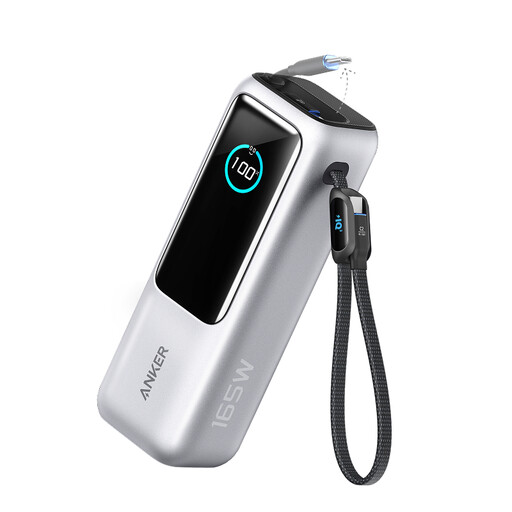
Why This Fits Their Persona: Ideal for users who need to charge multiple high-power devices like a MacBook Pro, a tablet, and a smartphone simultaneously without performance drops. The high total capacity and massive power output cover the energy needs for an entire workday.
This model sidesteps the wattage bottleneck with three powerful USB-C ports and solves the cable conundrum with two integrated USB-C cables, one of which is retractable.
The combination of 25,000mAh capacity, 165W total output, and four charging outputs (including built-in cables) offers maximum flexibility and performance.
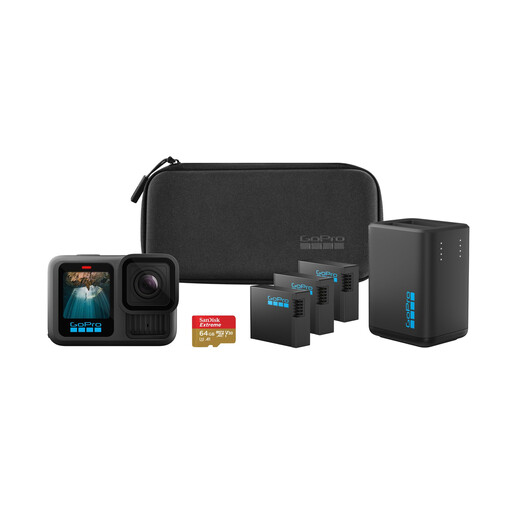
Why This Fits Their Persona: Perfect for iPhone users who watch or record videos on the go. The magnetic attachment (MagSafe compatible) and integrated kickstand allow for hands-free use while the device charges wirelessly.
This model focuses on convenience and integration. It avoids the cable conundrum through wireless charging and provides a clear display of the remaining capacity.
The combination of 15W wireless charging, a 27W wired USB-C output, and an integrated stand makes it a versatile companion for media consumption.
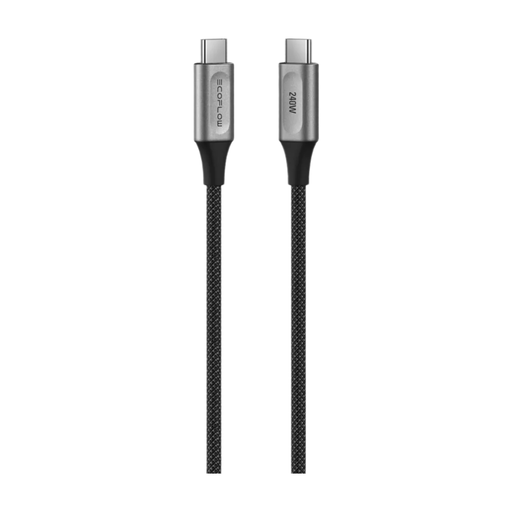
Why This Fits Their Persona: For users who already own a high-performance power bank or wall charger and want to ensure not a single watt of power is lost to a subpar cable. This cable is engineered for the highest performance demands.
It addresses an often-overlooked point of failure: the charging cable. A standard cable can bottleneck the output of a high-end power bank. This cable, with its E-Marker chip, ensures the full power is transferred safely.
Supports up to 240W charging power according to the PD 3.1 standard. The durable nylon braiding and reinforced connectors are designed for longevity.
To unlock the full potential of your devices, the right accessories are crucial. Discover our selection of cables designed for high performance and durability.
1. How many times can a 25,000mAh power bank charge a MacBook Pro? This depends on the MacBook Pro model and its battery capacity. A 14" MacBook Pro (approx. 6,000 mAh) could be fully charged about 2 to 2.5 times. This is an estimate based on the power bank's rated capacity, which is typically 60-70% of its total advertised capacity.
2. Is a 165W power bank safe for my smartphone that only needs 25W? Yes, it is completely safe. Thanks to the Power Delivery (PD) protocol, the power bank and your smartphone communicate to negotiate the maximum safe charging speed. The power bank will only deliver as much power as the device requests and can safely handle.
3. What is the lifespan of a high-performance power bank like one from Anker? The lifespan of a lithium-ion power bank is measured in charge cycles. High-quality models are typically rated for around 300 to 500 full charge and discharge cycles before the capacity noticeably degrades (usually to about 80% of its original capacity). With normal use, this corresponds to a lifespan of several years.