
Lieferung heute & morgen

Qualitätsgarantie

Willkommens-Angebote freischalten: KOSTENLOSE Lieferung | Bis zu 80 % RABATT | Kostenlose 30-Tage-JoyPlus-Testphase
App herunterladen
A modern anthracite LED outdoor wall light can significantly define a property's aesthetic. It not only sets architectural accents but also increases security around the home. However, pitfalls lurk in the selection process that can quickly turn a supposed bargain into a costly mistake. Before you make a decision, you should be aware of three common weaknesses that often only become apparent after installation.
This guide will help you avoid these problems and make an informed decision.
To find a durable and functional outdoor wall light, a few technical parameters are of crucial importance. You should check these three aspects before making a purchase.
The IP (Ingress Protection) rating indicates how well a luminaire is protected against the ingress of foreign objects (first digit) and water (second digit). For outdoor use, the following minimum standards are relevant:
To call a weatherproof wall lamp as such, it requires at least an IP44 rating, with higher values signalling a longer lifespan under harsh conditions.
The longevity of an outdoor light depends heavily on the material used. While plastic is often offered as a budget-friendly alternative, an outdoor light made of aluminium offers decisive advantages. Look for die-cast aluminium, which is more dimensionally stable and robust compared to thin aluminium sheeting. A high-quality powder coating in anthracite provides lasting protection against corrosion and ensures the colour does not fade, even after years of use.
Today, a modern outdoor wall light serves more than just the purpose of illumination. It is a design element for LED facade lighting.
Here are some recommendations tailored to different needs and use cases.
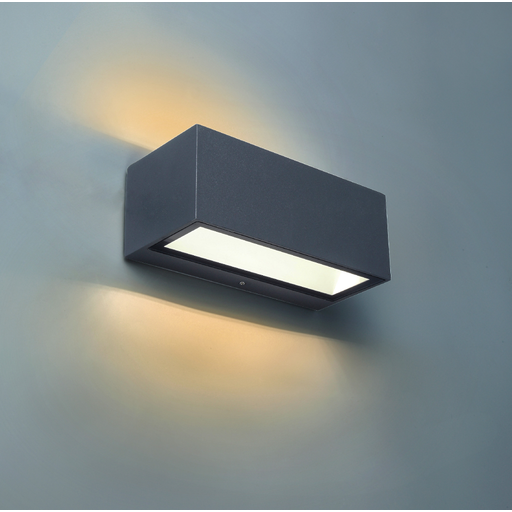
Why It's a Match: Ideal for homeowners who want a clean, modern design and a premium material feel. The light combines a stylish anthracite look with a striking up-and-down light cone to accentuate the facade.
The die-cast aluminium housing and IP54 protection rating ensure high weather resistance and durability, avoiding the problems of inferior materials and inadequate protection.
With 1300 lumens and an up-and-down effect, it produces powerful yet atmospheric facade lighting. The neutral white light colour of 4000 K ensures clear visibility.
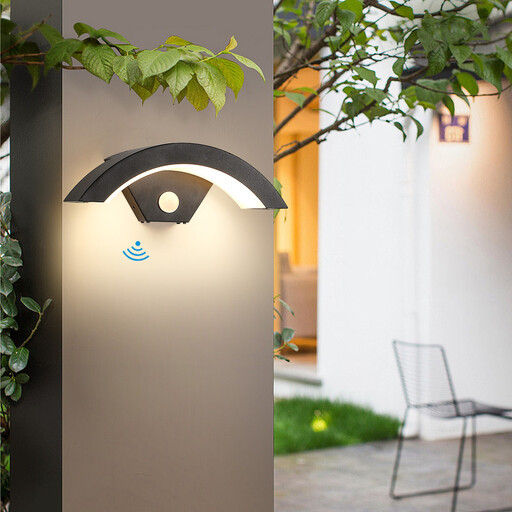
Why It's a Match: Perfect for anyone who values automated security and energy efficiency. The light activates automatically in response to motion and darkness, reliably illuminating paths, driveways, or entrance areas.
The die-cast aluminium housing is explicitly described as "highly weather-resistant." The integrated sensor technology prevents unnecessary continuous operation and ensures on-demand, efficient lighting.
The combination of a motion detector and a dusk-to-dawn sensor offers maximum convenience and security without manual switching. The warm white light (3000 K) creates a pleasant atmosphere.
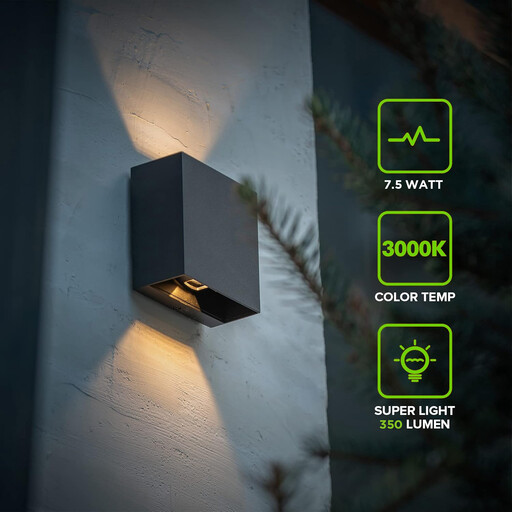
Why It's a Match: For users who want to not just illuminate, but to design with purpose. The variable beam angle allows you to customise the light cones and create unique effects on the facade.
The powder-coated aluminium housing is declared as rustproof and water-resistant. The integrated LED technology with a stated lifespan of 50,000 hours promises longevity.
The adjustable beam angle (from 0 to 106 degrees, according to the manufacturer) offers maximum flexibility in lighting design—from narrow accents to wide-area illumination.
We have compiled a complete, up-to-date list of products that fully meet these strict selection criteria and UK safety regulations.
For an outdoor light exposed to rain and snow, a minimum rating of IP44 (protection against splashing water) is recommended. For unprotected locations where the light is exposed to severe weather, IP54 or IP65 offers better and more durable protection against the ingress of dust and water.
An up-and-down lighting effect means the luminaire emits light both upwards and downwards simultaneously. This creates two cones of light on the wall that emphasize an architectural structure, create depth, and provide a particularly modern and decorative illumination.
Yes, for safety reasons and to ensure a proper seal, the installation of outdoor lights connected to the 230-volt mains supply must always be carried out by a qualified electrician. This ensures that all connections are made correctly and safely in accordance with current regulations.