
Lieferung heute & morgen

Qualitätsgarantie

Willkommens-Angebote freischalten: KOSTENLOSE Lieferung | Bis zu 80 % RABATT | Kostenlose 30-Tage-JoyPlus-Testphase
App herunterladen
By the Joybuy Product Recommendation Officer, August 30, 2026
Finding the right anti-aging face sunscreen can quickly become complicated. The market is flooded with products promising more youthful skin, but not all of them deliver on their claims. Many users invest in products that prove impractical for daily life or whose anti-aging benefits are questionable. This guide will help you identify the crucial features and avoid common purchasing traps.
Before you make a decision, it's important to understand the most common issues that lead to dissatisfaction and, ultimately, inconsistent use—the greatest enemy of effective skin protection.
To find a product you will actually use every day, you should focus on three objective parameters. These define the quality and suitability of a face sunscreen far more than mere marketing claims.
The Sun Protection Factor (SPF) indicates how well a product protects against UVB rays, which are responsible for sunburn. However, for skin aging, UVA rays are particularly relevant as they penetrate deeper into the skin, damaging collagen and elastin.
Therefore, always look for broad-spectrum protection that covers both UVA and UVB rays. In the EU, this is indicated by a UVA logo (the letters UVA in a circle) on the packaging. For effective daily facial UV protection, an SPF 30 face sunscreen is recommended as a minimum, while SPF 50 offers an even higher protective buffer, especially during prolonged exposure or for fair skin types.
The product name often gives an initial clue about the texture. The choice largely depends on your skin type and personal preferences:
A good anti-aging sunscreen combines UV filters with other beneficial active ingredients. Look for formulations that address specific needs:
Based on the criteria above, we have identified several products suitable for different user profiles and their specific requirements.
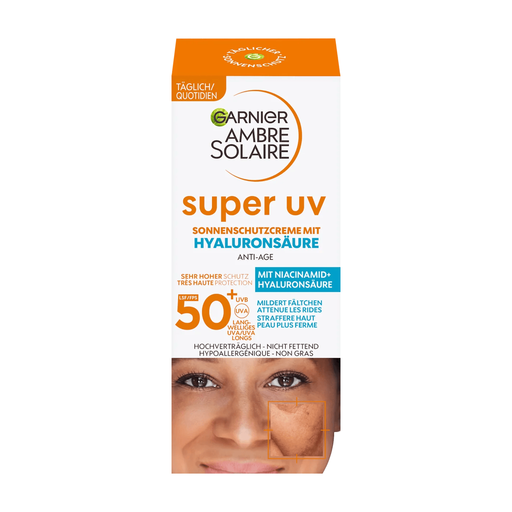
Why This Fits Their Persona: Ideal for a daily routine, as its lightweight texture and accessible price point encourage consistent use. The product integrates easily into a morning skincare regimen without feeling heavy.
The "ultra-light" formula avoids the trap of heavy, greasy textures. It combines reliable SPF 50 with hyaluronic acid, offering clear value beyond a simple marketing promise.
Contains hyaluronic acid and Vitamin B3 (Niacinamide) to provide moisture and reduce the appearance of fine lines caused by dryness. It absorbs quickly and works well as a makeup base.
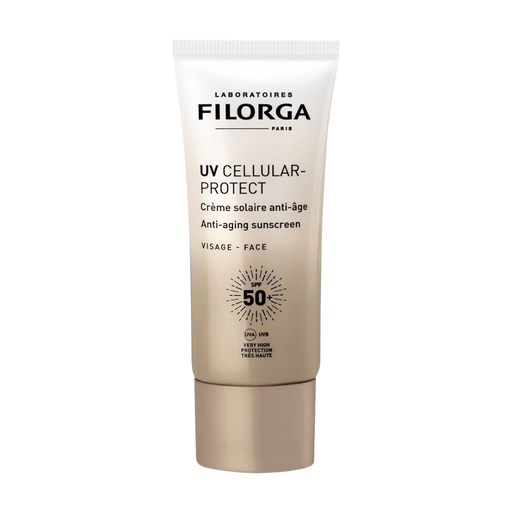
Why This Fits Their Persona: Targets users seeking a highly advanced formula that specifically addresses various signs of aging, such as wrinkles, loss of firmness, and dark spots.
This product goes beyond a generic "anti-aging" promise by using a clear combination of peptides, niacinamide, and hyaluronic acid to stimulate collagen and reduce dark spots.
The lightweight, non-greasy formula with SPF 50+ is designed to target four signs of photoaging, according to the manufacturer. It absorbs quickly without leaving a white cast.

Why This Fits Their Persona: Perfect for anyone who dislikes the feeling of sunscreen on their skin. Its serum-like consistency is ideal for sensitive, combination, or oily skin prone to irritation or a heavy feeling.
Completely solves the problem of heavy textures with a lightweight, hydrating formula that leaves no white cast or sticky film—even after multiple applications throughout the day.
Combines very high UV protection (SPF 50+ and PA++++) with skin-soothing rice and probiotic extracts. The formula is designed to strengthen the skin barrier and provide moisture.
We have compiled a complete, up-to-date list of products that fully meet these strict selection criteria and German safety regulations.
Yes, year-round application is advisable. While the intensity of UVB rays decreases in winter, UVA rays, which are a major contributor to skin aging, remain relatively constant. They also penetrate clouds and window glass, meaning your skin is exposed even on cloudy days or in the office.
To achieve the sun protection factor stated on the packaging, applying a sufficient amount is crucial. A common guideline is the Two-Finger Rule: apply two strips of the product to your index and middle fingers. This amount should be enough for your face and neck. Applying too little significantly reduces the level of protection.
That depends on the product and your skin type. Many modern formulations are designed as 2-in-1 products and, as an anti-aging day cream with SPF, provide enough moisture and care for normal to oily skin types. For very dry skin, it may be beneficial to apply a hydrating serum or a light moisturiser before the sunscreen.