
Lieferung heute & morgen

Qualitätsgarantie

Willkommens-Angebote freischalten: KOSTENLOSE Lieferung | Bis zu 80 % RABATT | Kostenlose 30-Tage-JoyPlus-Testphase
App herunterladen
A day cream with SPF 30 is more than just a moisturiser; it's a cornerstone of daily protection against premature skin ageing. However, the market is saturated with products whose marketing claims often create more confusion than clarity. Many users invest in creams that fail to meet their specific needs or provide inadequate protection. This guide will help you understand the crucial criteria and make an informed decision.
As a Joybuy Product Recommendation Officer, my role is to filter market information and provide you with objective, practical advice to help you find the right daily moisturiser with SPF.
Before we dive into the key parameters, let's examine the most common marketing traps that lead to poor purchasing decisions.
To make the right choice, focus on three objective criteria that determine the efficacy and compatibility of your day cream.
The Sun Protection Factor (SPF) indicates how much longer you can expose yourself to the sun with the product before getting a sunburn, compared to your skin's natural protection time. An SPF 30 is generally sufficient for everyday use.
However, be sure to look for the UVA symbol (the letters "UVA" in a circle). This seal guarantees that the UVA protection is at least one-third of the stated SPF, thus meeting EU recommendations. UVA rays penetrate deeper into the skin and are primarily responsible for the development of wrinkles and loss of elasticity. Some modern formulas also offer protection against high-energy visible light (HEV light), also known as blue light, which is emitted by screens and the sun and can also contribute to skin ageing.
A good moisturiser with SPF 30 combines sun protection with targeted active ingredients. Here are the most important ones:
The texture is crucial for how the product feels on your skin and for your willingness to apply it daily.
Here are some product recommendations tailored to specific needs and skin types.
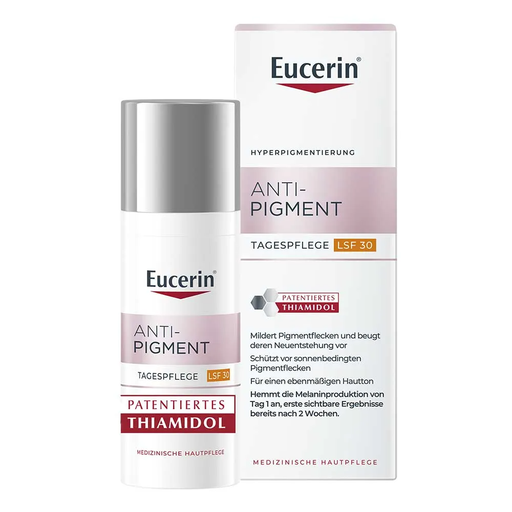
Why This Fits Their Persona: Ideal for individuals who want to specifically target existing dark spots and prevent new ones from forming, without compromising on daily sun protection.
Instead of a vague "brightening" promise, the formula relies on the patented active ingredient Thiamidol, which, according to the manufacturer, targets hyperpigmentation at its source.
Combines a specific active ingredient against dark spots with a broad protection spectrum (UVA, UVB, HEV light) in a lightweight, fast-absorbing texture.
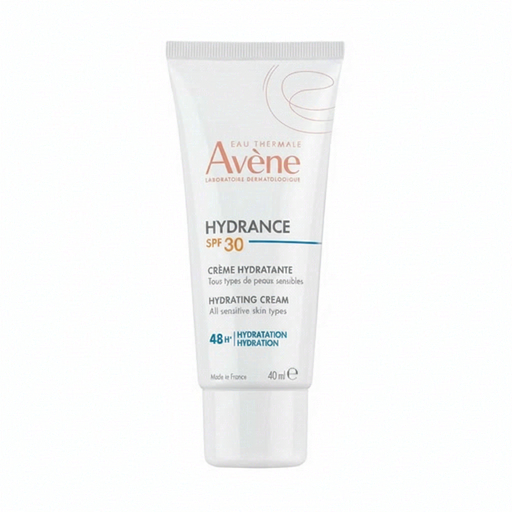
Why This Fits Their Persona: Suitable for individuals with sensitive skin seeking reliable, long-lasting hydration and high sun protection in a soothing formula.
Addresses the "non-greasy" trap with a universal texture that the brand claims is neither too rich nor too light. It absorbs quickly and serves as a good make-up base without feeling sticky.
Offers a very high standard of protection (UVB, UVA, HEV blue light) and uses soothing Avène Thermal Spring Water, making it particularly well-tolerated by reactive skin types.
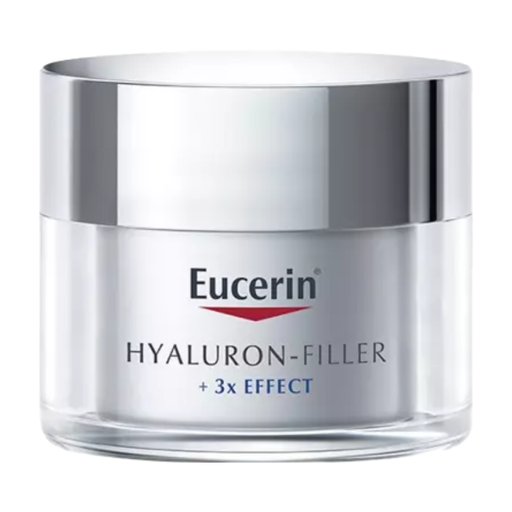
Why This Fits Their Persona: Perfect for anyone looking to actively reduce fine lines and even deeper wrinkles, seeking a treatment that plumps the skin from within.
Goes beyond the generic "anti-ageing" promise by describing a clear 3x effect mechanism: Fill, Stimulate, and Protect. The formula combines long- and short-chain hyaluronic acid with Saponin.
Provides a comprehensive approach to wrinkle reduction based on hydration, stimulation of the skin's own hyaluronic acid production, and protection against its degradation. Includes UVA/UVB protection.
We have compiled a complete, up-to-date list of products that fully meet these strict selection criteria and all relevant safety regulations.
For normal daily activities, like commuting to work or brief periods outdoors, a day cream with SPF 30 is generally sufficient. However, for prolonged and intense sun exposure, such as at the beach, while hiking, or during sports, a dedicated, water-resistant sunscreen should be used. This is because people often apply a smaller amount of day cream than is required for full protection, and it may also need to be reapplied more frequently.
Yes, daily use is recommended all year round. While the intensity of UVB radiation decreases in winter, UVA rays—which are primarily responsible for skin ageing—remain consistently strong. They can penetrate clouds and even window glass. Therefore, consistent daily protection is the most effective way to prevent photoageing.
As a general guide: