
Lieferung heute & morgen

Qualitätsgarantie

Willkommens-Angebote freischalten: KOSTENLOSE Lieferung | Bis zu 80 % RABATT | Kostenlose 30-Tage-JoyPlus-Testphase
App herunterladen
It can be very distressing for parents when a baby frequently suffers from stomach pain, gas, or fussiness after feeding. A possible cause is swallowing air while drinking. An anti-colic baby bottle is specifically designed to address this exact problem. This article introduces various models and how they work to provide you with an informed basis for choosing a suitable baby bottle for newborns.
The models available on the market differ mainly in their venting systems, nipple shape, and the materials used. Understanding these features will help you make an informed choice.
The core of any anti-gas baby bottle is its venting system. Its purpose is to prevent a vacuum from forming inside the bottle and to ensure that the baby swallows milk, not air. Common systems include:
For parents who want to combine breast and bottle feeding, the nipple shape is crucial. A breast-like baby bottle with a wide, soft, and flexible nipple can make it easier for the baby to switch between breast and bottle. Most nipples are made of silicone, a taste-neutral and heat-resistant material. Pay attention to the specified hole size or flow rate, which should match your baby's age and drinking habits (e.g., a slow flow for newborns).
Baby bottles are primarily made from polypropylene (PP), polyamide (PA), or glass. All models sold in the EU must be BPA-free baby bottles.
Easy cleaning and sterilisation are also important criteria. Bottles with a wide opening or models that can be completely disassembled make hygienic daily handling easier.
Here is a selection of models that take different approaches to reducing colic.
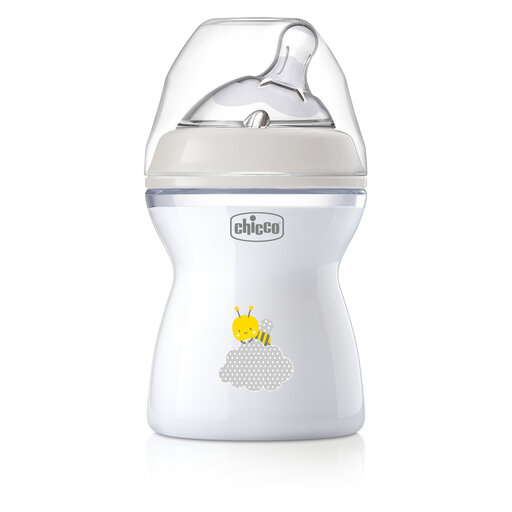
Why It Stands Out: The most distinctive feature of this bottle is its angled nipple. It is designed to remain constantly filled with milk during feeding, which reduces air intake. The shape is also intended to support an ergonomic neck position for the baby.
Advantages:
Who It's For? For parents looking for a bottle that promotes a natural latch position and is well-suited for combination feeding.
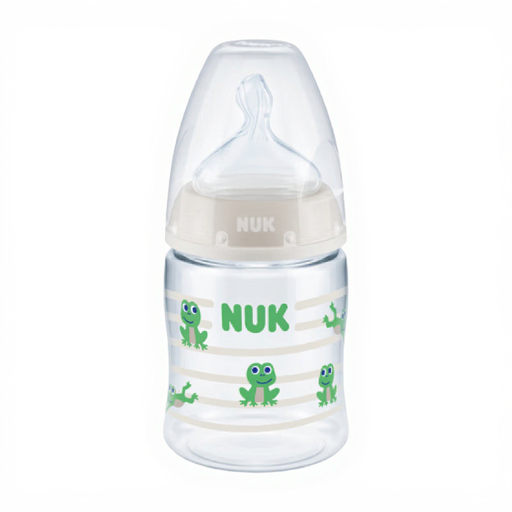
Why It Stands Out: This bottle from NUK integrates a practical temperature control indicator. The scale on the side of the bottle turns white if the contents are too hot. The NUK Anti-Colic Air System in the nipple ensures a natural flow of food.
Advantages:
Who It's For? For safety-conscious parents who appreciate a visual check of the milk's temperature and trust a proven anti-colic system. Ideal as a baby bottle from birth.
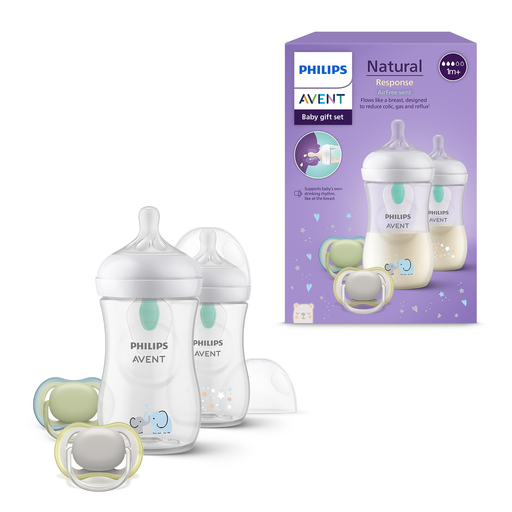
Why It Stands Out: This set combines the Natural Response nipple with the Avent AirFree vent. According to the manufacturer, the nipple only releases milk when the baby actively drinks, mimicking the natural rhythm of breastfeeding. The AirFree vent ensures the nipple stays full of milk, not air, even in an upright feeding position.
Advantages:
Who It's For? For parents seeking a solution for combining breast and bottle feeding and who value giving the baby control over the milk flow.
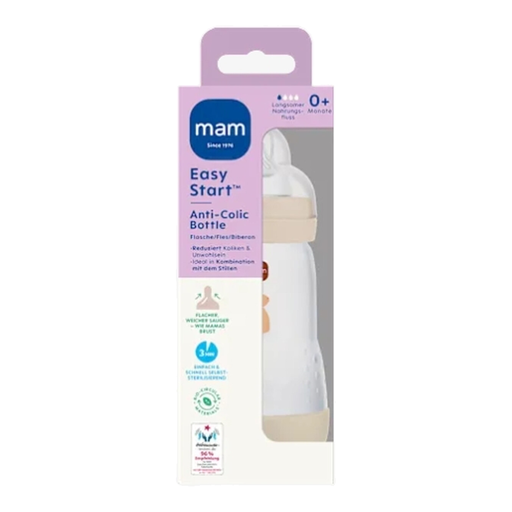
Why It Stands Out: The MAM Anti Colic bottle is distinguished by its innovative base vent, which ensures a very smooth drinking flow. Another practical feature is its self-sterilising function: the bottle can be sterilised in the microwave in three minutes without needing a separate device.
Advantages:
Who It's For? For parents looking for a straightforward and hygienic solution for home and on the go. The high acceptance rate of the nipple makes it a great choice for starting with bottle feeding.
Every baby is unique and reacts differently to various bottle shapes and nipples. If the models presented here don't meet your needs, there are many other alternatives available.
Discover a wider selection of models in our Milk Bottle category.
An anti-colic bottle has a special venting system (e.g., in the nipple or at the base of the bottle). This system equalises the pressure in the bottle, preventing air bubbles from getting into the milk during feeding. As a result, the baby swallows less air, which can reduce gas and colic.
An anti-colic bottle can be used from birth. It is especially worth considering if you notice that your baby is often fussy, struggles with gas, or burps a lot after a bottle feed.
Yes, combining breastfeeding and bottle-feeding is possible with many anti-colic bottles. Models with a wide, soft, and flexible nipple that mimics the shape of the mother's breast are particularly suitable for this. They can help the baby accept the switch between breast and bottle more easily.