
Lieferung heute & morgen

Qualitätsgarantie

Willkommens-Angebote freischalten: KOSTENLOSE Lieferung | Bis zu 80 % RABATT | Kostenlose 30-Tage-JoyPlus-Testphase
App herunterladen
Choosing the right anti-colic baby bottle can be a challenge for new and expectant parents. The market is flooded with promises, but not every product that claims to relieve colic and gas is right for your baby. Discomfort after feeding, frequent burping, or even abdominal cramps are stressful—for both the child and the parents.
As your Joybuy Product Recommendation Officer, I'm here to help you identify the crucial features and avoid common purchasing pitfalls. The goal is to make an informed decision based on objective criteria and your baby's actual needs, rather than on overblown marketing claims.
Many parents invest in multiple bottle sets, only to find that their baby rejects them or the promised anti-colic effect never materialises. This can be avoided by understanding the following points:
To find the right bottle, focus on verifiable features instead of marketing slogans. The following three parameters are crucial.
An effective system for reducing gas prevents a vacuum from forming in the bottle during feeding, which stops the baby from swallowing air. The most common mechanisms are:
For a bottle designed to prevent gas, the way the valve functions is more important than a simple "anti-colic" label.
The BPA-free baby bottle label is now a legal standard in the EU and therefore a basic requirement, not a special quality feature. Also, pay attention to the materials used:
The choice of material affects the bottle's weight, durability, and handling.
The combination of nipple shape and flow rate is especially critical for a bottle for breastfed babies.
Based on the objective criteria mentioned, we have identified several models that offer an ideal solution for specific needs.
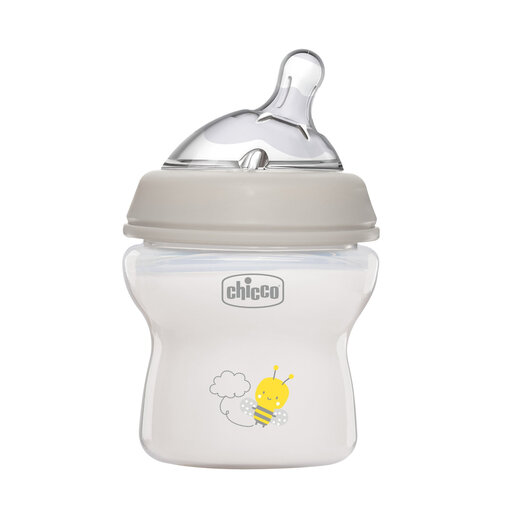
Why This Fits Their Persona: Ideal for parents who want to combine breastfeeding and bottle-feeding. The small 150 ml size and slow flow rate are perfectly tailored to the needs of newborns.
Instead of a vague "breast-like" promise, the angled nipple offers a tangible feature that supports a natural feeding posture and ensures the nipple stays full of milk.
The dual anti-colic valve is proven to reduce air intake. The soft silicone nipple and its shape make it easier for breastfed babies to accept.
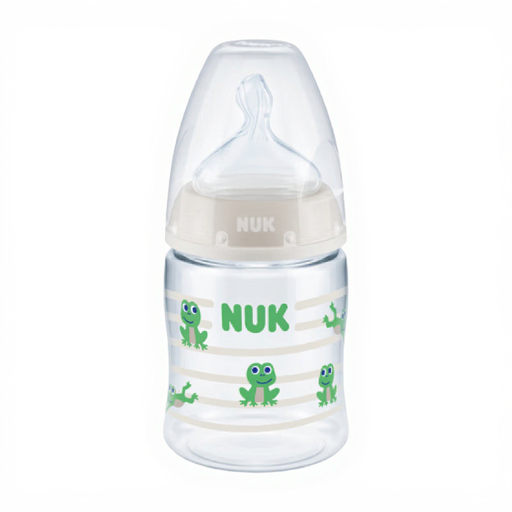
Why This Fits Their Persona: For parents who want extra peace of mind when preparing formula. The temperature control provides visual feedback, minimising the risk of feeding milk that is too hot.
This model offers a concrete, visible feature (the colour-changing scale) that goes beyond generic safety promises. The NUK Anti-Colic Air System is a well-established valve system located in the nipple.
The Temperature Control indicator provides an added layer of safety. The extra-wide bottle neck makes filling and cleaning significantly easier. Made from high-quality, lightweight Polyamide (PA).
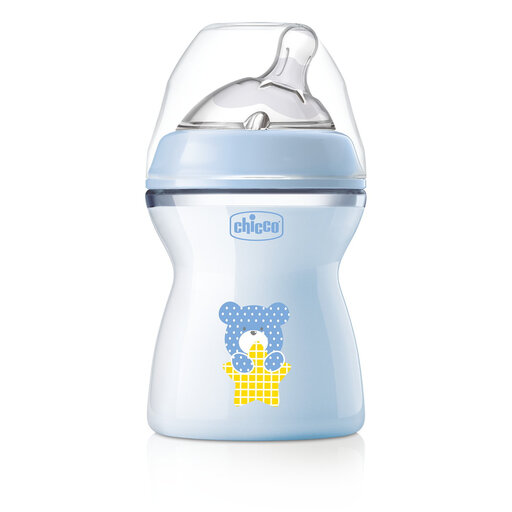
Why This Fits Their Persona: Perfect for the next stage of development, when your baby develops a bigger appetite and a stronger suck. The 250 ml capacity and medium flow rate are designed for babies from 2 months onwards.
This model avoids the "one-size-fits-all" trap by offering a specific solution for an older age group. It acknowledges that a baby's needs change and their equipment must adapt accordingly.
Larger capacity for bigger feeds and an adjusted medium flow rate. It retains the proven dual anti-colic valve and the ergonomic design of the NaturalFeeling series.
We've compiled a complete, up-to-date list of products that fully meet these strict selection criteria and all relevant safety regulations.
1. How often should you replace the nipple on a baby bottle? For hygiene and safety reasons, it is recommended to replace the nipple every one to two months. Before each use, inspect the nipple for cracks, bite marks, or stickiness, and replace it immediately at the first sign of wear.
2. How do you properly clean an anti-colic baby bottle? After each use, disassemble the bottle into all its individual parts. Clean all components, especially valves and hard-to-reach areas, with warm water, mild washing-up liquid, and a suitable bottle brush. Rinse everything thoroughly with clean water. Follow the manufacturer's instructions for sterilisation (e.g., by boiling or using a steam steriliser).
3. Can you mix and match different brands of bottles and nipples? This is generally not recommended. The threads on the bottle body and screw ring are often incompatible. More importantly, the anti-colic system is designed as a single unit of bottle and nipple. Combining different brands can impair the valve's function and negate the anti-colic effect.