
Lieferung heute & morgen

Qualitätsgarantie

Willkommens-Angebote freischalten: KOSTENLOSE Lieferung | Bis zu 80 % RABATT | Kostenlose 30-Tage-JoyPlus-Testphase
App herunterladen
An anti-colic baby bottle can make daily feeding easier when the valve, teat shape and capacity match your baby’s drinking habits. However, the name alone isn’t a reliable selection criterion. What really matters are the specific components, how easy it is to clean, and the age recommendation.
When it comes to a baby bottle for newborns, three common buying issues often arise:
An anti-colic feature is no guarantee that problems like wind or posseting will be avoided. It describes a design characteristic, such as a valve to control air intake. If feeding issues persist, you should discuss them with a paediatrician.
Teat flow describes how quickly milk can come out. Manufacturer specifications aren’t completely standardised, but they serve as a practical guide:
With a baby bottle with an anti-colic valve, you should also check that the valve is fitted correctly. A teat that’s sitting crooked or a bottle ring that isn’t screwed on properly can cause leaking.
The size should match your baby’s typical feed volume and how you plan to use it:
The capacity doesn’t tell you anything about the bottle’s quality. A smaller bottle can actually be more practical in daily use, because it’s easier to control the milk volume and the powder-to-water ratio.
A BPA-free baby bottle made from polypropylene is lightweight and, in the product selections mentioned, is combined with silicone teats. Clear information about materials and care is important:
A breast-shaped teat can help with the transition between breast and bottle during mixed feeding. However, every baby’s drinking habits are individual. Some babies accept a particular shape straight away, while others need several attempts.
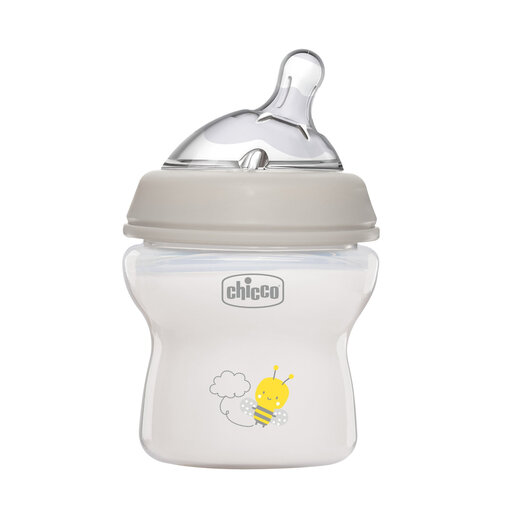
Why this product fits the profile: The compact capacity is ideal for small feeds and getting started with bottle feeding. The slow milk flow is intended for newborns and younger babies, according to the product information.
The 150 ml size prevents unnecessarily large bottles being used for small portions. The double-valve design is clearly stated in the product description.
BPA-free plastic bottle, silicone teat, dishwasher-safe on the top rack, and a breast-shaped teat.
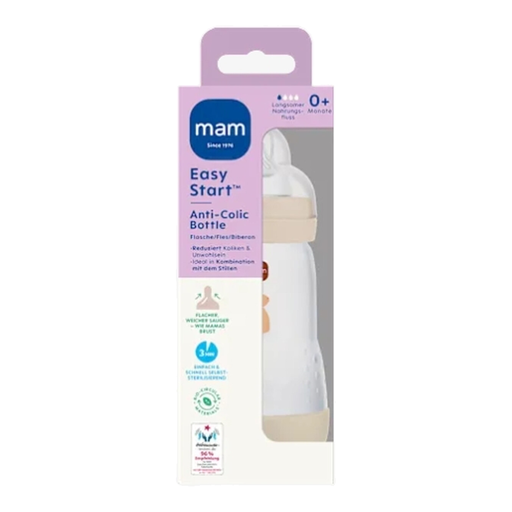
Why this product fits the profile: The bottle is suitable from birth, according to the information, and combines a 260 ml capacity with a slow milk flow.
The care instructions require disassembling it into all its individual parts. This allows the valve to be cleaned thoroughly, rather than just rinsing the bottle when assembled.
Breast-shaped, flat silicone teat, 260 ml capacity, and a self-sterilising function as per the manufacturer’s instructions.
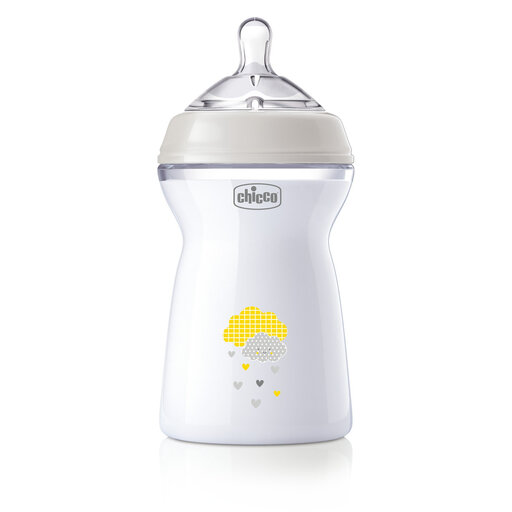
Why this product fits the profile: The large capacity is intended for older babies, where bigger feed volumes and a fast milk flow match the relevant age recommendation.
The “Fast Flow” label and the recommendation from six months make the intended use clearer, rather than using a fast teat for every age without thinking.
330 ml capacity, double valve, silicone teat, and dishwasher-safe design.
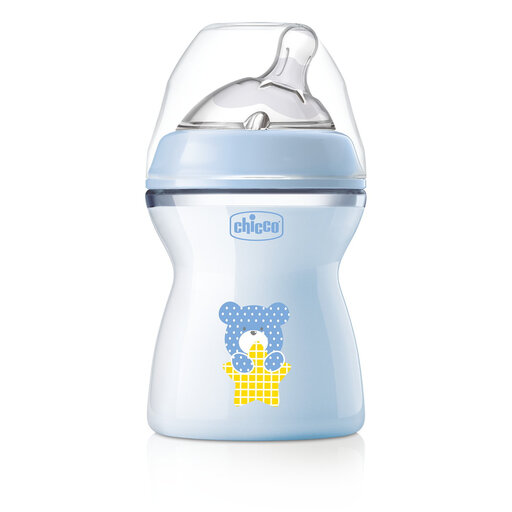
Why this product fits the profile: The combination of 250 ml, medium milk flow and a breast-shaped teat is designed for babies from around two months and for switching between feeding methods.
The medium flow level prevents a fast teat being chosen for younger babies. The age recommendation should be checked against your baby’s drinking habits before purchase.
Angled teat, double valve, polypropylene bottle and silicone teat; suitable for the dishwasher according to the product information.
We’ve put together a full, regularly updated list of products that fully meet these strict selection criteria and the safety regulations in force in the EU.
Before first use, all components should be cleaned and sterilised according to the manufacturer’s instructions. With a bottle that has a valve, it’s important to check the teat, ring, valve and cap individually. After each use, any milk residue should be removed.
Also bear in mind:
With a self-sterilising baby bottle, the instructions from the specific manufacturer apply. The individual parts usually still need to be cleaned beforehand. Self-sterilisation does not replace a visual inspection or regular care.
For newborns, look for models with an age recommendation from birth and a slow milk flow. A 150 ml baby bottle is handy for smaller portions. What matters most is your baby’s drinking habits and the manufacturer’s specific instructions.
This depends on the material, how often it’s used, and the manufacturer’s recommendations. The teat should be checked before every use and replaced immediately if there are any visible signs of damage. Some brands also recommend a regular replacement schedule, for example every two months.
Not necessarily. Often, a larger bottle can be reused with a suitable teat. Parents usually need to change the teat flow level rather than the bottle size. Before buying, check whether replacement teats are compatible with the bottle you have.