
Lieferung heute & morgen

Qualitätsgarantie

Willkommens-Angebote freischalten: KOSTENLOSE Lieferung | Bis zu 80 % RABATT | Kostenlose 30-Tage-JoyPlus-Testphase
App herunterladen
A baby bottle with anti-colic function is designed to make feeding with breast milk, infant formula, or mixed feeding as practical as possible for everyday life. In practice, however, it is not just the "anti-colic" label that determines whether a bottle suits your baby. Teat shape, flow rate, capacity, and cleaning are equally important.
When it comes to baby bottles for newborns, it is all too easy to make a poor purchase if you don't compare marketing claims with the actual product specifications.
A valve can help the design reduce the amount of air that enters the bottle or teat during feeding. However, this does not automatically mean that discomfort will be completely avoided. Feeding position, teat size, drinking pace, and how the feed is prepared all play a part.
So look for a clear description of the system, such as a double valve, a ventilated teat design, or a separate AirFree valve. Claims like "no colic" should not be taken as a guaranteed result.
A teat that is too fast can cause a young baby to drink too hastily. On the other hand, a flow that is too slow can be frustrating when your child is already sucking more strongly. A baby bottle for 6 months and older should therefore not be chosen simply by its capacity; what matters is the combination of age recommendation and teat flow.
Typical flow rates are:
A BPA-free baby bottle is a sensible starting point. You should also check the material, cleaning instructions, and whether it is suitable for sterilisation. Polypropylene (PP) is a commonly used material for the bottle body in the bottles listed here. The teat is usually made from flexible silicone.
Whether a bottle is dishwasher-safe or microwave-safe varies by model and component. With some products, the teat, ring, and cap must not be heated together.
A breast-shaped teat with a wide base may appeal to parents who want to combine breastfeeding and bottle feeding. A slanted teat shape is designed to help keep the teat filled with liquid during feeding. This is a design feature, not a guarantee of a trouble-free switch between breast and bottle.
For a baby bottle for mixed feeding, a soft, flexible silicone teat is also recommended. Check whether the teat is replaceable and whether spare teats are compatible with the same bottle.
The size should match your baby's age, feeding amount, and intended use:
A 150 ml baby bottle is easier to hold and can be practical on the go. A 250 ml, 260 ml, or 330 ml baby bottle, on the other hand, offers more flexibility when your current bottle is regularly emptied completely.
A dishwasher-safe baby bottle saves time in your daily routine. Even so, all parts should be disassembled before the wash cycle and thoroughly cleaned after every use. Before first use, sterilisation according to the manufacturer's instructions is required.
Check the teat before each feed for cracks, deformation, or porous areas. Damaged teats must be replaced. The bottle should only be used under adult supervision. Always check the temperature of the feed before feeding.
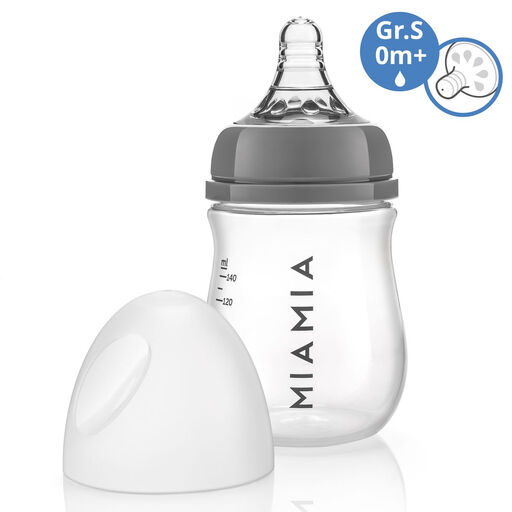
Why this product fits the profile: The compact 140 ml bottle is suitable from birth and works with breast milk, water, tea, and pre- and stage 1 formula.
The size and size S teat are designed for a slow flow rate. The materials listed are BPA-free PP and silicone.
Wide bottle neck, measurement scale, and suitability for dishwasher and sterilisation in a water bath or steriliser.
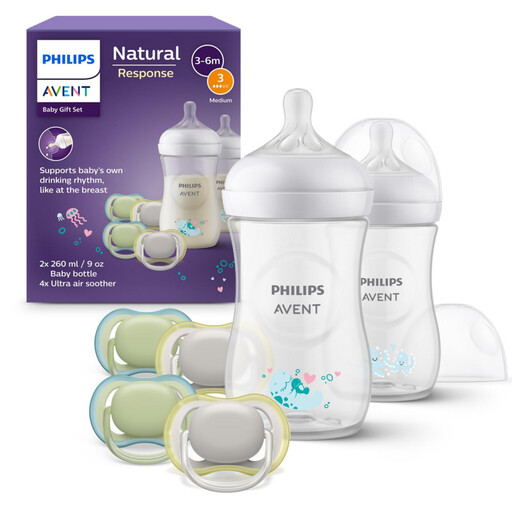
Why this product fits the profile: The set combines two 260 ml bottles with Natural Response teats and four Ultra-Air dummies for babies.
The milk flow is linked to active sucking. An anti-colic valve is also mentioned; the bottle body is made from BPA-free polypropylene.
Two bottles in a set, wide bottle opening, and suitability for dishwasher and microwave according to product information.
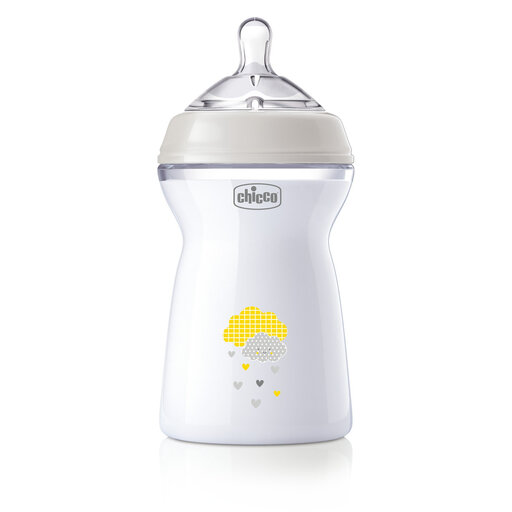
Why this product fits the profile: According to the product information, the 330 ml bottle is intended for babies from 6 months and comes with a fast flow rate.
The age recommendation and fast teat make it clear that this bottle is not intended for newborns.
Large capacity, breast-shaped silicone teat, and double valve; the bottle body is made from PP.
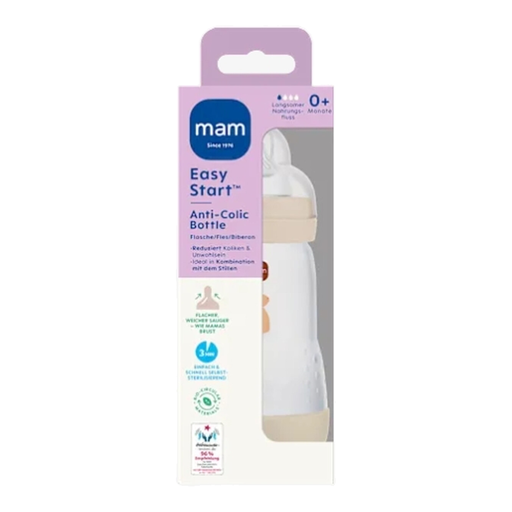
Why this product fits the profile: The bottle is suitable from birth, has a flat, soft teat, and a slow flow rate for the early stages of life.
The slow flow is clearly stated. The self-sterilising design still requires full disassembly and cleaning of all parts.
260 ml capacity, BPA-free PP, silicone teat, and cleaning in the top basket of the dishwasher up to the stated temperature.
We have put together a complete, regularly updated list of products that fully meet these strict selection criteria and the safety regulations in force in the EU.
For newborns, look for models with an age recommendation of from birth, a slow or normal flow rate, and a soft silicone teat. Examples from our selection include the Chicco NaturalFeeling 150 ml, the MiaMia 140 ml, and the MAM Easy Start 260 ml. The actual suitability also depends on your baby's feeding behaviour.
The bottle body can be used for longer with proper cleaning. The teat is a wear part and should be checked regularly and replaced immediately if damaged. Some manufacturers recommend periodic replacement for hygiene reasons. Always follow the instructions for your specific product.
Many models are described as having a breast-shaped teat and a design for combined feeding. These include the Chicco NaturalFeeling, Philips Avent Natural Response, and MAM Easy Start, among others. Switching between breast and bottle can still vary from baby to baby. The flow rate should match the appropriate age stage and your baby's sucking behaviour.