
Lieferung heute & morgen

Qualitätsgarantie

Willkommens-Angebote freischalten: KOSTENLOSE Lieferung | Bis zu 80 % RABATT | Kostenlose 30-Tage-JoyPlus-Testphase
App herunterladen
An anti-colic baby bottle can be a helpful everyday tool when parents want to ensure controlled fluid intake and minimise air ingestion. However, the name alone doesn't tell you whether a bottle will suit your family and your baby's feeding habits. What really matters are factors such as teat flow rate, capacity, material, cleaning requirements and age suitability.
A valve or a specially shaped teat can, by design, limit the amount of air your baby takes in during feeding. But that's no guarantee that issues like posseting or discomfort won't occur. Feeding position, how you prepare the milk and your baby's individual behaviour all play a part.
A baby bottle with a slow flow isn't automatically right for every age. A teat that's too slow can make feeding unnecessarily long, while one that's too fast may be unsuitable for a newborn. The manufacturer's age recommendation is a useful guide, but it should always be matched to your baby's actual feeding pattern.
An anti-colic system often consists of several components. If the valve, teat, screw ring and bottle body aren't fully taken apart, residue can build up. Also check whether the bottle is dishwasher-safe and whether replacement teats with different flow rates are available.
A baby bottle from birth with 140 or 150 ml is often suitable for smaller feeds and for use on the go. For babies a few months old, a 250 ml baby bottle can be more practical as their feed volume increases. A 330 ml baby bottle, in the product variants shown here, is aimed at older babies from around six months and offers more capacity per feed.
A larger volume doesn't automatically mean a better choice. A bottle that's too big can feel heavier in the hand and may tempt you to prepare more milk than needed. The best guide is your baby's usual feed size.
A breast-shaped teat made from soft silicone can make switching between breast and bottle easier. For combination feeding, a shape that supports a stable feeding position is also helpful. Some models have an angled teat designed to stay filled with milk during feeding.
Pay attention to the flow rate:
Never enlarge the teat opening yourself with a needle. Check the teat before each use for cracks, distortion or stickiness, and replace it if you spot any damage.
A BPA-free baby bottle is often made from polypropylene, or PP for short. This material is lightweight and more shatter-resistant than glass, though it can show visible wear with heavy use. The teat on the products listed here is made from silicone.
For baby bottles, the European standard EN 14350 is a relevant reference for products designed to hold liquid food. It doesn't replace the need for daily checks by an adult. Before first use, all parts should be cleaned and sterilised according to the manufacturer's instructions. Also check whether just the bottle body, or the teat and cap too, are suitable for the dishwasher, microwave or steriliser.
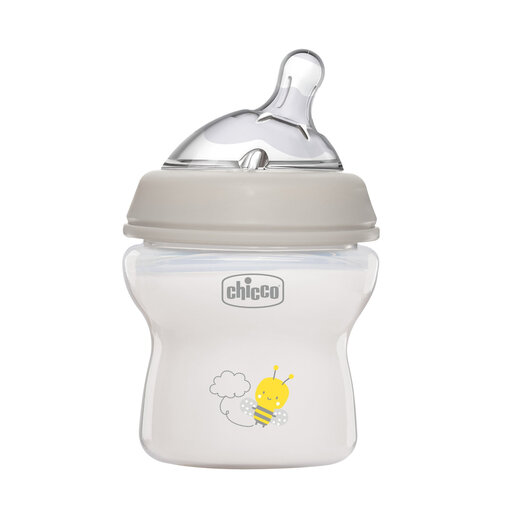
Why this product fits the profile: The 150 ml capacity is designed for smaller feeds and for getting started from birth. The soft silicone teat offers a slow or normal flow for younger babies.
The clear size and age guidance helps you avoid buying an oversized bottle for small feeds. The integrated double-valve design is intended to limit air intake.
150 ml, BPA-free material, silicone teat and suitable for cleaning in the top rack of the dishwasher.
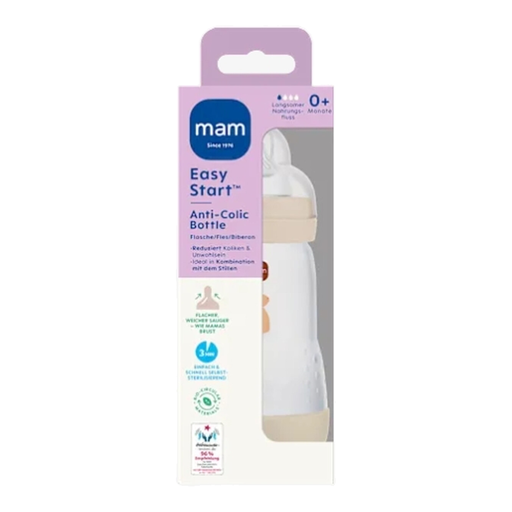
Why this product fits the profile: The 260 ml bottle is suitable from birth and combines a flat, soft teat with a slow flow. This could appeal to families who are combining breastfeeding with bottle feeding.
The bottle must be fully disassembled for cleaning. This requirement prevents residue from building up unnoticed in the anti-colic system.
260 ml, PP bottle, silicone teat, slow flow and a self-sterilisation function as described by the manufacturer.
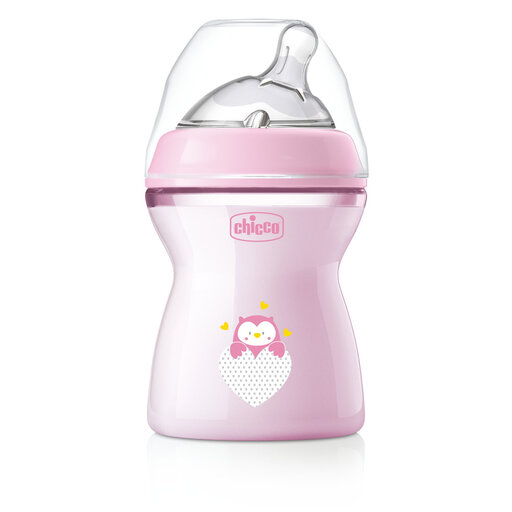
Why this product fits the profile: With 250 ml and a medium flow, this Chicco NaturalFeeling baby bottle is aimed at babies from around two months. It suits families whose baby's feed volume has already outgrown the smaller 150 ml bottles.
The stated age range and medium flow rate make the choice clearer, rather than deciding based on bottle size alone.
250 ml, angled silicone teat, double valve, BPA-free PP and suitable for the top rack of the dishwasher.
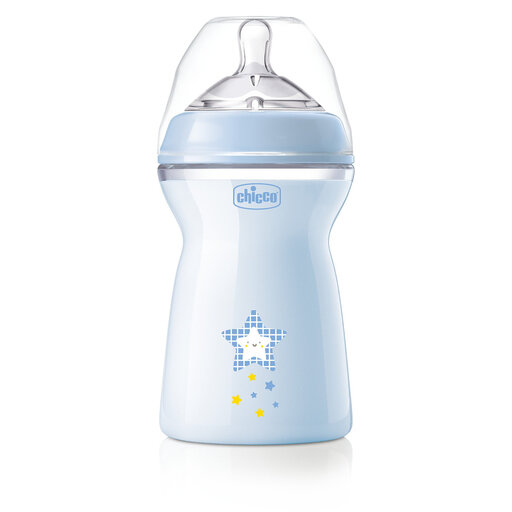
Why this product fits the profile: The 330 ml bottle with fast flow is intended for babies from six months according to the product information, and can be used for larger feeds in daily life.
The "from six months" labelling prevents a fast-flow teat from being mistakenly bought for a newborn.
330 ml, fast flow, soft silicone teat, double valve and dishwasher-safe design.
We've put together a full, regularly updated list of products that fully meet these strict selection criteria and the safety regulations in force in the EU.
For a bottle for combination feeding, look for models with a soft, breast-shaped silicone teat and a controlled flow rate. What matters most is that your baby is comfortable with the teat shape. No general guarantee of suitability can be given. Start with the age and flow level recommended by the manufacturer.
The bottle body can be used for longer as long as the material remains intact. Teats and valves, however, should be checked regularly and replaced immediately if they show signs of wear. Some manufacturers also specify a recommended replacement interval. Always follow the care instructions provided and check the condition of the product.
Before first use, sterilisation according to the manufacturer's instructions is standard practice. After that, all parts should be thoroughly cleaned. How often additional sterilisation is needed depends on your baby's age, how often the bottle is used and the manufacturer's guidance. It's important to let bottles dry completely after cleaning and always to supervise the milk temperature and feeding process.