
Lieferung heute & morgen

Qualitätsgarantie

Willkommens-Angebote freischalten: KOSTENLOSE Lieferung | Bis zu 80 % RABATT | Kostenlose 30-Tage-JoyPlus-Testphase
App herunterladen
Prolonged standing, whether at a height-adjustable desk, in the kitchen, or in a workshop, can lead to noticeable discomfort in your feet, legs, and back. An anti-fatigue mat is designed to enhance comfort during standing tasks by reducing pressure on the body. This guide will help you find the right mat for your needs and presents a selection of recommended models.
Choosing the right mat depends on several factors. Considering the following criteria can help you make an informed decision.
The core of any ergonomic mat is its material. High-density polyurethane foam is a common choice, as it offers a good balance between softness and supportive firmness. A mat that is too soft can compromise stability, while one that is too hard will fail to provide the desired cushioning effect. The material's density is crucial for durability and the mat's ability to retain its shape and function with daily use.
The thickness of a workstation mat directly influences its level of cushioning. Mats with a thickness between 1.2 cm and 2 cm typically offer a good compromise between comfort and stability. The size should be appropriate for the intended use area. A compact mat is suitable for a limited space in front of a sink, while a larger standing desk mat allows for more freedom of movement at your workstation. Measure the intended area to ensure the mat fits without becoming a tripping hazard.
A non-slip mat is essential for workplace safety. Look for a textured surface and a non-slip base that ensures a secure grip on various floor types like tile, wood, or laminate. Bevelled edges reduce the risk of tripping on the mat's borders. For use as a kitchen mat or in a workshop, a water-resistant and easy-to-clean surface is also beneficial.
Based on the criteria above, we have compiled a selection of mats suitable for various applications.
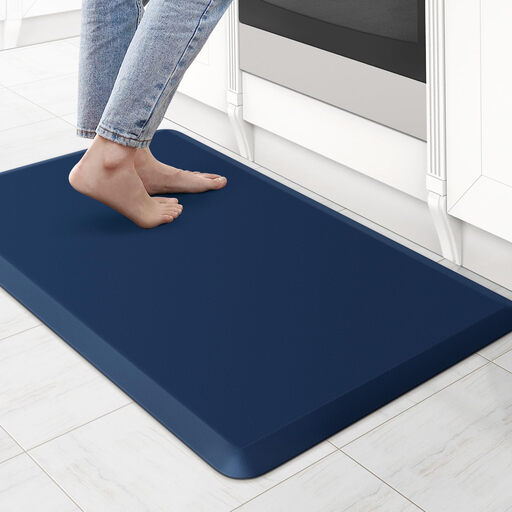
Key Features: This mat combines a high-density, resilient foam core with a durable, textured surface. Its 1.2 cm (0.47-inch) thickness provides noticeable cushioning to reduce pressure on your feet and joints. The matte black surface is stain-resistant and easy to clean.
Benefits:
Best for: Users looking for a versatile floor mat for a standing workstation in the office or at home. With its dimensions of 71 x 44 cm (28 x 17.3 inches), it fits well in front of standard desks or in kitchen areas.
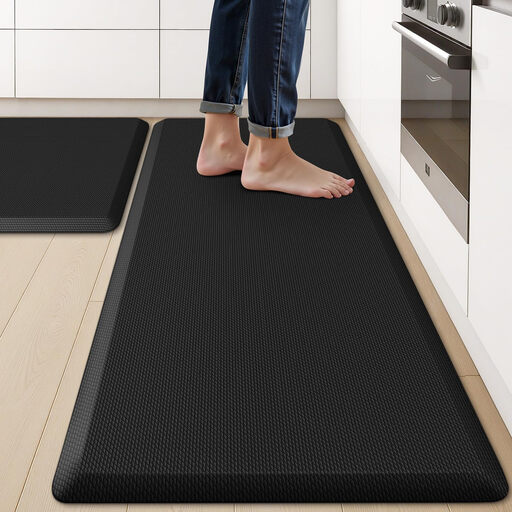
Key Features: With a generous size of 101.5 x 44 cm, this model offers an expanded standing area. It is ideal for workspaces that require more lateral movement, such as in front of a long kitchen counter or a workbench. The high-density foam core ensures consistent comfort and stability.
Benefits:
Best for: Individuals who need a larger kitchen mat or a durable surface for a workshop or garage. The extra width also makes it a great choice for wider standing desk setups.
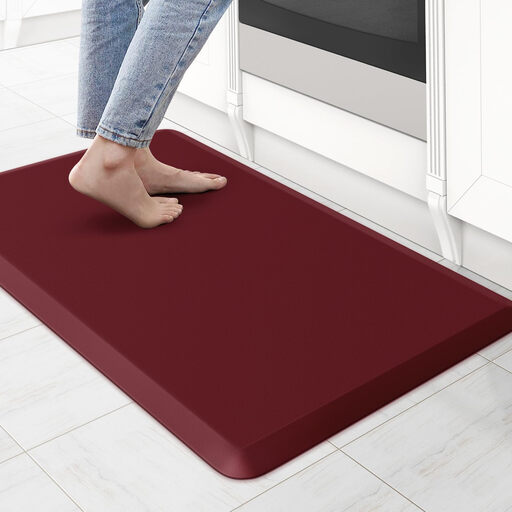
Key Features: This model is functionally identical to our first recommendation but offers a visual alternative to standard black and grey with its red colour. The high-density foam core, with a thickness of 1.2 cm (0.47 inches), encourages micro-movements in the leg muscles, which can help improve circulation.
Benefits:
Best for: Users who value aesthetics as much as functionality and want to add a pop of colour to their office, kitchen, or hobby room. The dimensions of 71 x 44 cm (28 x 17.3 inches) are suitable for many standard applications.
The mats featured here are designed for flat, indoor floors. If you are looking for a flooring solution for areas with special requirements, such as basements, garages, or damp environments, other products may be more suitable. For such applications, durable flooring with a studded texture is a great option.
Explore our selection of studded basement floor mats here.
1. How does an anti-fatigue mat work? An anti-fatigue mat has a yielding surface that encourages the body to make unconscious, minimal balancing movements. These micro-movements in the leg and calf muscles can promote blood circulation, preventing blood from pooling in the legs. This can help reduce fatigue and discomfort associated with prolonged standing.
2. How thick should an ergonomic mat be? A common thickness for effective anti-fatigue mats is between 1.2 cm and 2.0 cm. A mat in this range typically provides good cushioning without being so thick that it compromises stability or poses a significant tripping hazard. The choice also depends on your body weight and personal preference.
3. Can you use an anti-fatigue mat with shoes? Yes, most anti-fatigue mats are designed to be used with or without shoes. Their durable surfaces can withstand the wear and tear from common footwear like trainers or flat office shoes. However, using them with sharp heels (like stilettos) is not recommended, as they can permanently damage the mat's surface.
From your Joybuy Product Recommendation Officer