
Lieferung heute & morgen

Qualitätsgarantie

Willkommens-Angebote freischalten: KOSTENLOSE Lieferung | Bis zu 80 % RABATT | Kostenlose 30-Tage-JoyPlus-Testphase
App herunterladen
Standing for long periods on hard floors, whether at a standing desk in your home office, at the kitchen counter, or at a workbench, can lead to noticeable strain on your feet, legs, and back. A suitable floor mat can offer significant relief. However, the selection is vast, and the differences are in the details.
This article serves as a guide. It highlights the essential features you should consider when making your choice and introduces various models to provide a solid foundation for making an informed decision for your specific use case.
To find the right mat for your needs, several functional criteria should be considered. The following points will help you objectively compare the features of different models.
The material is crucial for a mat's comfort and durability. Common materials include polyurethane (PU), PVC foam, or rubber. A padded floor mat with sufficient thickness (often between 1.5 cm and 2.5 cm) offers a good balance of cushioning and stability. The material should be elastic enough to distribute pressure but also firm enough to prevent you from sinking through. This encourages unconscious micro-movements in the leg muscles, which can support blood circulation.
A non-slip kitchen mat or workshop mat must be safe above all else. Look for a textured underside that grips reliably on smooth floors like tile or laminate. Bevelled edges are another important safety feature. They reduce the risk of tripping and make it easier to step on and off the mat. The surface should also be easy to clean and resistant to liquids and dirt, especially in the kitchen or workshop.
The size of the mat should fit the location where it will be used. A standing desk mat should offer enough space to easily change your standing position without having to step off the mat. For a mat for a standing workstation, a rectangular shape is often ideal. Measure the available space before purchasing to ensure the mat fits while still allowing enough freedom of movement.
Based on the criteria mentioned, we have compiled a selection of products that cover different requirements and applications.
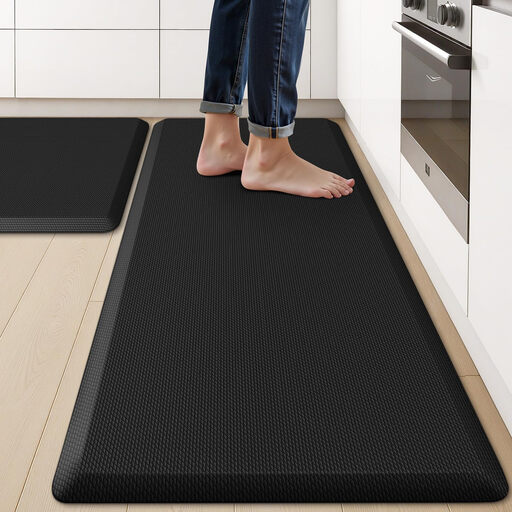
Why it stands out This mat is specifically designed as an ergonomic workstation mat. It is made of high-density PVC with an internal honeycomb structure that provides lasting rebound and pressure relief. The extra-thick padding aims to reduce the strain on legs and back during long periods of standing.
Benefits
Who is it for? This model is a functional solution for individuals seeking targeted ergonomic support at a standing workstation, in a workshop, or in the kitchen, who also value durability and safety.
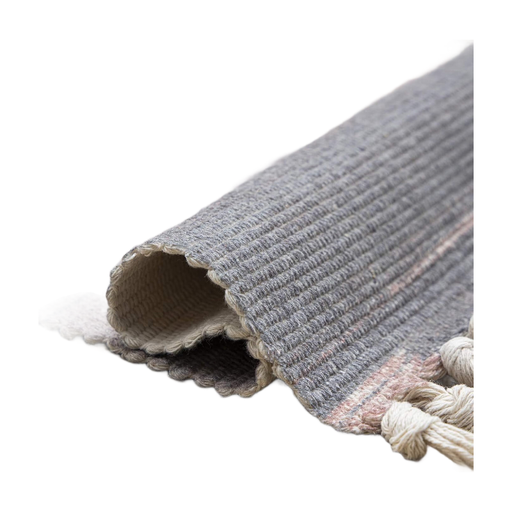
Why it stands out This rug combines a soft feel with a decorative design. Instead of technical foam, it uses a high-pile cotton-polyester blend with hand-woven details. It provides a comfortable, soft surface that is particularly suitable for barefoot areas.
Benefits
Who is it for? Ideal for users looking for a stylish and comfortable floor covering for areas with shorter standing times, where aesthetics are a priority. It is less of a technical anti-fatigue mat and more of a soft, decorative rug.
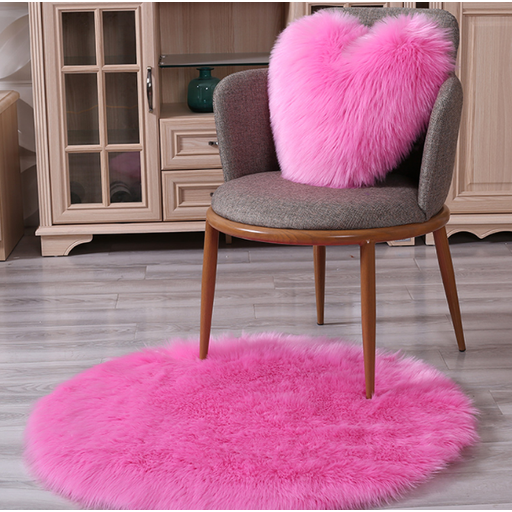
Why it stands out With its high-pile faux wool, this round rug offers an exceptionally soft and inviting surface. The integrated non-slip rubber backing ensures stability on smooth floors. It serves as a warm and comfortable accent in living rooms or bedrooms.
Benefits
Who is it for? This model is aimed at people looking for a decorative and very soft rug to add warmth and cosiness to a room. It offers general comfort on hard floors but is not primarily designed for ergonomic support during long periods of standing.
The products presented cover a range of needs, from functional ergonomics to decorative comfort. If you are looking for other styles, sizes, or materials, you may find a suitable alternative in our broader selection.
? Discover more runners and rugs here
1. What does an anti-fatigue mat do? An anti-fatigue mat provides a cushioned surface that encourages the body to make subtle, unconscious balancing movements. These micro-movements in the leg and calf muscles can promote blood circulation, helping to reduce the fatigue and static load caused by standing for long periods on a hard surface.
2. How thick should an ergonomic workstation mat be? A common recommendation for thickness is between 1.5 cm and 2.5 cm. A mat in this range typically offers good cushioning without being too soft, which could lead to instability. However, the optimal thickness also depends on the user's body weight and personal preference.
3. Can you use an anti-fatigue mat with an office chair? Most anti-fatigue mats are designed for standing. The casters of an office chair can damage the soft material. Additionally, the surface is often too pliable to move a chair on it easily. There are specialised mats designed for combined use with chairs and standing desks, which often have a firmer surface. However, using a standard anti-fatigue mat with a chair is not recommended.