
Lieferung heute & morgen

Qualitätsgarantie

Willkommens-Angebote freischalten: KOSTENLOSE Lieferung | Bis zu 80 % RABATT | Kostenlose 30-Tage-JoyPlus-Testphase
App herunterladen
Prolonged standing, whether at a standing desk in the office, in the kitchen while cooking, or at a workbench, can cause long-term strain on your feet, legs, and back. Hard floors offer no cushioning, which can lead to muscle fatigue and tension. An anti-fatigue mat is designed to reduce this very strain by creating a cushioned yet supportive surface.
This article serves as your guide. It explains the key criteria to consider when making your selection and presents several models with different features to help you choose the right standing mat.
The selection of mats is vast, but not every model is suitable for every purpose. Three key criteria will help you make an informed decision.
The core of any anti-fatigue mat is its material. High-density PVC foam or polyurethane are commonly used. These materials offer a good balance of softness and supportive firmness. A cushioned mat for the office or workshop should be pliable enough to absorb pressure but firm enough to provide stability and prevent bottoming out.
Thickness is another crucial factor. Mats with a thickness between 1.2 cm and 2.5 cm (approx. 0.5 to 1 inch) are common. A thicker mat generally offers more cushioning, which can be beneficial for very long periods of standing. Look for terms like "high-density," as this indicates a durable material that will retain its shape even with regular use.
The mat's dimensions should fit your workspace. Do you need an elongated kitchen mat that allows you to move between the sink and the counter, or a compact mat for your standing desk that covers only the immediate standing area? Measure the available space before making a decision.
The surface should be easy to clean, especially in a kitchen or workshop. Water- and stain-resistant materials are a plus. A textured surface can also increase slip resistance for your feet.
A good workstation mat must be safe. A non-slip base is essential to prevent the mat from sliding on smooth floors like tile, laminate, or hardwood. Many models feature a special rubberised or textured pattern on the underside.
Bevelled edges are another key safety feature. They reduce the risk of tripping by creating a smooth transition from the floor to the mat. This is especially important in areas with high foot traffic.
Based on the criteria above, we've compiled a selection of products that cater to different needs and applications.
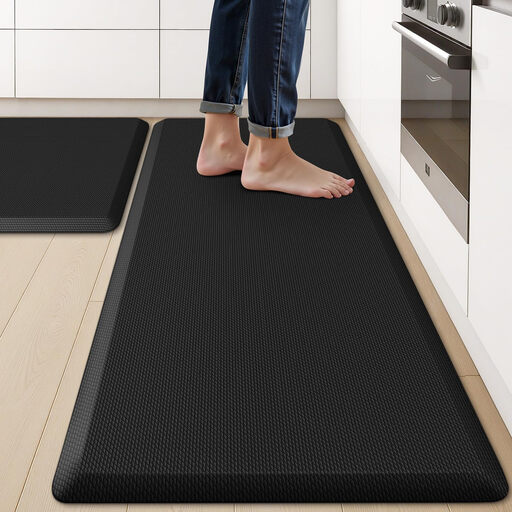
Why it stands out: This model combines a generous surface area with extra-thick cushioning. According to the manufacturer, the mat is made of high-density PVC with an internal honeycomb structure designed for lasting rebound. Measuring 101.5 x 44 cm, it offers plenty of room to move.
Pros:
Who it's for: Individuals looking for a durable, large-area mat for high-use environments like the kitchen, garage, or a spacious office with a standing desk.
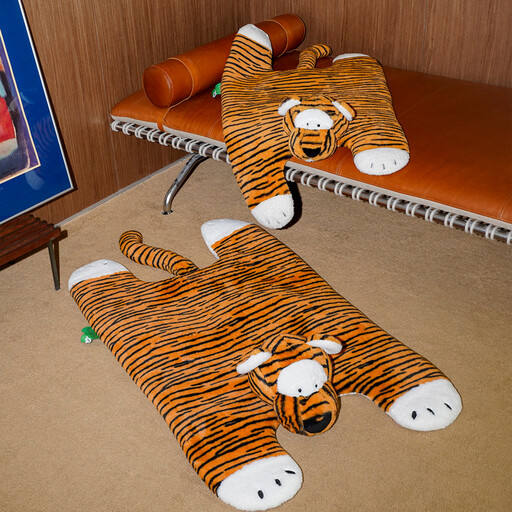
Why it stands out: This product is an unconventional choice. It's a multi-function mat originally designed as a spacious bed for pets. Its eye-catching tiger design and soft plush surface set it apart from typical ergonomic mats. At 110 x 55 cm, it is exceptionally large.
Pros:
Who it's for: Users looking for a visually appealing and comfortable mat for a private space (e.g., a home office) who prioritise aesthetics over specific ergonomic features. It's an interesting option for creative environments where comfort and style are paramount.
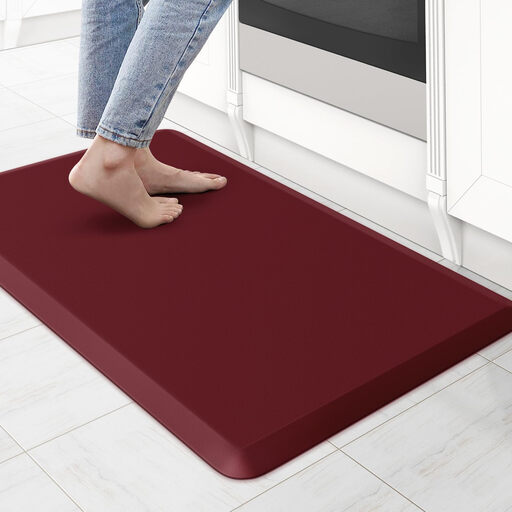
Why it stands out: This model is a compact and colourful solution. With a thickness of 0.47 inches (approx. 1.2 cm) and a high-density foam filling, it provides a solid foundation for short to medium standing periods. The bright red colour adds a pop of colour to any room.
Pros:
Who it's for: Users with limited space who need a functional mat for a standing desk or a specific workstation in a workshop and prefer a colourful alternative to standard black mats.
The products featured here cover only a small fraction of the available range. Every work environment and individual has unique requirements for size, material, and design.
If you'd like to compare more models and styles to find the perfect solution for you, browse our wider selection in the Standing Floor Mats category.
A common thickness for anti-fatigue mats is between 1.2 cm and 2.5 cm (approx. 0.5 to 1 inch). Thinner mats are often firmer and more stable, while thicker mats offer more cushioning. The choice depends on personal preference and the duration of standing. For very long work periods, a thicker mat can be more advantageous, as long as it provides sufficient support and isn't too soft.
An ergonomic floor mat is designed to reduce pressure on the feet, legs, and back. The yielding surface encourages minimal, subconscious micro-movements in your leg muscles. These micro-movements can promote circulation and counteract the static, rigid posture that often leads to muscle tension. While a mat is not a substitute for a fully ergonomic workstation setup, it can be a key component in reducing the strain caused by prolonged standing.
Most anti-fatigue mats are not designed to be used with office chairs, especially those with casters. The wheels can exert high point pressure, permanently damaging or even puncturing the foam material. These mats are intended exclusively for standing. If you need a mat for a combined sit-stand workstation, it should be easy to slide aside when the chair is in use.