
Lieferung heute & morgen

Qualitätsgarantie

Willkommens-Angebote freischalten: KOSTENLOSE Lieferung | Bis zu 80 % RABATT | Kostenlose 30-Tage-JoyPlus-Testphase
App herunterladen
By Joybuy Product Recommendation Officer, July 28, 2026
Prolonged standing, whether at a standing desk in the office, in the kitchen, or in a workshop, can lead to noticeable discomfort in your feet, legs, and back. An anti-fatigue mat is designed as a simple and effective solution to increase comfort during standing activities. However, the market offers an overwhelming variety, and not every product lives up to its promise.
Many buyers invest in a mat only to find that it becomes unusable after a short time or fails to solve the problem. This guide highlights the most common pitfalls and explains which core features you should look for to make an informed decision.
Before you make a purchase, it's important to understand the typical flaws that can render a seemingly good mat useless.
To avoid the pitfalls mentioned above, focus on objective, measurable criteria. These three parameters are crucial for the functionality and longevity of your mat.
Thickness alone is not a sign of quality. What's crucial is the material density. A high-quality ergonomic workstation mat is made of high-density foam (e.g., PVC or polyurethane) that provides controlled give without collapsing. This promotes micro-movements in the leg muscles, which stimulates blood circulation and reduces fatigue. A thickness between 1.2 cm and 2.5 cm is a good benchmark, but only in combination with a high density that ensures lasting support. A thinner, dense mat is often more effective than a thick but overly soft office comfort mat.
A reliable kitchen mat must be non-slip. Look for a textured underside with a clear pattern (e.g., a wave or nub profile) that grips various floor types. Another important safety feature are beveled edges. They significantly reduce the risk of tripping and ensure the mat lies flat on the floor without the edges curling up. This is especially important for a floor protection mat at a standing workstation, where movement is frequent.
The mat must fit the workspace. For a standing desk mat, the surface area should be large enough to allow for a natural stance and slight changes in position. Measure the available space before buying. For a rubber mat in the workshop or hobby room, a larger or even a modular mat may be useful to cover a wider area.
Here are some recommendations tailored to different user profiles and applications.
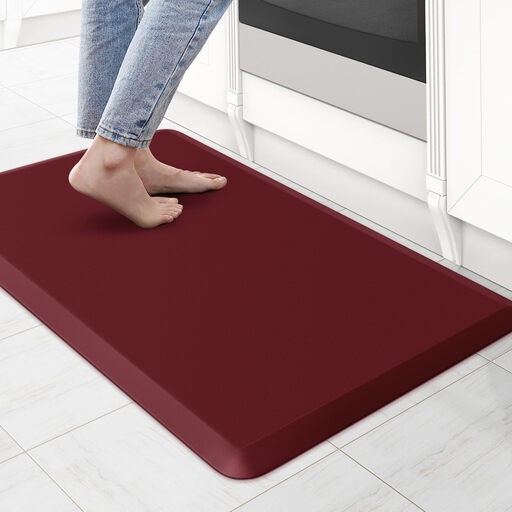
Why it's a good fit: With its standard size and balanced density, this mat is a solid choice for daily use at a standing desk or in front of a kitchen counter. It provides noticeable relief without being too dominant in the room.
The high-density foam prevents sinking and provides sustainable support, thereby avoiding the "too-soft" trap. The non-slip base ensures stability on common hard floors.
A great balance of cushioning and support. The surface is also easy to clean and resistant to moisture.
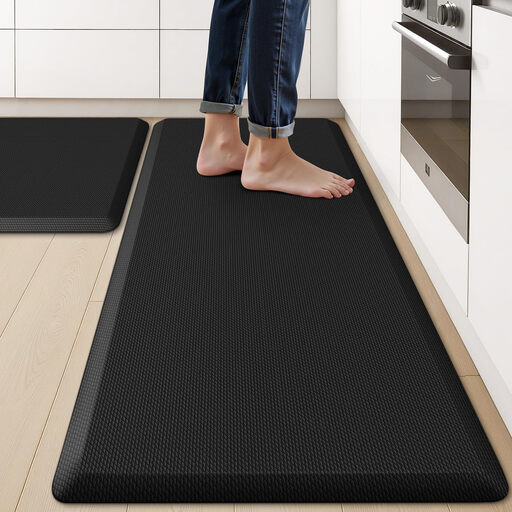
Why it's a good fit: For people who stand for many hours a day or work in demanding environments like workshops, garages, or labs. The larger surface area and robust construction are designed for heavy-duty use.
The construction of high-density PVC with a honeycomb structure offers superior rebound and durability. The surface is completely waterproof and stain-resistant, which minimises cleaning effort.
Maximum durability and support for intensive use. The beveled edges and wave-patterned underside offer enhanced safety.
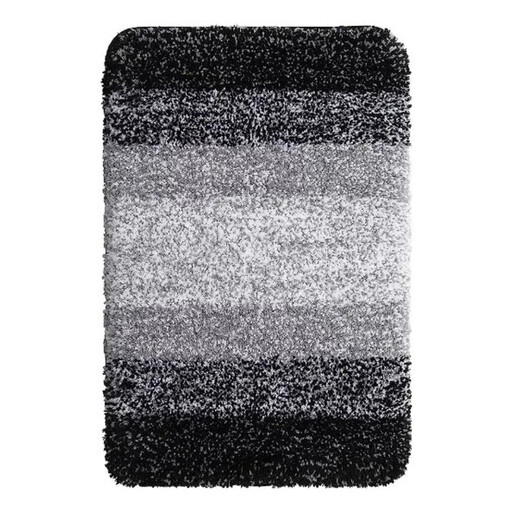
Why it's a good fit: For users who prioritise aesthetics and only stand for shorter periods, such as in an entryway, bathroom, or at a kitchen island. It combines design with basic comfort.
Although it's not a dedicated anti-fatigue mat, it addresses the safety aspect with its reliable non-slip backing. Its low profile prevents doors from catching and reduces tripping.
Modern gradient design that blends well into living spaces. The mat is also machine-washable and easy to care for.
We have compiled a complete, up-to-date list of products that fully meet these strict selection criteria and rigorous safety standards.
Most mats made of PVC or foam are water-resistant and can be simply wiped down with a damp cloth and mild detergent. For tougher stains in the kitchen or workshop, a completely waterproof surface is advantageous. Always follow the manufacturer's care instructions, as some materials cannot tolerate harsh chemicals.
Thickness is secondary to material density. A typical range is between 1.2 cm and 2.5 cm. A very thick but soft mat can be counterproductive. A thinner mat with high density often provides better, more active support because it encourages the muscles to make minimal balancing movements instead of letting the foot sink in passively.
You can identify good slip resistance by examining the underside of the mat. Look for a clearly defined, grippy texture (e.g., nubs, grooves, or a wave pattern) instead of a smooth surface. The material of the base (often rubber or PVC) should be suitable for the flooring in your home or workplace. Beveled edges that lie flat on the floor also contribute to stability and safety.