
Lieferung heute & morgen

Qualitätsgarantie

Willkommens-Angebote freischalten: KOSTENLOSE Lieferung | Bis zu 80 % RABATT | Kostenlose 30-Tage-JoyPlus-Testphase
App herunterladen
By: Joybuy Product Recommendation Officer
Standing for long periods on hard floors, whether at a standing desk in your home office, cooking in the kitchen, or working in a workshop, often leads to fatigue in the feet, legs, and back. An anti-fatigue mat is a functional solution designed to increase comfort during standing activities. This article serves as a guide to understanding the essential features of such a mat and helps you select a model that fits your needs.
Selecting a suitable mat depends on a few key product features. Instead of being swayed by marketing promises, it's wise to focus on objective criteria.
The core of any ergonomic floor mat is its material. Mats made of high-density foam offer a balanced combination of cushioning and support. They yield under body weight to distribute pressure on the soles of the feet, joints, and lower spine. Sufficient thickness is crucial. A thickness of about 1.2 cm (0.47 inches) has proven practical, as it provides noticeable cushioning without creating a tripping hazard or compromising stability. The material should also be shape-retaining to maintain its supportive function even with daily use.
Safety is an aspect that cannot be overlooked, especially when the mat is used in areas like the kitchen where the floor can get wet. A good kitchen mat should be non-slip. Look for a textured surface that provides grip even when wearing socks or slippers. Equally important is a non-slip underside that ensures the mat stays firmly in place on smooth floors like tile, laminate, or hardwood. This prevents the mat from shifting during use and minimises the risk of accidents.
The dimensions of the mat should match its intended use. For a workspace at a standing desk, a mat is needed that provides enough room for small weight shifts and changes in position. A size of approximately 70 x 44 cm is often sufficient for this purpose. In a workshop or a larger kitchen, a longer workstation mat can be advantageous to cover a wider range of movement. Measure the available space before purchasing to ensure the mat fits while still allowing enough freedom of movement.
Based on the criteria mentioned above, we have compiled a selection of mats that stand out for their functional properties.
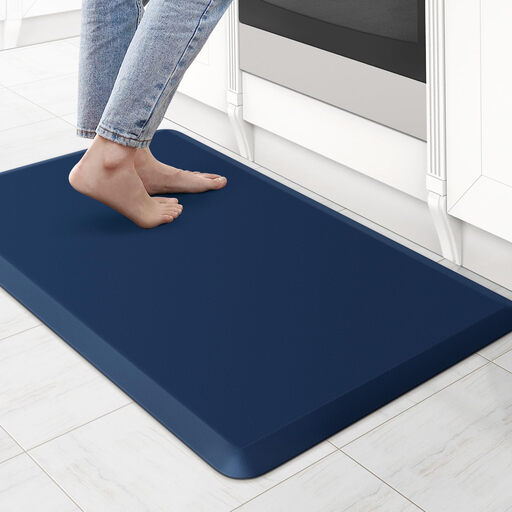
Why it stands out: This model combines a functional thickness of 1.2 cm with a high-density foam core. The matte black, textured surface is discreet and practical, while the non-slip base ensures stability on various floor types.
Advantages:
Who is it for? Ideal for home office users looking for a discreet and functional standing mat for their desk. It is also well-suited as a workstation mat in garages or workshops due to its robust construction.
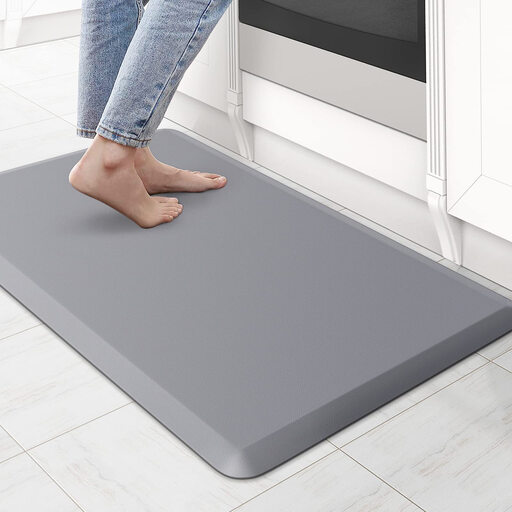
Why it stands out: This version offers the same technical features as the black model but in a neutral grey tone. It blends seamlessly into modern living and office environments without being visually overpowering.
Advantages:
Who is it for? A great choice for individuals who value a cohesive aesthetic and are looking for a mat that harmoniously integrates into bright or minimalist-designed rooms.
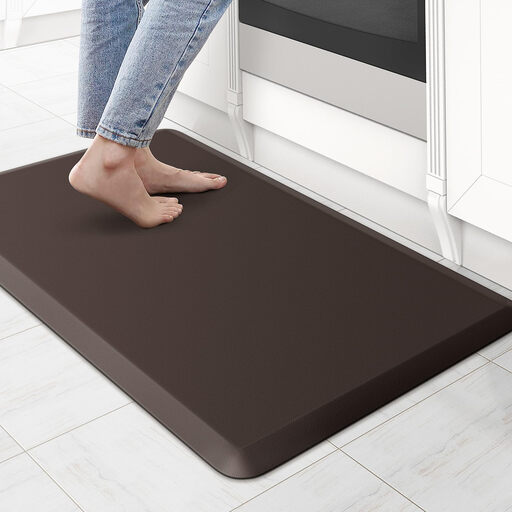
Why it stands out: The brown version appeals to users who prefer a warmer colour palette. It pairs well with wood floors or classic office furniture while offering the same reliable support and functionality.
Advantages:
Who is it for? Perfect for users seeking a functional mat that visually integrates well into environments with wood elements or a traditional decor, whether in the office or the home kitchen.
The products presented here represent a curated selection. If you are looking for other solutions or complementary accessories for your ergonomic workspace, you can find additional options in our broader product category.
Discover our full range of home office desk accessories and find the right equipment for your needs.
An anti-fatigue mat is designed to improve comfort while standing on hard surfaces. The yielding yet supportive surface encourages subtle micro-movements in the leg muscles. This can promote circulation and help reduce the strain on the feet, legs, and lower back. It is often considered a supportive mat for back pain and leg fatigue in the context of long standing periods.
Most anti-fatigue mats are very easy to care for. The surfaces are typically water- and dirt-resistant. To clean, it is usually sufficient to wipe the mat with a damp cloth and, if necessary, a mild cleaning agent. Avoid harsh chemicals or abrasive tools, as they could damage the material.
Not necessarily. While a certain thickness is necessary for cushioning, an excessively thick or overly soft mat can be unstable and affect your balance. An optimal mat offers a balance of cushioning and firm support. A thickness of about 1.2 to 2 cm is considered effective and safe for most applications.