
Lieferung heute & morgen

Qualitätsgarantie

Willkommens-Angebote freischalten: KOSTENLOSE Lieferung | Bis zu 80 % RABATT | Kostenlose 30-Tage-JoyPlus-Testphase
App herunterladen
A well-chosen TV backlight can fundamentally transform your viewing and gaming experience. It not only creates an inviting atmosphere but can also enhance perceived picture quality and reduce eye strain. However, the market is filled with products whose marketing promises often suggest more than the technology can deliver. This guide will help you avoid common pitfalls and make an informed decision for your home cinema or gaming room.
Before you invest, you should be aware of the typical problems that arise from hasty purchases. Many users are disappointed because budget-friendly products often fail to implement essential features adequately.
To make the right choice, focus on the following core parameters. They are the primary determinants of the quality and functionality of your new TV backlight.
The type of LEDs used is fundamental to the lighting experience.
The method the lighting system uses to capture colours from the screen is another critical factor.
Pay close attention to the length specifications of the LED strip and the recommended TV size. A strip that is too short will result in unlit corners, while one that is too long looks messy and disrupts the light distribution. Measure the perimeter of the back of your TV to ensure the length is correct.
Instead of making a one-size-fits-all recommendation, we have curated products for different user groups and their specific needs.
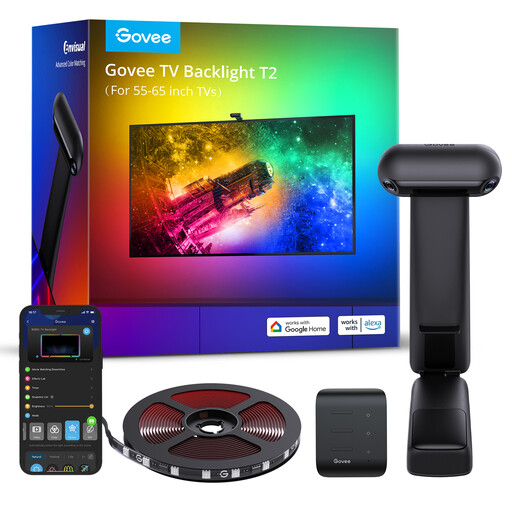
Why This Fits Their Persona: These users seek maximum immersion for films and series. The T2 system works with any video source and is designed for more precise colour capture, especially at the screen edges, thanks to its dual-camera structure.
Directly addresses the pitfall of inaccurate colour sync by using an enhanced dual-camera technology that promises higher sampling density and accuracy.
RGBIC technology for segmented colour display. Works with all TV content, including native apps.

Why This Fits Their Persona: For this user group, a clean aesthetic and seamless integration are paramount. A TV stand with LED lighting combines furniture and ambient lighting into one elegant solution.
Completely solves the problem of cable clutter and poor adhesion, as the lighting is permanently integrated into the furniture. The result is tidy and high-end from the start.
Combines storage and lighting in one piece of furniture. The high-gloss finish and 16 selectable colours suit modern interior design concepts.
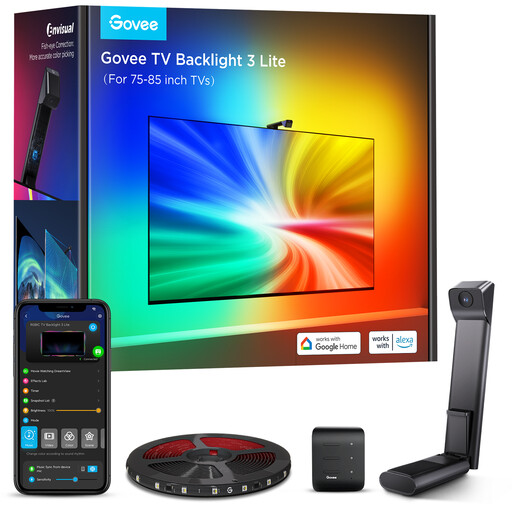
Why This Fits Their Persona: Gamers need responsive lighting for their gaming room lighting. This Govee TV Backlight uses a fisheye camera for wide colour capture and RGBICW technology for vibrant colours and pure white, intensifying the gaming atmosphere.
Avoids the RGB trap by using RGBICW, which allows for segmented and more colour-intensive display. The Govee algorithm is optimised for low latency, which is crucial for fast-paced gameplay.
Smart home integration (App, Alexa, Google Assistant) and special gaming and music modes. The version for large TVs (75-85 inches) is ideal for immersive setups.
We have compiled a complete, up-to-date list of products that fully meet these strict selection criteria.
1. Does a TV backlight really reduce eye strain? Indirect lighting behind the TV can reduce the harsh contrast between a bright screen and a dark wall. This effect, known as bias lighting, is perceived by many users as more comfortable for the eyes, especially during long movie or gaming sessions. However, it is not a medical treatment for eye conditions.
2. How much power does a TV LED strip consume? The power consumption of modern LED systems is typically very low. Most products are designed for energy efficiency. The exact consumption is stated on the product's energy label in watts (W) or kilowatt-hours per 1000 hours of operation (kWh/1000h). For example, the manufacturer states a consumption of 5 watts for the Govee TV Backlight 3 Lite, which corresponds to energy efficiency class G.
3. Can I cut an LED strip if it's too long for my TV? This depends heavily on the specific product. Simple, single-colour or RGB strips often have marked cutting points. For complex RGBIC systems with camera synchronisation, such as the Govee Envisual T2, cutting is strongly discouraged as it can permanently damage the integrated circuits and the functionality of the entire system. Always check the manufacturer's instructions before making any modifications.