
Lieferung heute & morgen

Qualitätsgarantie

Willkommens-Angebote freischalten: KOSTENLOSE Lieferung | Bis zu 80 % RABATT | Kostenlose 30-Tage-JoyPlus-Testphase
App herunterladen
By Joybuy Product Recommendation Officer, August 30, 2026
The search for an effective anti-wrinkle night cream can quickly feel overwhelming. The market is saturated with products promising instant results and revolutionary ingredients. But not every cream delivers on its marketing claims. Many formulations fail to produce the desired results because crucial details are overlooked. This guide will help you cut through the noise and make an informed decision for your nightly skincare routine.
Before you invest, it's important to recognise common marketing traps that often lead to disappointment.
To find a suitable firming night cream, you should focus on objective and verifiable product features. The following three parameters are crucial.
The effectiveness of a cream for wrinkles depends heavily on its active ingredients. Look for proven substances in relevant concentrations.
A rich cream for dry, mature skin can clog pores on oily or blemish-prone skin. The base of the formulation is therefore just as important as the active ingredients.
Some of the most effective anti-ageing ingredients, especially retinol and Vitamin C, are unstable and quickly lose their potency when exposed to air and light. A simple jar that is opened for every use is not ideal for such formulations. Look for opaque and airtight packaging like pump dispensers or aluminium tubes to ensure the product's effectiveness down to the last drop.
Based on the criteria above, we have compiled a few products for different needs and priorities.
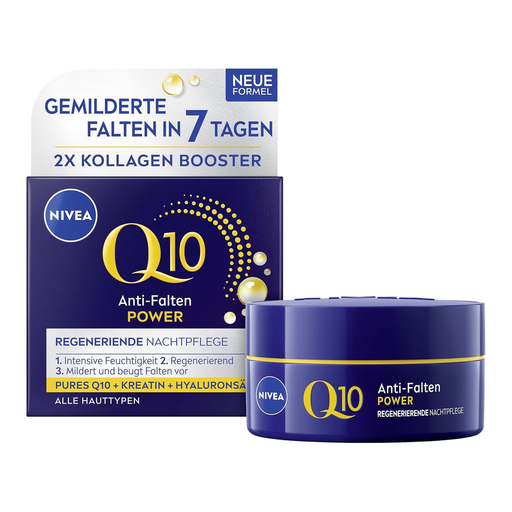
Why it's a match: Ideal for anyone looking for a reliable and affordable moisturising night cream with a proven antioxidant. The formula is straightforward, focusing on overnight regeneration and hydration.
The product relies on the well-researched active ingredient Coenzyme Q10 instead of making vague promises. It bypasses the "active ingredient illusion" by concentrating on a solid, antioxidant base.
Supports skin regeneration overnight with Q10 and Creatine. Provides intensive moisture thanks to shea butter and glycerin.
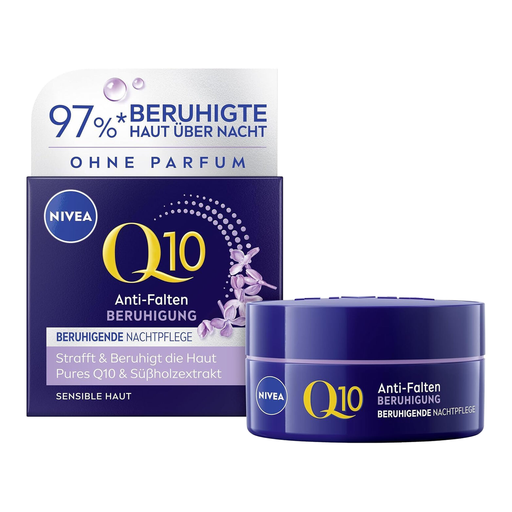
Why it's a match: A targeted solution for sensitive skin that desires an anti-wrinkle effect without risking redness or irritation. The formula combines the power of Q10 with skin-soothing properties.
This product goes beyond blanket age recommendations to address a specific skin need. The fragrance-free formula and the addition of licorice root extract are clear indicators of a care routine focused on sensitivity.
Specially developed for sensitive skin and dermatologically approved. Soothes the skin overnight and provides intensive moisture.
We've compiled a complete, up-to-date list of products that fully meet these strict selection criteria and local safety regulations.
There's no fixed age. The need for an anti-wrinkle night cream depends on your individual skin condition. The first fine lines, often caused by dryness, can appear as early as your late 20s or early 30s. From this point on, a preventative, moisturising, and regenerating night care routine can be beneficial to maintain skin elasticity and slow the signs of ageing.
The frequency of use depends on the retinol concentration and your skin's individual tolerance. It is recommended to start by applying it every two to three nights and observing your skin's reaction. If no excessive dryness or irritation occurs, you can slowly increase the frequency to daily use. Important: When using retinol products, sunscreen the following day is essential, as retinol makes the skin more sensitive to light.
The main difference lies in their function and formulation. A regenerating night cream is typically richer and contains higher concentrations of active ingredients that support the skin's repair process overnight. It does not contain sunscreen. A day cream is usually lighter, acts as a shield against environmental aggressors, often contains antioxidants and ideally a Sun Protection Factor (SPF), and provides a good base for makeup.