
当日/次日达

品质保障

开启新人专享福利: 全场免邮 | 低至 2 折 | 免费试用 30 天 JoyPlus 会员
下载 Joybuy
An Anycubic resin 3D printer is ideal for miniatures, figurines, prototypes, jewellery models and highly detailed components. At first glance, choosing one seems simple: a high K rating, fast print speeds and a suitable UV resin. In practice, however, several technical details determine whether a printer is right for your intended use and available workspace.
A specification such as 10K or 14K mainly describes the resolution of the exposure screen. For fine details, the effective X/Y pixel size, light distribution and mechanical stability of the Z-axis are also important. A 14K device is not automatically more suitable for every project than a 10K resin 3D printer. A compact model may be perfectly adequate for small figurines, while build volume is also important for larger prototypes.
Figures such as 120, 150 or 170 mm/h refer to specific conditions, usually a layer height of 0.1 mm and a compatible High-Speed Resin. Different values may apply when using Standard Resin. Exposure time, temperature, model geometry, support structure and release film all affect actual throughput. Maximum speed should therefore not be your only buying criterion.
An LCD resin 3D printer processes UV resin, but requires a properly matched profile. Standard Resin, ABS-Like Resin and water-washable resin differ in their exposure requirements, cleaning process and mechanical properties. Post-processing is also part of the system: models must be cleaned, dried and post-cured under UV light. A Wash & Cure Station can simplify the process, but it does not replace the necessary protective equipment and ventilation.
For miniatures and jewellery models, a fine X/Y resolution and even exposure are important. According to the product specifications, the Photon Mono 4 Ultra features a 7-inch 10K monochrome LCD, an X/Y resolution of 17 × 17 μm and a build volume of 153.4 × 87 × 165 mm. The Photon Mono 4 also uses 10K resolution and offers this compact build volume.
The Photon Mono M7 and Photon Mono M7 Pro, on the other hand, offer a build volume of 223 × 126 × 230 mm, equivalent to around 6.5 litres. This size is practical for larger models, printing several miniatures in one go and creating prototypes. For the Photon M7, the manufacturer specifies a 10.1-inch 14K LCD and an X/Y resolution of 16.8 × 24.8 μm.
A high-speed 3D printer needs a stable Z-axis because forces are generated as each layer is released. According to the product specifications, the Photon Mono M7 reaches up to 150 mm/h with High-Speed Resin 2.0. Under the stated conditions, the Photon Mono M7 Pro can reach up to 170 mm/h. Both models use dual linear guides with a specified precision of 10 μm.
For smaller prints, the Photon Mono 4 Ultra can be sufficient, offering speeds of up to 120 mm/h with High-Speed Resin. According to the product specifications, the Photon Mono 4 reaches up to 70 mm/h with high-speed material. When comparing models, you should also check whether automatic levelling, power-loss recovery, Wi-Fi or automatic resin refilling are important to you.
Many available resins operate in the range of 365–405 nm and are designed for LCD, DLP or SLA systems. Even so, you should follow the specifications for the individual printer and the recommended exposure profile.
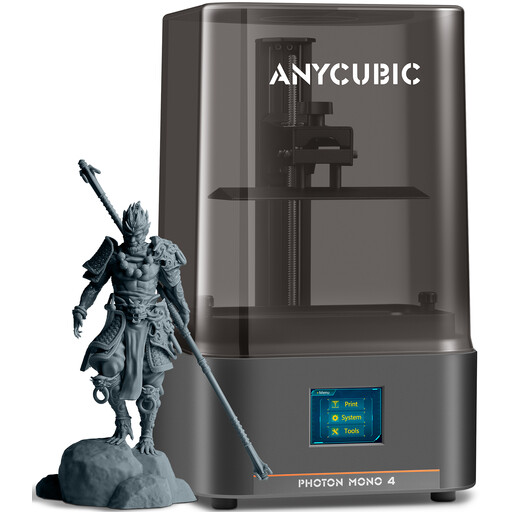
Why this product suits this profile: This compact model is ideal for a desk, miniatures, figurines and initial prototypes. Its 2.2-litre build volume limits the size of larger models, but keeps its space requirements manageable.
The 10K resolution is supported by specific details on the 17-μm pixel size and build volume. The maximum speed is transparently stated as up to 70 mm/h with High-Speed Resin.
7-inch 10K monochrome LCD, 153.4 × 87 × 165 mm build volume and support for Standard, ABS-Like and water-washable resin.
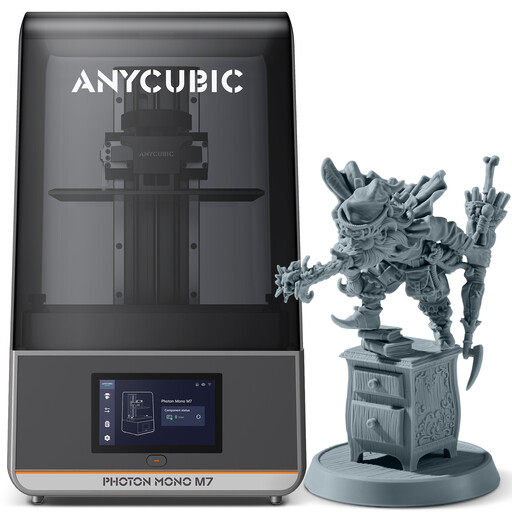
Why this product suits this profile: The larger build volume and 14K resolution are designed for highly detailed models, multiple miniatures and larger prototypes.
The stated 150 mm/h applies when using High-Speed Resin 2.0. According to the product specifications, speeds of up to 90 mm/h are intended for Standard Resin.
223 × 126 × 230 mm build volume, 10.1-inch 14K LCD, dual linear guides and, according to the product specifications, set-up without levelling.
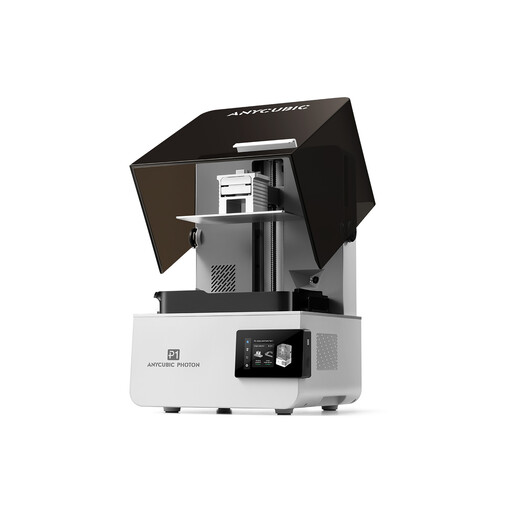
Why this product suits this profile: The combination of a 14K LCD, Auto-Leveling 3.0, a temperature-controlled resin vat and support for more viscous resins is aimed at regular use and more demanding models.
The material specification is precise: according to the product specifications, the printer is designed for resins with a viscosity of up to 8000 cps. Its 6.5-litre build volume remains suitable for larger projects.
Dual-rail and ball-screw system, Auto-Leveling 3.0 with feedback, plus support for Chitubox, Lychee and Tango according to the product description.
In addition to the purchase price, you will need resin, isopropanol or a suitable cleaning solution, nitrile gloves, protective goggles, filters, replacement films and UV post-curing. A Wash & Cure Station reduces manual work. According to the product specifications, the Anycubic Wash & Cure 3 offers a cleaning volume of 165 × 100 × 180 mm. The larger Wash & Cure 3 Plus has a stated cleaning volume of 230 × 140 × 260 mm, making it more suitable for larger models or multiple parts.
Liquid resin must not come into contact with skin or eyes. The printer should be kept in a well-ventilated, dry area away from direct sunlight. Liquid resin residues and contaminated cleaning solutions must be handled in accordance with the product instructions and local disposal requirements. According to the product specifications, fully cured resin residues are classified as plastic waste.
We have put together a complete, regularly updated list of products that fully meet these strict selection criteria and the safety regulations applicable in the EU.
For general models and figurines, Standard Resin is a sensible starting point. ABS-Like Resin may be more suitable for functional prototypes. Water-washable resin simplifies cleaning, but requires wastewater to be handled properly. The key factors are always the 365–405 nm wavelength and the correct printing profile.
Service life depends on print volume, cleaning, resin quality and how the LCD, protective film and FEP or ACF film are handled. Cured resin residues should be removed immediately. Replacement and protective films are typical wear parts; the LCD itself should be protected from direct contact with resin.
For occasional small prints, manual cleaning with suitable equipment is sufficient. With regular use, numerous miniatures or larger prototypes, a Wash & Cure Station can save time and streamline the washing and UV post-curing processes. The appropriate size should be based on the printer’s build volume and the dimensions of your models.