
Lieferung heute & morgen

Qualitätsgarantie

Willkommens-Angebote freischalten: KOSTENLOSE Lieferung | Bis zu 80 % RABATT | Kostenlose 30-Tage-JoyPlus-Testphase
App herunterladen
An app-controlled pet feeder promises to make daily life for pet owners significantly easier. The ability to control feeding times and portions via a smartphone offers flexibility and peace of mind, especially when you're away. However, the market is crowded, and not every device delivers on its promises. Before you make a decision, it's crucial to understand the common pitfalls that often only become apparent after the purchase.
Three common problems with automatic pet feeders include:
To avoid these pitfalls, you should base your choice on objective technical parameters. A good smart pet feeder is defined by more than just its app.
The connection type is fundamental. A Wi-Fi pet feeder is the most common option but requires a stable 2.4 GHz network. An alternative is connecting via protocols like Zigbee, which often run more stably but require a separate hub. Regardless of the connection technology, a backup power supply using batteries is a must-have. It ensures that the feeding schedule, stored locally on the device, runs reliably even during a power outage.
The material of the food bowl directly impacts your pet's health. Bowls made of stainless steel or ceramic are preferable to plastic. They are non-porous, which makes it harder for bacteria to adhere, and can be cleaned more hygienically. Ensure that the food container, dispensing mechanism, and bowl can be easily disassembled without tools. This is the only way to guarantee thorough and regular cleaning.
The app control should allow for granular scheduling. A good programmable cat feeder or a model for automatic dog feeding allows you to set multiple meals per day. Check how finely the portion size can be adjusted. Precise measurements in grams or small volume units are a sign of a high-quality device. The functionality of a feeder with a timer is enhanced by the app, which lets you adjust schedules anytime, from anywhere.
Based on these criteria, we have identified several models suitable for different requirements and user profiles.
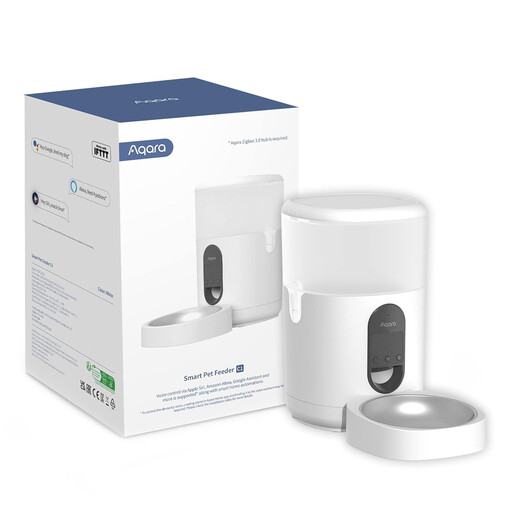
Why It's a Match: Ideal for users who already own or are building a smart home system. Integration into ecosystems like Google Assistant, Alexa, and Siri (via scenes) allows for centralised control and automation alongside other devices.
Connection via the Zigbee 3.0 protocol (hub required) provides a more stable and reliable link than Wi-Fi alone, minimising the risk of failure. The backup battery power supply further secures operation.
Comprehensive smart home compatibility and the ability to create automation scenes (e.g., trigger feeding when you leave the house). The bowl is made of stainless steel.
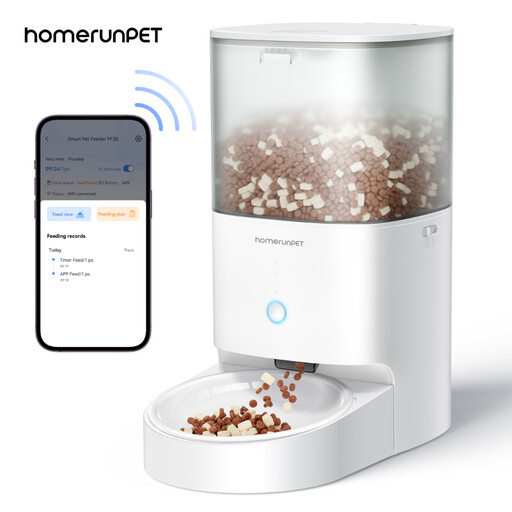
Why It's a Match: For users seeking maximum reliability and minimal maintenance. The extremely long battery life makes the device independent of a power outlet and ideal for travel or extended absences.
The device is fully detachable, allowing for thorough cleaning and preventing hygiene issues. The app control enables precise scheduling of up to 8 meals per day with 20 portion levels, which prevents inaccurate feedings.
According to the manufacturer, it has a battery life of up to 6 months. The device features a sealed design to protect against moisture and insects. A ceramic bowl is included.
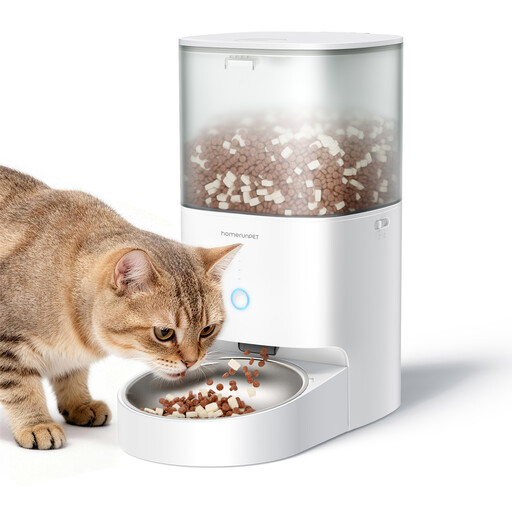
Why It's a Match: Perfect for owners who place the highest value on food safety and easy cleaning. The focus is on high-quality, hygienic materials and a design that preserves food freshness.
The bowl, made of 304 stainless steel, is particularly durable, scratch-resistant, and hygienic. The triple-freshness lock system, with moisture protection and a seal, prevents food from spoiling or being infested by pests.
The focus is on material quality and food freshness. Like its sister model, it offers long battery life and precise, app-controlled feeding schedules, combined with a robust stainless steel bowl.
We have compiled a complete, up-to-date list of products that fully meet these strict selection criteria and rigorous safety standards.
A high-quality automatic feeder stores the programmed feeding schedule directly on the device. Thanks to the backup battery power, feedings will be dispensed at the set time even without electricity or an internet connection. However, app control and notifications will be unavailable in this case.
Always disconnect the device from the power supply and remove the batteries before cleaning. Disassemble all removable parts, such as the food container, dispensing mechanism, and bowl. Clean these components with mild dish soap and warm water. Ensure all parts are completely dry before reassembling to prevent mould growth and blockages.
Most automatic feeders are designed for standard dry food with a kibble size of approximately 5 to 15 mm in diameter. Very large, small, or unusually shaped kibble can jam the dispensing mechanism. Check the manufacturer's specifications for the recommended food size to ensure smooth operation. Wet food is generally not suitable for this type of feeder.