
Lieferung heute & morgen

Qualitätsgarantie

Willkommens-Angebote freischalten: KOSTENLOSE Lieferung | Bis zu 80 % RABATT | Kostenlose 30-Tage-JoyPlus-Testphase
App herunterladen
Purchasing an electric car is the first step into a new era of mobility. The second, equally important step is setting up a suitable charging infrastructure at home. An app-controlled wallbox not only offers convenience but also a high degree of control over charging times and costs. However, given the multitude of models and features, the selection process can be complex.
This article serves as an objective guide. It explains the crucial criteria for selection and presents various models to provide you with a solid basis for making an informed decision about your home EV charger.
Before you decide on a model, several technical and functional aspects should be considered. These factors determine how efficiently and conveniently the charging process can be integrated into your daily life.
The charging power, measured in kilowatts (kW), indicates how quickly your vehicle's battery will be charged.
The maximum charging power is always determined by the weakest link in the chain: the wallbox, the charging cable, and the vehicle's on-board charger.
The choice between a permanently installed and a portable charging solution depends on your individual needs.
A smart wallbox is distinguished by its connectivity and additional features, which are usually controlled via an app.
Based on the criteria mentioned, we have compiled a selection of chargers that cover different requirements.
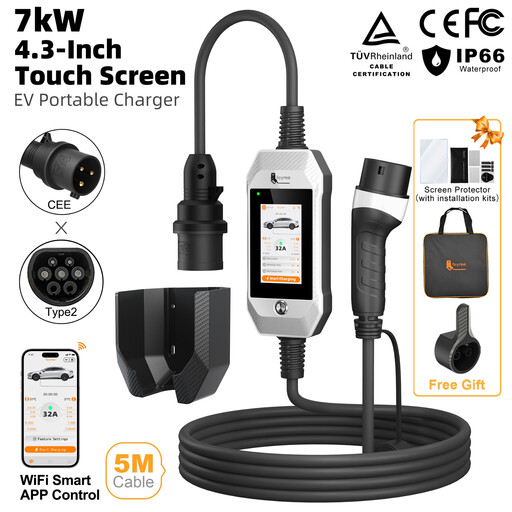
Why it stands out: This mobile charger combines flexibility with advanced operation. The large 4.3-inch touchscreen made of tempered glass allows for direct control and monitoring of all charging data without always needing your smartphone. Another special feature is the OTA (Over-the-Air) firmware updates, which provide the device with new functions and security enhancements via the app.
Advantages:
Who is it for? This model is ideal for users looking for a flexible, 7kW mobile wallbox who value intuitive operation directly on the device. It is suitable for tech-savvy individuals who want to analyse detailed charging data and keep their charger up-to-date.
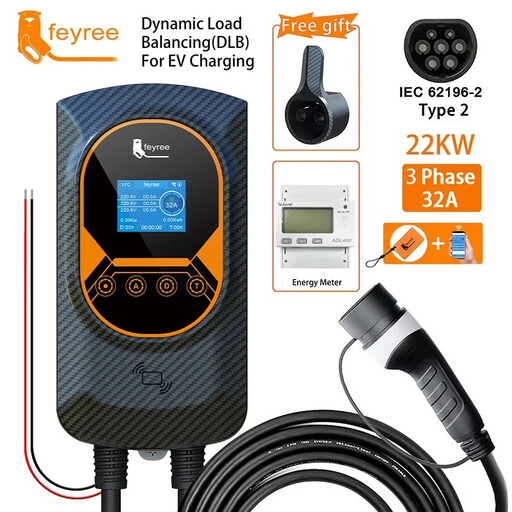
Why it stands out: The core feature of this stationary wallbox is its Dynamic Load Balancing (DLB) function. It intelligently balances power consumption between the charging vehicle and other household appliances. This ensures that available energy is used with maximum efficiency without overloading the home's connection. This is a key feature for modern households.
Advantages:
Who is it for? This EV charging station is the right solution for homeowners, especially those with multiple power-intensive appliances or plans for a second EV. Anyone looking to maximise charging power without compromising the stability of their home's electrical grid will find a suitable solution here.
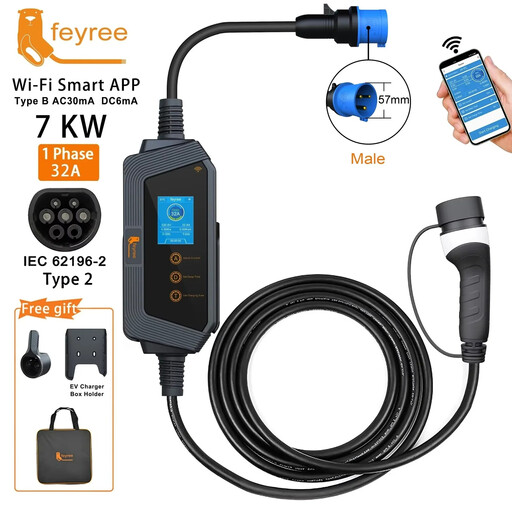
Why it stands out: This charger focuses on smart cost optimisation and safety. The Wi-Fi-connected app allows you to schedule charging specifically during off-peak tariff times (night-time electricity), which can significantly reduce your electricity bill. The integrated residual current device (Type B: AC 30mA + DC 6mA) offers a high standard of protection that often needs to be externally retrofitted on other devices.
Advantages:
Who is it for? Ideal for cost- and safety-conscious EV drivers. Those who want to plan their charging intelligently to save money, while also valuing comprehensive, integrated safety mechanisms, will find this model to be a very functional home EV charger.
Our selection covers common use cases, but the requirements for an EV charging station are individual. If you are looking for different power levels, designs, or specific features like RFID access control or certification for billing purposes, you will find a broader selection in our main category.
Browse our full range of EV chargers.
Yes. According to the technical connection rules in Germany, charging equipment up to 11 kW only needs to be registered with the responsible grid operator. A 22kW wallbox or any charging equipment with more than 11 kW of power must be approved by the grid operator before installation.
Dynamic load management is a feature of a smart wallbox that monitors a household's total electricity consumption in real-time. If many appliances are running simultaneously, the wallbox automatically reduces the car's charging power to prevent overloading the home's electrical connection. When consumption in the house decreases, the charging power is increased again.
In Europe, the Type 2 connector (IEC 62196-2) has become the standard for AC charging. Nearly all current EVs and wallboxes on the European market are compatible with it. However, the actual charging speed depends not only on the wallbox but also on the maximum charging power that the vehicle's on-board charger can handle. A car that can only charge at 11 kW will not charge any faster at a 22 kW wallbox.