People cooking together to stock up
If several people are freezing cooled compote on the same day, the total amount being frozen at once, the appliance’s freezing capacity and a well-coordinated routine are all key.


Choose your appliance based on how much cooled compote will actually need freezing after a cooking session, and how much freezer space is available. For fresh batches, consider whether the appliance is suitable for freezing fresh food and its freezing capacity in kg/24 h, as well as its usable capacity. An existing freezer compartment may be enough for smaller quantities, while an upright or chest freezer will suit different needs in terms of access and space. The German Federal Institute for Risk Assessment recommends cooling larger quantities of food quickly in shallow portions; a freezer does not replace this step.
If several people are freezing cooled compote on the same day, the total amount being frozen at once, the appliance’s freezing capacity and a well-coordinated routine are all key.
If you want to find dated portions quickly, compare the drawers in an upright freezer with the basket layout of a chest freezer.
An existing suitable freezer compartment or a small additional appliance may be an option; consider the space required and the ongoing electricity consumption as part of your decision.
A good fit if: there is enough free space and freezing capacity for all the portions being frozen at once.
Things to consider: you won’t need an additional appliance, but space or freezing performance could become a bottleneck when several cooking sessions are combined.
A good fit if: several people regularly take out individual labelled portions and you have enough vertical space for the appliance.
Things to consider: drawers make it easier to sort portions, but the usable capacity, annual energy consumption and freezing capacity need to match your actual needs.
A good fit if: you regularly prepare larger batches and have enough floor space at the installation site, as well as room to open the lid.
Things to consider: baskets or labelled sections can help when sharing the freezer, but portions stored at the bottom may be harder to reach.
| What matters to you | What to check when buying | Who should pay particular attention |
|---|---|---|
| Several batches frozen at once | Compare the total amount being frozen at once in kg, available space, suitability for freezing fresh food and freezing capacity in kg/24 h. Litres alone only tell you how much you can store. | If several people are cooking and freezing on the same day, the appliance needs to handle the largest combined batch. Around 33% of consumers focus on managing larger quantities prepared at once. |
| Cooling and portioning | Check that suitable containers will fit in the compartments or baskets. Label each with its contents, quantity and date; where possible, avoid placing fresh portions directly on top of food that is already frozen. | If you’re organising the whole process together, from cooking to storing, you’ll need space for manageable portions and clear labelling. This is a priority for around 27% of consumers. |
| Space and access | Check the external dimensions, including the door or lid when open, the internal layout and the manufacturer’s recommended ventilation clearances at the intended location. | If space is limited and you regularly need individual portions, fitting the appliance in and keeping everything easy to find are especially important. Around 20% of consumers prioritise these points. |
| Energy use and maintenance | Compare the annual energy consumption in kWh, suitable usable capacity and defrosting method of specific models. The energy efficiency class alone is no substitute for comparing kWh/year. | If you’re considering an additional appliance and want to limit ongoing energy use or the effort involved in defrosting, weigh up your needs alongside the model specifications. Around 20% of consumers focus on these factors. |
Usable capacity tells you how much you can store, but not how much fresh compote the appliance can freeze within 24 hours.
Work out the largest amount you’ll be freezing at once, then check freezing capacity and available space separately.
A powerful freezer does not replace the need to cool cooked food quickly.
Plan cooling and portioning together; larger quantities can be divided between several shallow containers. The German Federal Institute for Risk Assessment recommends cooling hot food quickly to below +7 °C before storing it for longer periods.
The design alone does not tell you how much a specific appliance will use or how much maintenance it will need.
Compare annual energy consumption, suitable usable capacity, defrosting method and floor space using the specifications for each model.
For the Bauknecht GT 219 A3+, the figures in one comparison table differ from the manufacturer’s specifications. This could affect your assessment of whether a batch can be frozen within 24 hours.
Before planning, check the full model number and the manufacturer’s current product data sheet.
Chest freezers for larger stocks; the GT 219 A3+ is one specific model example.
Freestanding upright freezers with drawers; the GSN36AIEP is one specific model example.
Compact freezers may be an option as an additional appliance for smaller portions frozen at different times.
Chest freezers in a range of usable capacities; the CF200CWN is one specific model example.
Chest freezers with different usable capacities, including the HCE200C and HCE321C models.
This selection includes upright and chest freezers for separately stored portions or batches frozen at once.
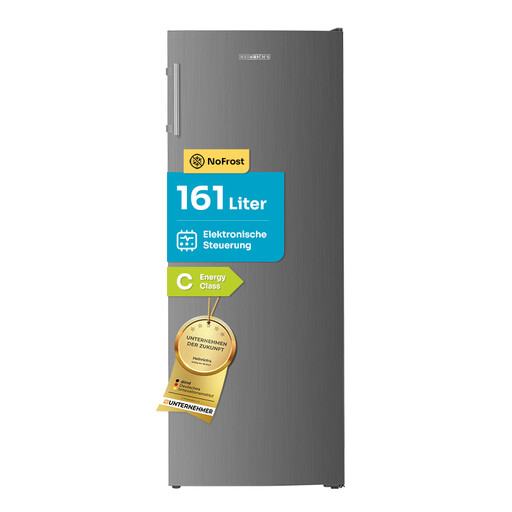 No image available
Could suit separately organised portions, provided you check that it is suitable for freezing fresh food and can handle your batch.
161 l; No-Frost; energy class C; LED display; alarm function; temperature range from -14 °C to -22 °C.
 No image available
A chest freezer may suit batches of portions, provided the floor space and access through the lid work for your routine.
142 l; 4-star freezer compartment; removable basket; fast-freeze function; electronic temperature control; manual defrosting.
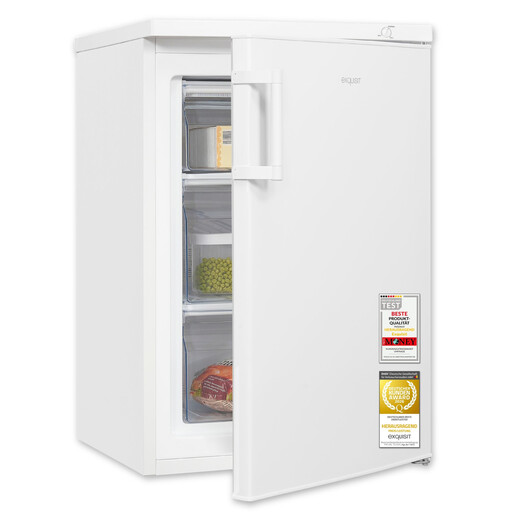 No image available
Could suit smaller portions stored separately, provided its freezing capacity is sufficient for the amount being frozen at once.
85 l; 4-star freezer compartment; three drawers; manual temperature control; manual defrosting.
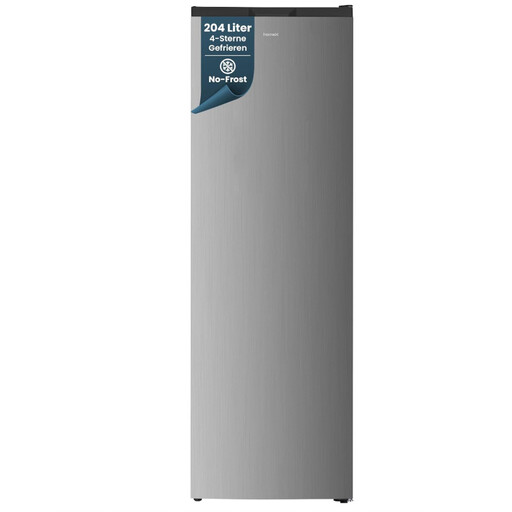 No image available
The drawer layout could make it easier to separate portions managed by several people; check that the appliance is suitable and has the freezing capacity for fresh batches.
204 l; NoFrost; six drawers; Super-Frost function; 39 dB; energy class E.
 No image available
Could suit batches of portions if its stated freezing capacity matches the amount you have measured and there is enough room for the chest freezer at the intended location.
141 l; 4-star freezer compartment; FastFreeze; FreezeProtect -15 °C; inverter compressor; flexible baskets; defrost when ice builds up, as directed in the manual.
Yes. For hot food that will be stored for longer, the German Federal Institute for Risk Assessment recommends cooling it quickly to below +7 °C; larger quantities can be divided between several shallow dishes to help them cool. This is a food hygiene recommendation, not a general legal minimum requirement for every home freezing process.
Use freezer-safe containers and label each with its contents, quantity and date of storage. Where possible, avoid putting fresh, unfrozen portions directly on top of food that is already frozen; labelled sections or drawers can make it easier for everyone to take out what they need.
No. For appliances of a suitable size, also compare the kWh/year figure on the EU energy label. The label is based on standardised conditions; the appliance’s location and how you use it will affect its actual energy consumption. To estimate your own costs, multiply the kWh/year figure by your electricity tariff in euros per kWh.
The household refrigeration appliances covered here are subject to EU rules on energy labelling and product information, summarised by EUR-Lex. Old electrical appliances must be collected separately; according to the German Environment Agency, local collection points generally take them free of charge. Before placing your order, check whether the retailer offers a take-back or collection service.