Weekday portion preppers
You freeze cooled compote in individual lunch portions and want to find older portions quickly. The German Federal Centre for Nutrition recommends freezing a predetermined quantity in individual portions.


If your labelled portions of compote fit in an existing four-star freezer compartment, you don’t necessarily need another appliance. The German Federal Centre for Nutrition recommends using a four-star compartment to freeze food you’ve prepared yourself. If you regularly run short of space, a small freezer with drawers can make individual portions easier to access. A chest freezer may be a better choice if you also want to store larger quantities. Compare the usable freezer capacity, dimensions and annual energy consumption of the specific appliance, rather than choosing based only on its design or energy rating.
You freeze cooled compote in individual lunch portions and want to find older portions quickly. The German Federal Centre for Nutrition recommends freezing a predetermined quantity in individual portions.
If there’s barely any room for your compote portions alongside other frozen food, the usable capacity you actually need and the space available for the appliance are important factors. The German consumer advice centre recommends choosing an appliance size to suit your needs.
Alongside compote, you prepare larger quantities of other foods and are weighing up whether a larger upright freezer or a chest freezer would better suit your storage needs and available space.
Suitable if: Your weekly portions fit alongside your other frozen food, and the compartment is suitable for freezing food you’ve prepared yourself.
The trade-off: You won’t need another appliance, but lots of small portions may be harder to organise among your existing frozen food.
Suitable if: You regularly take out individual containers and need more organised freezer space.
The trade-off: The appliance takes up space and runs continuously, so check its annual energy consumption too.
Suitable if: You need room for other supplies as well as compote, and are looking for a NoFrost model.
The trade-off: You’ll need enough space for the larger capacity and the features you want. Make sure the appliance size matches the amount you actually store.
Suitable if: You regularly freeze larger quantities as well as lunch portions, and have a suitable place for the appliance.
The trade-off: The German consumer advice centre notes that chest freezers use less electricity than upright freezers. You’ll need to organise small containers carefully so they’re easy to find.
First, check whether your existing compartment is suitable for freezing food you’ve prepared yourself. Then consider your container sizes, available space and the energy consumption of an appliance that matches the amount you actually store. The EU energy label shows annual energy consumption.
| Priority | What to check before buying | Who is this important to? |
|---|---|---|
| Organising individual portions | Will your sealable, freezer-safe containers fit in the compartment or drawers? Can you label them? | If I want to take out individual containers on weekdays, I need a layout that works for me and want to find older portions quickly. Around 36% of consumers would make portion organisation their top buying priority. |
| Extra freezer space | Measure the portions you need to store at the same time, along with your other supplies and the space available for the appliance. Check the door-opening clearance too. | If my existing compartment no longer has enough room alongside other frozen food, I want enough extra space without buying an oversized appliance. Around 29% of consumers would make additional freezer space their top buying priority. |
| Ongoing electricity use | Compare the kWh/year for appliances with a suitable capacity, and choose a size that matches your actual needs. | If I’m going to run an additional appliance all the time, I want to take its stated annual energy consumption into account and avoid unnecessary capacity. Around 21% of consumers would make electricity use their top buying priority. |
| Freezing larger quantities | Check the usable capacity, interior layout and the specific model’s stated freezing capacity. | If I regularly prepare larger quantities as well as compote, I need enough suitable space and still want to be able to find smaller containers. Around 14% of consumers would make storing larger quantities their top buying priority. |
Storing food that’s already frozen and freezing portions you’ve prepared yourself are two different things.
Check the star rating on your existing compartment before deciding whether to buy another appliance. The German Federal Centre for Nutrition recommends a four-star compartment for freezing food you’ve prepared yourself.
Extra freezer space is only useful if you need it and the appliance fits where you plan to put it. Unused capacity can mean unnecessary electricity use.
First work out how much you need to store and measure the available space. Then compare the kWh/year figures for appliances with a suitable capacity. Figures on the EU energy label are based on standardised conditions.
Product descriptions refer to different defrosting systems. Similar-sounding feature names don’t mean the appliances need the same maintenance.
Check the defrosting system listed for the exact model, rather than relying on a brand or feature name alone.
A model that reduces ice build-up may still need defrosting.
Perishable ingredients still need to be kept suitably chilled after the compote has thawed. Frozen compote isn’t a substitute for this.
If you’re taking perishable ingredients with you, plan how you’ll keep them chilled until you eat them.
The GS80-040E is a compact upright freezer. Its drawer layout may be useful for storing smaller portions separately.
According to Liebherr, the FNd 4224 Plus NoFrost offers greater capacity and NoFrost functionality for households that want room for other supplies as well as compote.
The FSE1073 and HS210530N illustrate two different compact designs: an under-counter freezer and a small chest freezer.
Haier’s chest freezer range may be worth considering if you regularly need room for larger quantities as well as lunch portions.
The following models include compact and larger freezers offering extra capacity. If you want to freeze compote you’ve prepared yourself, check that each appliance has a four-star rating for this purpose.
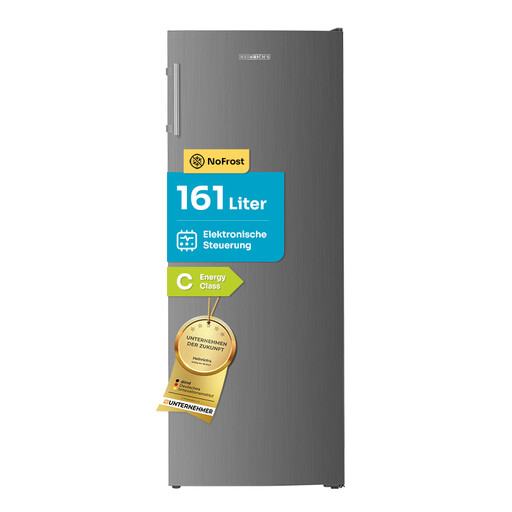 No image available
This model may suit you if you want separate storage areas and extra capacity. Before freezing portions you’ve prepared yourself, check the appliance’s star rating.
Details in the product title: 161 l, NoFrost, three freezer drawers, LED display, alarm function, reversible door and energy class C.
The stated temperature range is −14 °C to −22 °C.
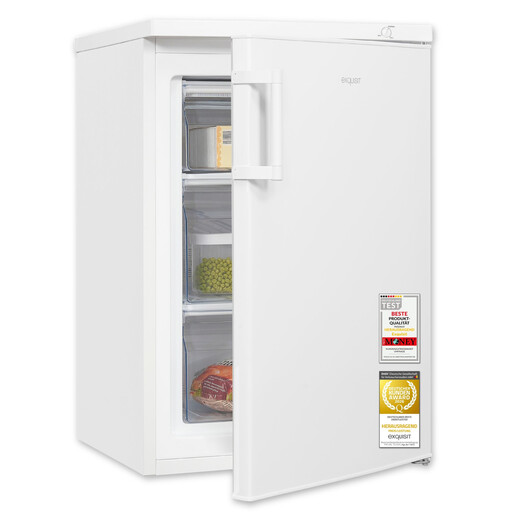 No image available
The three drawers give you space to store portions separately. The stated four-star rating is relevant if you want to freeze food you’ve prepared yourself; the German Federal Centre for Nutrition recommends a four-star compartment for this.
Details in the product title: 85 l, three drawers, manual temperature control, reversible door and white finish.
According to the product description, manual defrosting is required when more than 5 mm of frost has built up.
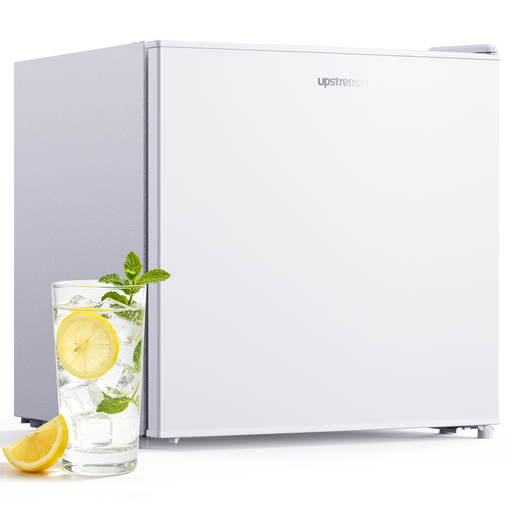 No image available
Its compact design may suit a tight space. Check that your containers will fit and that the stated star rating is suitable for what you want to do.
Details in the product title: 35 l, four-star rating and reversible door.
The title states a noise level of 41 dB.
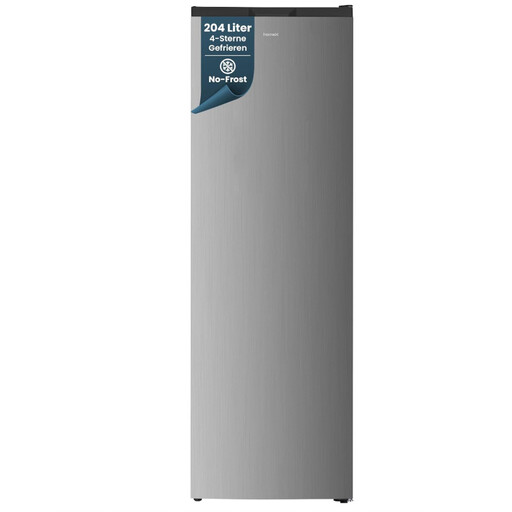 No image available
The larger stated capacity may be useful if you want to store compote alongside other supplies. Before freezing portions you’ve prepared yourself, check whether the specific appliance has a four-star rating.
Details in the product title: 204 l, NoFrost, Super-Freeze function, silver finish and energy class E.
The title states a noise level of 39 dB.
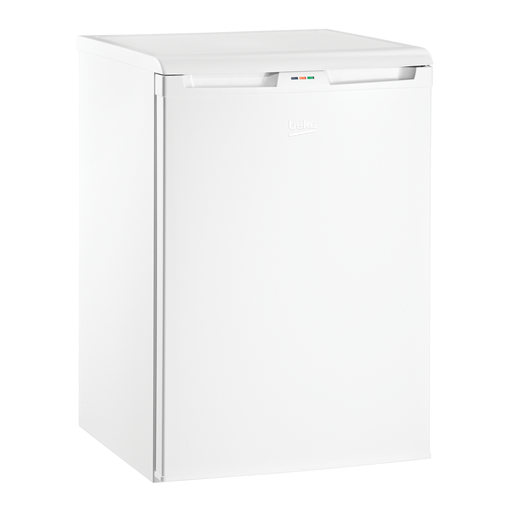 No image available
The under-counter design, with several interior compartments, may be useful for keeping portions separate. Before freezing food you’ve prepared yourself, check whether the model has a four-star rating.
Details in the product title: 95 l freezer capacity, freestanding design, MinFrost and energy class E.
The title states a noise level of 37 dB.
For freezing food you’ve prepared yourself, the German Federal Centre for Nutrition recommends a four-star compartment. A three-star compartment is intended for storing food that’s already frozen, not for freezing it in the first place.
Divide the cooled compote into freezer-safe containers and label them with the contents and date. The German Federal Centre for Nutrition recommends freezing food in portions when you already know how much you’ll need. Perishable ingredients in a lunchbox must be kept chilled until you eat them, even after the compote has thawed.
Compare the kWh/year figures on the EU energy labels of appliances with a capacity that suits your needs. The German consumer advice centre recommends avoiding unnecessarily large freezer capacity. Your actual usage and electricity tariff will affect running costs.
Since 2021, the European Commission’s energy label for new household freezers in the EU has used a scale from A to G and shows details including annual energy consumption and freezer capacity. As the German Environment Agency explains, old electrical appliances must be disposed of separately, for example at local collection points. Check with the retailer for the specific offer to find out whether they’ll take away an old large appliance, and under what conditions.