For individually labelled portions of compote, a small freezer or a suitable four-star freezer compartment may be enough. The key is to have drawers that suit your needs and enough room for the containers. If you regularly freeze larger batches, you should also consider capacity and freezing performance. Compare these alongside storage space, energy consumption, floor space and the effort involved in defrosting.
Who this guide is for
Households with different mealtimes
If you serve compote at different times, you can take out labelled individual portions without thawing the rest of your supply. The Federal Centre for Nutrition recommends using suitable freezer containers and labelling them.
Households that cook larger batches
If you prepare several portions at once, you’ll need enough room for the batch as well as food already in storage, along with compartments that are easy to access. The consumer advice centre recommends choosing an appliance size that suits your actual needs.
Households short on space
If you only want to freeze a few extra portions, first check whether an existing four-star freezer compartment will do the job. For a separate appliance, consider the usable drawer dimensions as well as the external measurements and stated annual energy consumption.
What to look for when buying
Start by considering the containers and portions you actually want to freeze, then choose the appliance size, freezing performance and location to suit.
| What you need |
What to look for |
Who it matters to |
| Individual portions |
Check the drawers and internal dimensions against the freezer containers you plan to use, and allow space for labels. |
If I want to find and take out individual portions quickly, well-organised compartments matter more than having as much capacity as possible. Around 36% of consumers are likely to prioritise individual portions. |
| Room for larger batches |
Compare the amount you want to freeze at once, along with your existing supplies, against the usable capacity and freezing performance of the specific model. |
If several freshly prepared portions need to fit alongside other supplies, capacity for the whole batch is important. Around 29% of consumers are likely to prioritise space for batches. |
| Energy use and defrosting |
Check kWh/year, usable capacity and noise level together on the EU energy label; weigh up No Frost and the need for manual defrosting separately. |
If the appliance runs all the time, I want to weigh its stated annual energy consumption against the maintenance involved. Around 21% of consumers are likely to prioritise running costs. |
| Where you’ll put it |
Check the external dimensions, door clearance and installation instructions for the specific model; if placing it in a cold room, check the permitted ambient temperature. |
If the kitchen, cellar or garage determines where the appliance has to go, it needs to suit the available space and conditions. Around 14% of consumers are likely to be limited mainly by where they can put it. |
Common buying mistakes
-
Choosing an especially large freezer just for individual portions
An oversized freezer may use more electricity than necessary. On the other hand, choosing a particularly small model doesn’t automatically mean it will be energy-efficient.
First work out how much room you need for containers and other supplies. Then compare the usable capacity and kWh/year figures for the specific models.
-
Assuming a three-star compartment can freeze food like a freezer compartment
The Federal Centre for Nutrition distinguishes between storing food that is already frozen and freezing food in the first place. A three-star compartment is not suitable for the freezing process described here in the same way as a four-star compartment.
Before buying, check the star rating of the freezer compartment or appliance.
-
Confusing No Frost with hygienic cooling
No Frost relates to frost build-up in the appliance. It doesn’t replace cooling cooked food properly or using suitable containers. The Federal Institute for Risk Assessment recommends cooling prepared food promptly; you can divide larger quantities between several shallow containers to help.
Cool the compote promptly, portion it into suitable containers and label them. Consider No Frost separately as an appliance feature.
-
Focusing only on the appliance size instead of your actual needs
More capacity is only useful if you regularly freeze or store a corresponding amount. The consumer advice centre points out that an oversized appliance may use more electricity than necessary.
Compare the storage space you need with the annual energy consumption on the EU energy label, and check that your containers will fit in the drawers.
Suitable brands and models
Severin
The compact GS 8865 under-counter freezer and the larger GS 8868 are worth considering for comparison.
- Severin says the GS 8865 offers 85 l of usable capacity and three drawers; the manufacturer gives its annual energy consumption as 105 kWh/year.
- The GS 8865 doesn’t have No Frost. For the GS 8868, Severin lists 161 l, No Frost, 132 kWh/year and a door alarm. These are details for these specific models, not an independent assessment of the brand.
Liebherr
The freestanding FNd 4224 is a medium-sized No Frost freezer for storing food separately.
- Liebherr lists 160 l, 37 dB and FrostProtect for this model, down to an ambient temperature of −15 °C.
- Check that it’s suitable for your chosen location, and check the annual energy consumption for the model you select. The FrostProtect specification doesn’t automatically apply to other appliances from the brand.
Bosch
The freestanding GSN29VWEP could suit households looking to store larger quantities of frozen food.
- Bosch lists 200 l, No Frost, a freezing capacity of 16 kg/24 h and 221 kWh/year for this model.
- Weigh the extra space against your needs and the stated annual energy consumption. The manufacturer’s figures aren’t measurements taken in your home.
Beko
The FS127940N is a larger static-cooling alternative with MinFrost instead of No Frost.
- Beko describes MinFrost as a system designed to reduce ice build-up, rather than eliminate the need for defrosting altogether.
- Beko lists 237 l in the product title, but gives the freezer capacity as 244 l in the technical specifications. Check the data sheet for the specific version to confirm its capacity before comparing models.
Freezers at Joybuy
The freestanding freezers below include compact options for individual portions as well as larger models for extra supplies.
 No image available
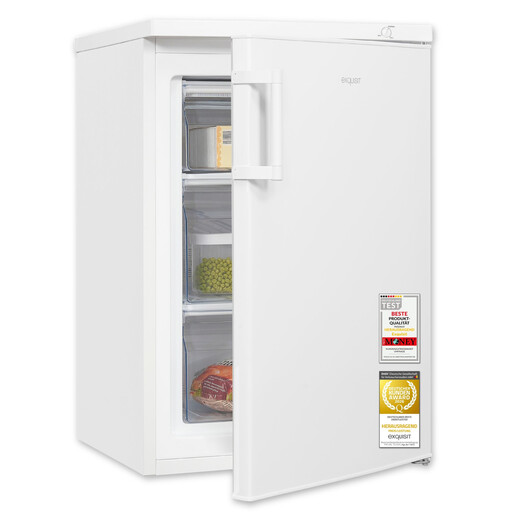
Exquisit GS581-H-010E, 85 l
A compact option if you want separate compartments for individual portions of compote.
- 85 l usable capacity
- Four-star freezer compartment
- Freezing capacity: 4,0 kg/24 h
- Three drawers; manual defrosting required
View at Joybuy
 No image available
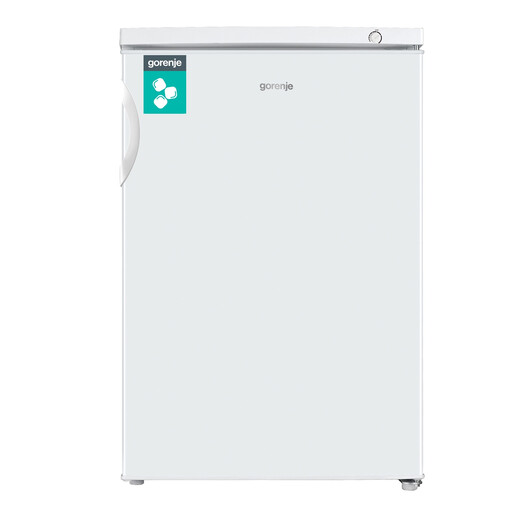
Gorenje F49DPW, 85 l
A compact option for smaller additional supplies and separate storage compartments.
- 85 l usable capacity
- Four-star freezer compartment
- Freezing capacity: 4 kg/24 h
- 131 kWh/year; manual defrosting required
- Reversible door
View at Joybuy
 No image available
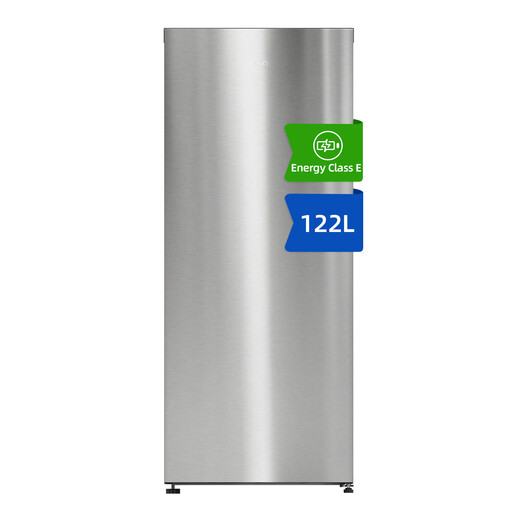
CHiQ JR122WSD, 122 l
A larger option if you want more separate storage space and less manual defrosting.
- 122 l usable capacity
- Four-star freezer compartment
- No Frost
- 39 dB according to the product information
- Reversible door hinge
View at Joybuy
 No image available
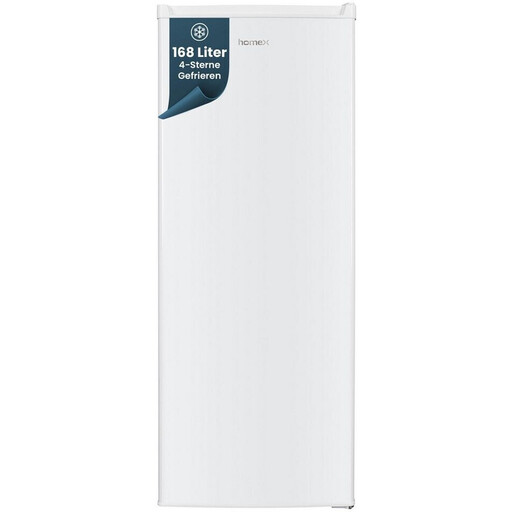
homeX FS1681E-W, 168 l
The larger version is a better fit if you want to store other supplies separately as well as compote.
- 168 l usable capacity
- Four-star freezer compartment
- Freezing capacity: 7,8 kg/24 h
- Four drawers and one flap compartment
- 40 dB; reversible door
View at Joybuy
 No image available
COMFEE RCU60WH2(E), 60 l
A small option if space is limited and you only need a little extra storage.
- 60 l usable capacity
- Four-star freezer compartment
- Freezing capacity: up to 6 kg/24 h
- Three separate storage compartments
- Reversible door
View at Joybuy
Frequently asked questions
Can I freeze a large pot of warm apple compote straight away?
No. Let the compote cool down promptly first. The Federal Institute for Risk Assessment recommends dividing larger quantities between several shallow containers to help it cool; you can then freeze suitable portions.
How can I tell if a freezer compartment is suitable?
A four-star compartment is suitable for freezing food, as the Federal Centre for Nutrition explains. A three-star compartment is intended for longer-term storage of food that is already frozen, so it isn’t an equivalent option for the freezing process needed here.
How should I fill and label liquid compote?
Use freezer-safe containers, leave room for the contents to expand, and note what’s inside and the date it was frozen. For liquid foods, the consumer advice centre recommends filling containers to only three-quarters full.
Is a manufacturer’s guarantee the same as statutory protection?
No. For a consumer purchase from a business seller in the EU, you generally have a statutory right to a minimum two-year legal guarantee from the date you receive the goods, as explained by Your Europe. A manufacturer’s guarantee is an additional voluntary promise, subject to the relevant guarantee terms and conditions.


