Occasional compote freezers
You want to keep a few portions for a meal later and are checking whether your existing freezer compartment is big enough. The Bundeszentrum für Ernährung points out that portioned quantities are easier to use later.


For a few portions of cooled apple compote, your existing freezer compartment will often be enough. A separate chest freezer makes more sense if you regularly freeze larger quantities of food as well. The Verbraucherzentrale recommends choosing a capacity that suits your needs, so compare usable capacity, floor space and kWh/year together. As the Bundeszentrum für Ernährung explains, portioning the compote makes it easier to take out what you need for a meal later.
You want to keep a few portions for a meal later and are checking whether your existing freezer compartment is big enough. The Bundeszentrum für Ernährung points out that portioned quantities are easier to use later.
You regularly freeze compote and other dishes, so need extra storage that suits your requirements. The Verbraucherzentrale notes that an oversized freezer can use more electricity than necessary.
You process a lot of apples at once, so as well as storage space, you should consider the freezing capacity of the specific model and how easy it will be to take out individual portions later. The Bundeszentrum für Ernährung explains that larger frozen quantities can be harder to divide up.
| What you need | What to look for | Who should pay particular attention? |
|---|---|---|
| Storage space to suit your needs | Compare the number of portions you plan to store and the usable capacity in litres with the available space in your existing freezer compartment. | If I only freeze compote occasionally, I want enough room for my portions without having an appliance that’s barely used. Around 36% of consumers put storage space that suits their needs first. |
| Energy consumption | Compare kWh/year and usable capacity on the EU energy label for models that are the right size for your needs. | If I use an additional chest freezer regularly, I want to assess its stated energy consumption against the capacity I need. Around 29% of consumers prioritise running costs. |
| Space and access | Check the external dimensions, the room needed to open the lid and the route for moving it into place. If it will be kept in a cold room, check that the specific model is approved for those conditions. | If space is limited, I want to be sure the chest freezer will fit and that I can open it easily. Around 21% of consumers focus first on space and access. |
| Freezing larger quantities | Compare the amount you plan to freeze with the specific model’s freezing capacity in kg/24 h, and check the baskets and defrosting method. | If I regularly freeze lots of portions at once, freezing capacity and easy access to the contents matter to me. Around 14% of consumers prioritise larger batches. |
An oversized freezer can use more electricity than necessary. For smaller quantities, your existing freezer compartment may be enough.
First work out how much compote and how many other supplies you regularly freeze. Then compare usable capacity and kWh/year.
What matters is whether the usable capacity and stated annual energy consumption match your actual needs. The European Commission lists the energy efficiency class, kWh/year and volume as details shown on the energy label.
Compare models with broadly similar usable capacities. Energy consumption at home may differ from the stated figure.
Liebherr describes SmartFrost and Beko describes MinFrost as reducing frost build-up, not eliminating the need to defrost.
Check the defrosting method for the exact model, and organise your portions so you can move them around easily when needed.
Depending on the model, occasional defrosting and moving your food elsewhere in the meantime may be part of its upkeep.
Exquisit offers the compact GT100-050E schwarz chest freezer, with 99 l of usable capacity.
Beko’s chest freezers include the HSM14550, with 148 l of usable capacity, and the HSM37540, with 360 l.
Haier’s HCE200C is a freestanding chest freezer with 196 l of usable capacity and energy efficiency class C.
The CFd 2085 Plus is a chest freezer for larger stocks of food. Liebherr gives its total capacity as 248 l and its width as 125 cm.
The following Joybuy picks are chest freezers for extra storage, from more compact models to appliances suited to larger stocks of food.
 No image available
An option if you regularly need extra freezer space, provided the usable capacity and available space suit your needs.
Features listed in the product title: 197 l, energy efficiency class E, convertible fridge and freezer function, removable basket and defrost drain.
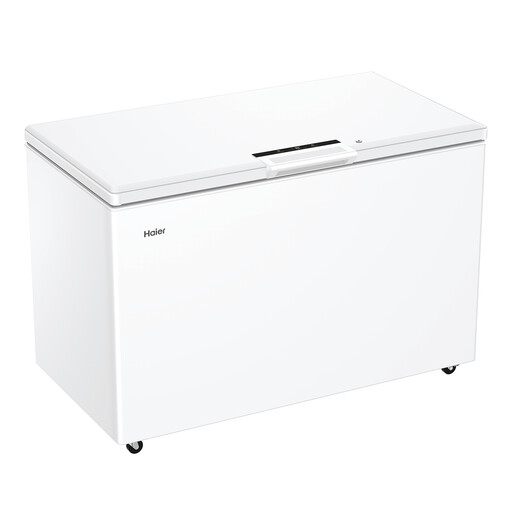 No image available
This model could suit larger stocks of food, if 418 l matches your regular needs and the space you have available.
Features listed in the product title: 418 l and energy efficiency class D. Low Frost reduces ice build-up, but does not replace manual defrosting.
 No image available
This is an option if you need a more modest amount of extra storage, provided the usable capacity and the space available suit your portions.
Features listed in the product title: 141 l, FastFreeze, FreezeProtect −15 °C and flexible baskets. The user instructions say to defrost the appliance if ice forms.
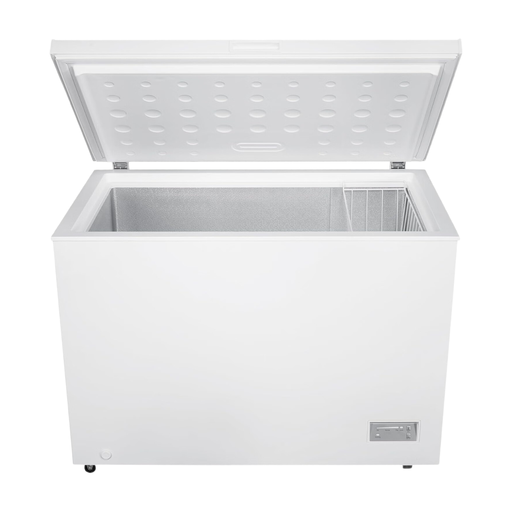 No image available
Suitable for regularly storing larger quantities, as long as 308 l is not more than you actually need.
Features listed in the product title: 308 l, one basket, temperature alarm, castors, LED display and energy efficiency class E. The title also says it is suitable for unheated rooms; check the installation guidance for the specific location.
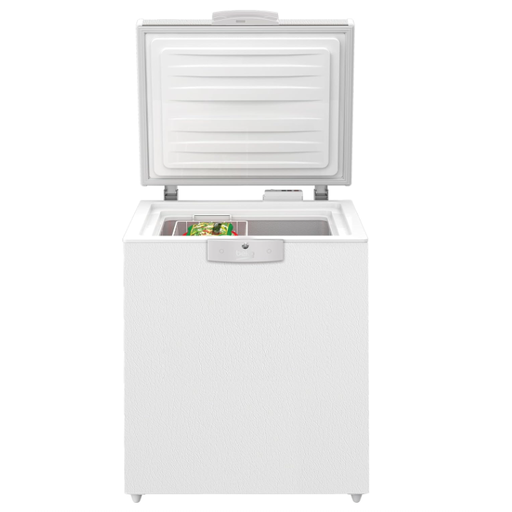 No image available
For more modest additional freezer needs, provided the usable capacity, external dimensions and freezing capacity suit the portions you plan to store.
For this model, Beko gives the capacity as 148 l, the dimensions as 75,5 × 67,5 × 91,2 cm and the energy efficiency class as D. The product description says to defrost it manually when the layer of ice exceeds 5 mm.
No, not just for that: a chest freezer is for freezing and storing food for a meal later. If you’re eating the compote today, freezing it and then thawing it isn’t a necessary step. For individual portions you want to keep, first check the space in your existing freezer compartment.
If you plan to store cooked food for longer, cool it quickly to below 7 °C; this is the advice of the Bundesinstitut für Risikobewertung. Transfer the compote to suitable, labelled freezer containers and divide it into portions according to how much you’ll need later. Leave some room in the container for liquid contents to expand. Try not to let already frozen food thaw when adding freshly filled containers.
The EU energy label for household freezers includes details such as the energy efficiency class, standardised annual energy consumption in kWh and capacity. Compare appliances that are genuinely the right size for your needs; energy consumption at home may differ.
Only if the installation instructions and approved temperature range for the specific model suit the conditions in the room. For example, Liebherr states that the CFd 2085 Plus has FrostProtect for ambient temperatures as low as −15 °C. This does not automatically apply to other models.
Electrical appliances must not go in household rubbish. The Umweltbundesamt notes that local collection points generally accept old appliances free of charge. Check before ordering what take-back service the retailer offers for your specific purchase and delivery.