Families with the occasional leftover portion
If you only have a few portions left after a meal, an existing four-star compartment may be suitable. The German Federal Centre for Nutrition (BZfE) specifies this rating for the freezing process itself.


If you only need to freeze a few portions now and again, first check whether your existing four-star compartment has enough space; you don’t necessarily need an extra appliance. If you regularly freeze larger quantities, compare usable capacity, freezing capacity, dimensions and annual energy consumption. An upright freezer makes it easier to access individual portions, while a chest freezer is better suited to larger stocks and homes with enough floor space.
If you only have a few portions left after a meal, an existing four-star compartment may be suitable. The German Federal Centre for Nutrition (BZfE) specifies this rating for the freezing process itself.
If you often freeze compote and other foods, look for an interior layout that lets you store labelled portions separately and find them easily. The BZfE recommends using suitable freezer containers and freezing food in portions.
If you regularly freeze larger batches, consider both storage space and freezing capacity, as well as the floor space available. The German consumer advice centre recommends choosing an appliance size to suit your actual needs.
First check whether a suitable existing compartment will do the job. If you’re adding an appliance, compare its footprint, access to portions, freezing capacity and annual energy consumption with your needs.
A good fit if: you only freeze small amounts occasionally and have enough room alongside your other frozen food.
Trade-off: You won’t need another appliance, but you’ll be limited to the spare space in your existing compartment.
A good fit if: your existing compartment is often too small, but you have limited floor space.
Trade-off: Drawers can help you organise portions. A smaller appliance isn’t automatically more energy efficient, so compare the annual energy consumption of the specific model.
A good fit if: you regularly freeze other family food stocks as well as compote and want to take items out individually.
Trade-off: Check the external dimensions and freezing capacity for larger batches; more usable capacity may mean a larger footprint.
A good fit if: you store larger quantities and have enough floor space.
Trade-off: Individual small portions are less easy to reach, so plan how you’ll label and arrange the containers. The German consumer advice centre says chest freezers are more energy efficient than upright freezers.
| Buying criterion | What to look for | Who it matters most to |
|---|---|---|
| Right-sized capacity | For an existing compartment, check the four-star rating and available space. For an additional appliance, compare its usable capacity and external dimensions with the amount of food you need to store. | If I only have leftovers occasionally, I don’t want to plan for an oversized appliance. Around 27% of consumers prioritise the right capacity over buying an unnecessary extra appliance. |
| Individual portions | Look for drawers and space for suitable, labelled freezer containers. | If I want to store several family portions separately, it’s important that I can find them individually later. Around 33% of consumers prioritise easy access to portions. |
| Larger batches | Compare the quantity you plan to freeze with the model’s stated freezing capacity in kg/24 h, and allow space for the individual containers. | If I regularly freeze larger quantities, I need enough space and the batch must be within the stated freezing capacity. Around 20% of consumers prioritise freezing larger batches. |
| Annual energy consumption | For appliances of a similar size, compare the figure in kWh/year. Actual consumption also depends on how and where the appliance is used. | If a freezer runs all the time, I want to take its stated energy consumption into account when comparing models. Around 20% of consumers prioritise low energy consumption over time. |
A three-star compartment may be suitable for storing frozen food, but according to the BZfE it doesn’t replace the four-star rating required for the freezing process itself.
Check the star rating of your existing compartment before using it to freeze portions you’ve made yourself.
According to the German consumer advice centre, an oversized freezer can use more electricity than necessary and take up more room than your food stocks require.
First work out how many portions you usually need to freeze, then compare usable capacity, dimensions and kWh/year.
An oversized appliance that runs all the time can increase your energy consumption unnecessarily.
NoFrost can affect how much maintenance an appliance needs, but it doesn’t replace comparing the annual energy consumption of similarly sized models.
Assess the feature and the kWh/year figure separately for the specific model.
A large frozen quantity can be harder to divide into family-sized portions later.
Before freezing, put the compote into suitable containers and label each one with its contents, quantity and date. The BZfE recommends using containers designed for freezing.
The FN4172CW upright freezer is a narrower option if width is a key consideration when you regularly freeze portions.
The freestanding GSN33VWEP has drawers and a Big Box compartment for containers of different sizes.
The GS51NAWCV is a larger upright freezer option for households that regularly need to store food stocks.
According to Haier, the H4F272WDH1 offers 276 l of capacity at a width of 60 cm, with the option to switch between cooling and freezing.
According to Beko, the RFNE448E45W is an upright freezer option for larger food stocks.
The Joybuy products below include chest and freestanding upright freezers for everything from individual portions to larger food stocks. Depending on your needs, compare the four-star compartment, freezing capacity, interior layout, dimensions and annual energy consumption.
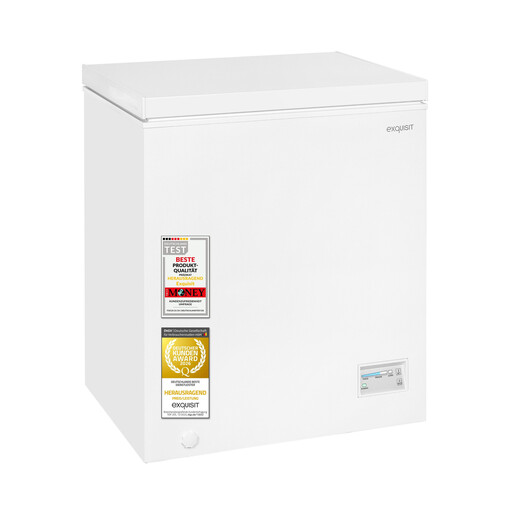 No image available
A chest freezer for households that want to store larger portions or food stocks separately.
142 l, four-star compartment and a freezing capacity of up to 7 kg in 24 hours; removable basket, fast-freeze function and manual defrosting.
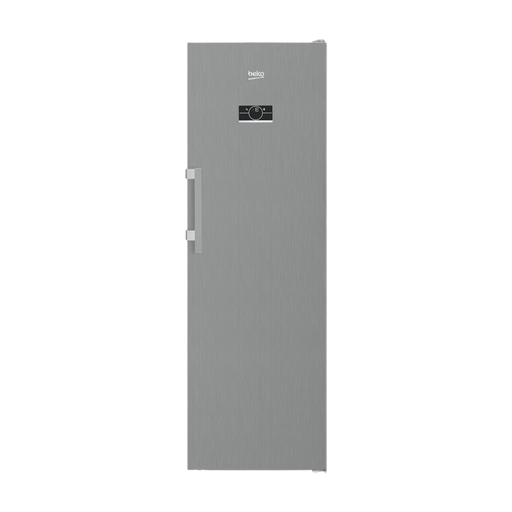
 No image available
For households that want to store several portions separately in a freestanding appliance.
204 l, six drawers or compartments, four-star compartment, Super-Frost function, 39 dB and energy efficiency class E.
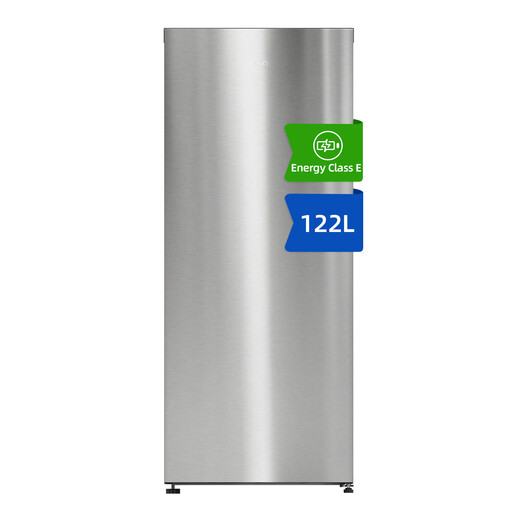
 No image available
For households that regularly freeze larger batches and want to store different food stocks separately.
286 l net capacity, five drawers and a freezing capacity of 17 kg per 24 hours; NoFrost, fast-freeze function and energy efficiency class D. Allow at least 5 cm of clearance at the back and sides. According to the description, it can operate in unheated rooms at temperatures down to −15 °C.
 No image available
A standalone freezer with a four-star function for freezing cooled apple compote.
Described as an upright freezer with a four-star function; the product description specifies manual defrosting.
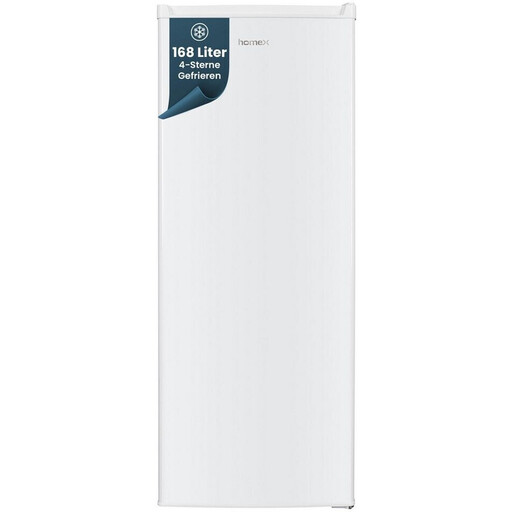 No image available
For households that want to store several portions in separate compartments.
168 l, four-star compartment, freezing capacity of 7,8 kg per 24 hours, four drawers and a flap compartment; 190 kWh/year, 40 dB and energy efficiency class E.
No. For the freezing process itself, the German Federal Centre for Nutrition specifies a four-star compartment. A three-star compartment can store frozen food long term, but it isn’t equivalent. Also check that there’s enough room to store portions separately.
Use containers specifically designed for freezing and label each one with its contents, quantity and date. The German Federal Centre for Nutrition recommends freezing food in portions, as larger frozen quantities can be difficult to divide. Packaging guidance doesn’t replace hygienic handling or proper cooling before freezing.
The EU energy label includes information such as the efficiency class and annual energy consumption in kWh. It’s best to compare appliances of a similar size; actual consumption also depends on how and where the appliance is used. The German consumer advice centre recommends choosing an appliance size to suit your needs.
For refrigeration appliances within its scope, EU Regulation (EU) 2019/2016 governs the energy label and supplementary product information. The official summary on EUR-Lex also lists requirements for advertising and online product information about specific models. This is a labelling requirement for retailers, not a particular energy class that you have to choose for your home.