
Same-day & Next-day Delivery

Quality Guaranteed

Unlock Your Welcome Offers: FREE Delivery | Up to 80% OFF | Free 30-day JoyPlus trial
Download the APP
Apple drinks are available as apple spritzers, flavoured mineral water, fruit-based soft drinks, concentrates or apple energy drinks. However, the product name alone tells you little about whether a drink suits your daily routine. If you focus only on the apple flavour or eye-catching packaging, it is easy to overlook important differences in sugar, calories, caffeine, fruit content and pack size.
This buying guide helps you compare apple drinks objectively for home, the office, sport or when you are out and about.
An apple-based soft drink may contain juice, juice concentrate, flavouring or merely a fruit extract. The ingredients list is what matters. With a classic apple spritzer, the fruit juice content is generally clearly stated. With apple-flavoured mineral water, on the other hand, the natural apple flavour may come from flavouring.
A higher fruit content can create a fuller flavour, but it often also means more natural sugar and calories. Always compare the value per 100 ml, rather than looking only at the figures per bottle.
“Light” usually indicates reduced energy or sugar content, while “Zero” often means very low or no sugar. Even so, sweeteners such as sucralose, acesulfame K, saccharin or cyclamate may be included. If you are looking for an apple drink with no sugar, check both the nutrition table and the ingredients list.
An apple energy drink usually contains caffeine and may also contain taurine, vitamins or plant extracts. This makes it a different product category from a standard apple spritzer. Check the caffeine content per 100 ml and the information on the packaging. Caffeinated energy drinks are not recommended for children, pregnant women or breastfeeding women, among others.
For a fair comparison, sugar in grams per 100 ml and kilocalories per 100 ml are the most important figures. A low-calorie apple drink may contain, for example, 12 to 19 kcal per 100 ml. A sweetened energy drink, on the other hand, may contain considerably more.
Also consider the actual amount you drink: a 500-ml can containing 13 g of sugar per 100 ml contains 65 g of sugar per can. With a multipack, the total increases accordingly.
Check whether apple or apple juice from concentrate appears near the start or later in the ingredients list. Additional ingredients may include fructose syrup, glucose syrup, lemon juice, flavourings, acidity regulators or sweeteners.
This information is particularly relevant when choosing between a classic apple spritzer, a fruit-focused mixed drink and flavoured mineral water. For example, Vilsa H2Obst Apple-Cherry states a 20% fruit content, including 14% apple juice and 3% sour cherry juice.
For home or the office, an apple drink crate or a multipack with 0.75- or 1.5-litre bottles is suitable. For drinking on the go, 330-ml cans, 500-ml cans or individual PET bottles are easier to portion.
Also compare the deposit, storage space and shelf life after opening. Depending on the product, opened drinks should be refrigerated and consumed promptly. A concentrate saves packaging space, but requires accurate dilution and additional use of water or a sparkling-water maker.
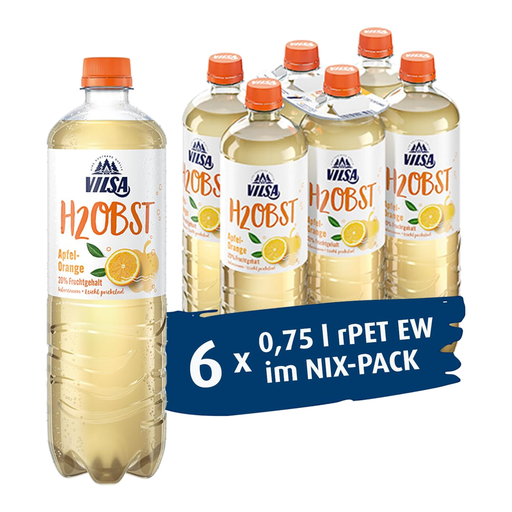
Why this product suits this profile: The six-pack contains 4.5 litres in total, making it suitable for keeping a regular supply at home or in the office. The flavour combines apple with orange and lemon.
The stated figures include 20% fruit content and 19 kcal per 100 ml. This makes it possible to assess the fruit and energy content before buying.
0.75-litre PET bottles, lightly sparkling and, according to the product details, with no added sugar.
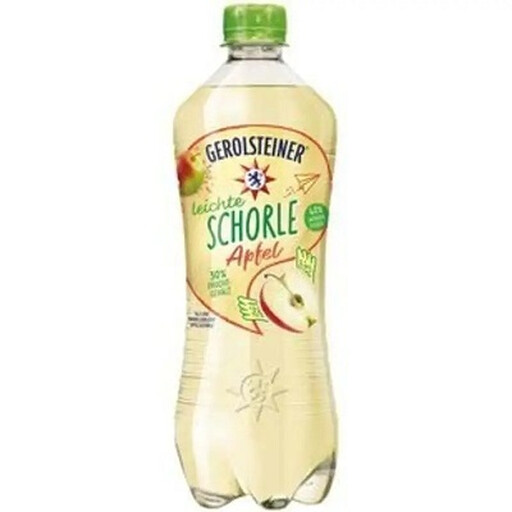
Why this product suits this profile: The classic combination of mineral water and 30% apple juice from concentrate is aimed at buyers who prefer clearly stated fruit content.
The fruit content, along with 3.1 g of sugar and around 14.5 kcal per 100 ml, is clearly stated. This means the choice is not based solely on the word “Light”.
6 × 0.75 litres, a natural mineral water base and less sugar than many classic fruit spritzers.
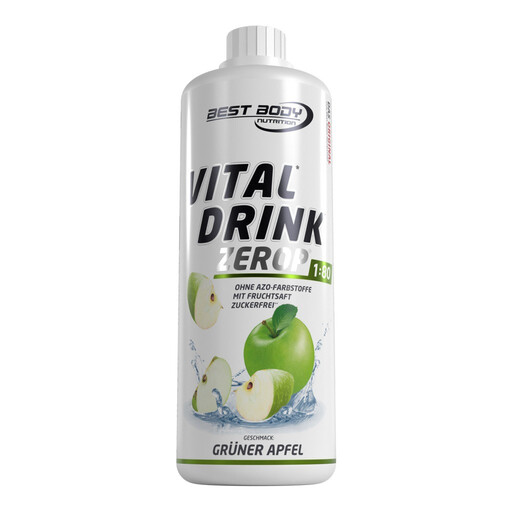
Why this product suits this profile: The concentrate is an interesting option for households, offices or clubs that regularly prepare larger quantities and want to reduce packaging volume.
The stated 1:80 dilution ratio prevents uncertainty when calculating quantities. The concentrate should not be drunk undiluted.
According to the product details, 1 litre of concentrate makes up to 80 litres of ready-to-drink beverage; suitable for still water or a sparkling-water maker.
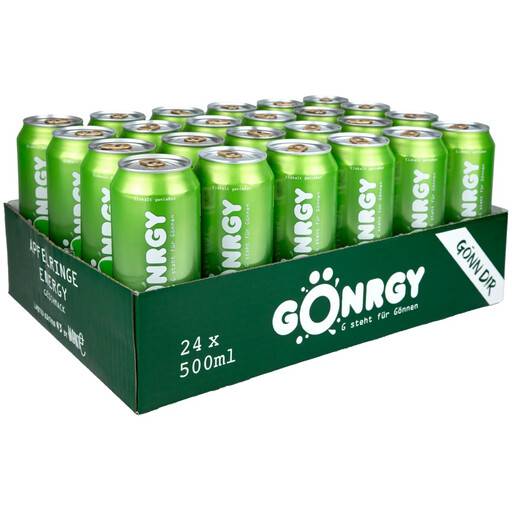
Why this product suits this profile: The 24-pack of 500-ml cans is designed for a portioned supply. The flavour is described as sweet and tangy apple.
With 0 g of sugar and 3 kcal per 100 ml, it is clear that this is a sugar-free option. However, the caffeine content and warnings should still be taken into account.
Sugar-free recipe, 24 cans and caffeine from natural sources according to the product description. Not recommended for children, pregnant women or breastfeeding women.
We have put together a complete, regularly updated list of products that fully meet these strict selection criteria and the safety regulations applicable in the EU.
Apple spritzers typically consist of apple juice and mineral water or water. An apple-based soft drink may also contain other fruit juices, flavourings, syrup, acidity regulators or sweeteners. The exact composition is listed in the ingredients.
That depends on the recipe. Products labelled “Light”, “Zero” or “no sugar” may contain fewer calories. Compare the nutritional values per 100 ml. A drink with no sugar may still contain sweeteners.
Unopened products should be stored according to the best-before date and storage instructions on the packaging. After opening, many drinks should be kept in the fridge and consumed within a few days. Concentrates often have their own time limits, which are stated directly on the label.