
Lieferung heute & morgen

Qualitätsgarantie

Willkommens-Angebote freischalten: KOSTENLOSE Lieferung | Bis zu 80 % RABATT | Kostenlose 30-Tage-JoyPlus-Testphase
App herunterladen
Apple juice is a staple in many households. But the selection on supermarket shelves or in online shops can be overwhelming. Labels advertise terms like "100% fruit content," "not from concentrate," or "naturally cloudy," but what do these claims really mean for quality and taste? Many consumers reach for products that seem high-quality at first glance but fail to meet their actual needs.
Before you order your next bulk pack of apple juice, you should be aware of two common pitfalls that can lead to disappointment:
This guide will help you navigate these pitfalls and understand the key parameters for finding the perfect apple juice for your needs.
The most important distinction when buying apple juice is between not-from-concentrate juice and juice made from concentrate. You will usually find this information in the fine print of the ingredients list.
The choice between a cloudy and a clear apple juice affects both the taste and the texture.
For families with children or individuals with a sensitive stomach, the acid and sugar content are important criteria.
Based on these objective criteria, we have selected a few products from our range that are suitable for different profiles.
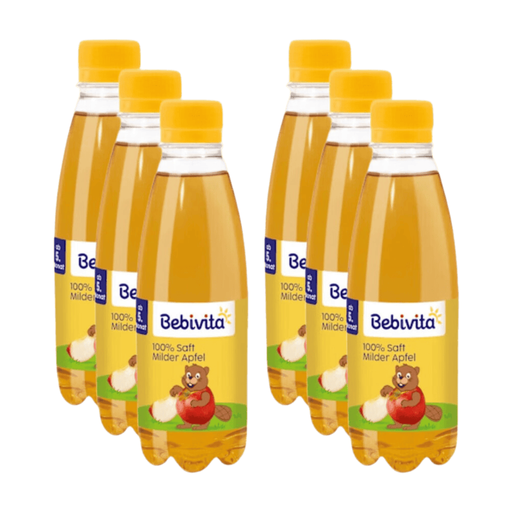
Why this product is a great fit: Specifically developed for the needs of babies from 5 months old. The juice is designed as a mild apple juice, making it particularly low in acid and gentle on the stomach. The 500ml bottles are practical for smaller needs and easy to portion.
Although made from concentrate, the product is subject to strict quality standards for baby food. The explicit "mild" labelling directly addresses concerns about high acidity.
According to the manufacturer, it is rich in Vitamin C and free from gluten and lactose. Ideal as a drink with meals to support iron absorption.
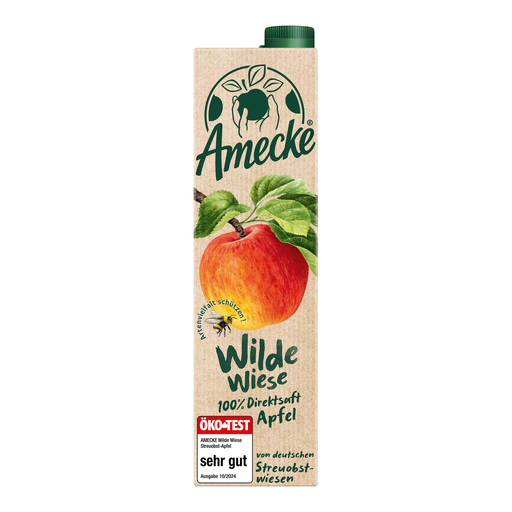
Why this product is a great fit: For anyone who values an authentic and unadulterated taste. As a not-from-concentrate apple juice, this product delivers a natural flavour that comes directly from the fruit.
The clear declaration as "not-from-concentrate" bypasses the concentrate trap. Here, you get a product that has not been rehydrated from concentrate, which is a key quality criterion for many.
According to the ingredients list, it consists exclusively of not-from-concentrate apple juice. This promises a pure and unadulterated taste with no other additives.
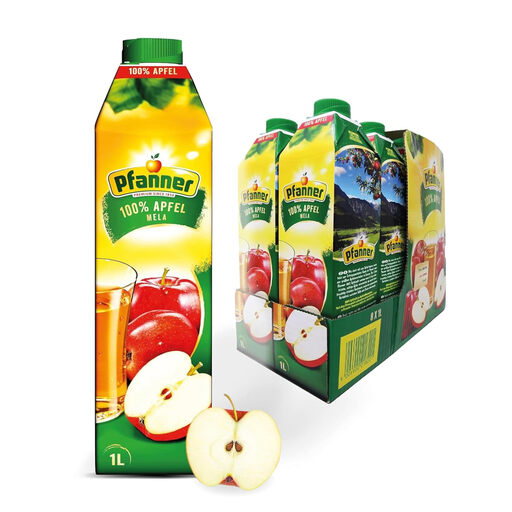
Why this product is a great fit: This bulk pack of apple juice, with six 2-litre cartons, is ideal for families or high consumption. It provides a large quantity of juice and simplifies stocking up for daily needs.
The product is transparently declared as juice from apple juice concentrate. It doesn't promise not-from-concentrate quality but delivers a solid 100% juice base for everyday enjoyment at an economical price.
The total volume of 12 litres offers excellent value for money and reduces the frequency of shopping trips. Ideal for long-term household planning.
We've compiled a complete, up-to-date list of products that fully meet these strict selection criteria.
The main difference is the fruit content. According to food standards regulations, Apple juice must always have a 100% fruit content. No sugar or water may be added. Apple nectar, on the other hand, has a lower minimum required fruit content (usually 50%). Water and sugar or sweeteners may be added to nectar.
Unopened, long-life apple juice in cartons or glass bottles should be stored in a cool, dark place. The best-before date on the packaging provides a good guideline. Once opened, the juice must be stored in the refrigerator and should typically be consumed within 3 to 4 days, as it comes into contact with oxygen and can begin to ferment.
Whether cloudy apple juice or clear juice is the better choice depends on personal preference. Cloudy juice contains more secondary plant compounds (polyphenols), which are bound in the suspended solids. In terms of taste, it is often described as fuller and more intense. Clear juice is preferred by some for its finer texture and lighter taste. Both versions, as long as they are 100% juice, are a good choice with no added sugar.