Breakfast juicers
If you want to quickly make juice from a few apples at your holiday cottage, where there’s an electricity supply, check the size of the feed chute and how much effort is involved in cleaning the appliance afterwards.


For just a few glasses, a centrifugal juicer is an obvious choice if speed matters more to you than a particular pressing method; ETM TESTMAGAZIN cites speed and easy juice preparation as reasons to choose this type of appliance. A slow juicer is worth considering if you care more about how it works or the texture of the juice, while a manual fruit press can be suitable for larger quantities without electricity – provided you have the space and allow time to chop the apples first.
If you want to quickly make juice from a few apples at your holiday cottage, where there’s an electricity supply, check the size of the feed chute and how much effort is involved in cleaning the appliance afterwards.
If you’ll only use it occasionally, its footprint, dimensions and how easy the removable parts are to clean may matter more than the type of juicer.
For larger quantities or pressing without electricity, you’ll need space and time to prepare the apples and clean the press.
First, decide whether you mainly want to make individual portions quickly, process smaller quantities with a slow juicer or press a larger harvest without electricity. Then check that the requirements of the specific model suit the space, preparation and cleaning facilities at your holiday cottage.
| What matters | What to check before buying | Who is it important to? |
|---|---|---|
| Quick portions | Check that it’s suitable for apples and look at the size of the feed chute. If you’re making several glasses, also check the size of the juice jug. | If I’m only juicing a few apples at my holiday cottage, I want to have a glass of juice quickly. Around 36% of consumers put speed first. |
| Space and cleaning | Compare the appliance’s dimensions and removable parts, and check whether they’re specified as dishwasher-safe. | If space in the kitchen is limited and I’ll only use the appliance occasionally, I want to be able to store it easily and clean it after use. Around 29% of consumers prioritise storage space and cleaning. |
| Harvest and independence from mains electricity | For a press, check the capacity of the pressing basket, whether a pressing cloth is included and how you can roughly chop the apples. | If I want to process lots of apples or press them without access to a plug socket, I’ll also need to allow for the space and time required to prepare them. Around 21% of consumers prioritise harvest capacity or independence from mains electricity. |
| How it works and juice texture | For the specific model, compare the filter inserts, feed chute and how easy the parts are to clean. | If I care more about how the appliance works or a particular juice texture than making juice as quickly as possible, I’ll look more closely at its features. Around 14% of consumers put these factors first. |
Citrus presses with a cone and appliances designed for apples work in different ways. Check the product description to make sure the appliance is specifically intended for apples or other firm fruit.
Otherwise, you may need another suitable appliance for apples.
You need to roughly chop apples before pressing them in a fruit press. So, plan for the whole process, from chopping the fruit to cleaning the press.
If you don’t have a suitable mill or another tool for chopping the apples, you may need to buy additional accessories.
The juicer test published by n-tv used carrots and oranges, not apples. Its results therefore don’t confirm a particular juice yield for apples.
Use test results for the criteria that were actually assessed, and look for a test using apples if you want information about apple juice yield.
Electric juicers in the Viva and Avance ranges vary by model in areas such as power, size and features.
The range includes centrifugal juicers and slow juicers; the type and features vary by model.
Electric juicers with a large feed chute are another option to compare if you want to do less chopping when preparing fruit.
Manual fruit presses are an option to consider if you want to process larger quantities without electricity.
Slow juicers offer another type to compare if you care more about how the appliance works and its filters than about making a single portion quickly.
This selection includes a manual apple press with a fruit mill and electric slow juicers. For electric appliances, check that your holiday cottage has a suitable power supply.
 No image available
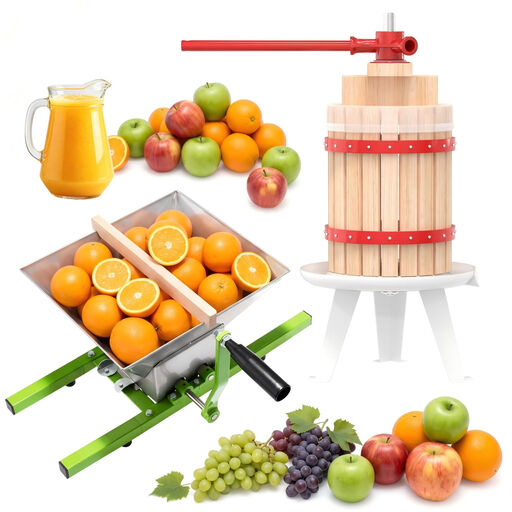
This manual set could be right for you if you want to press apples without electricity and chop them beforehand.
6-litre press; 7-litre fruit mill; pressing cloth included.
 No image available
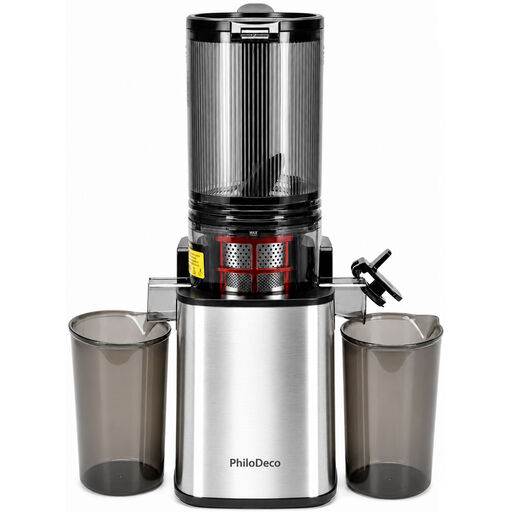
This electric slow juicer could suit you if you’re looking for a large feed chute and a slow-pressing design.
110-mm feed opening; 40 Nm; dual filter; reverse function.
 No image available
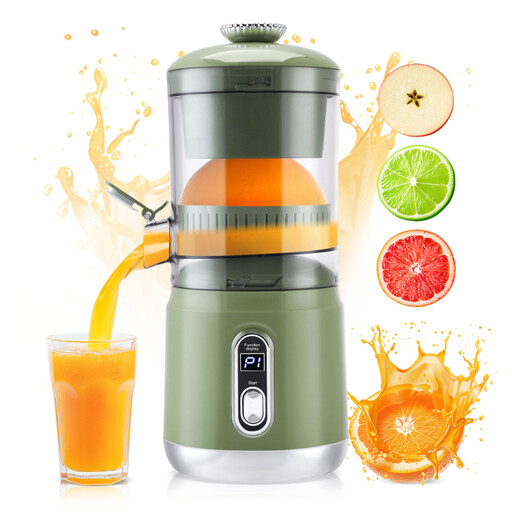
Its travel and camping features may be useful if you want to use it away from a typical kitchen worktop.
Three speed settings; removable parts for rinsing; rechargeable battery, according to the product description.
 No image available
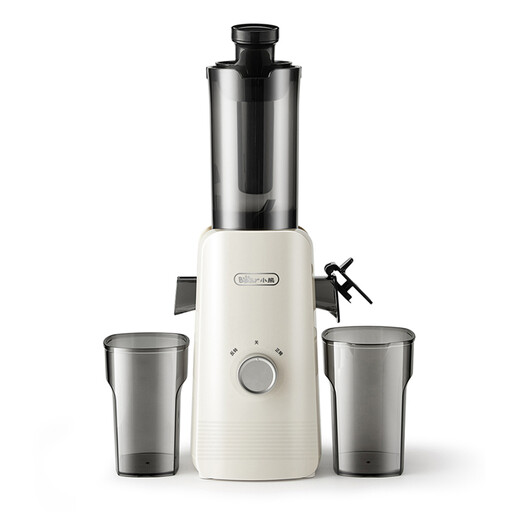
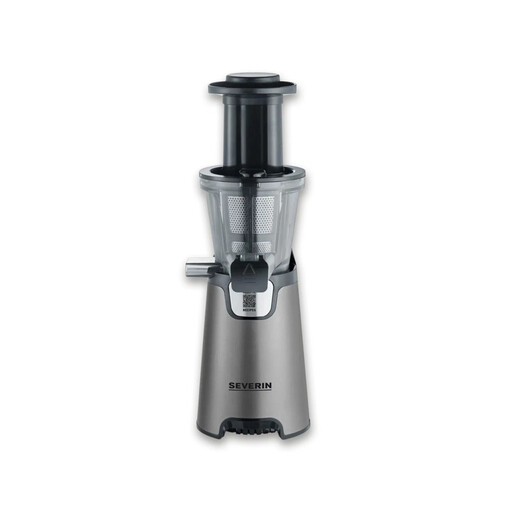
This model could suit you if you’re looking for a slow juicer with a wide feed opening and a 1-litre juice jug.
80-mm feed opening; 1-litre juice jug; silver finish.
 No image available
This electric slow juicer could suit you if you want a 1-litre juice jug and parts that can be cleaned with a brush or, according to the product description, in the dishwasher.
1-litre juice jug; 150 W. Fruit needs to be cut to fit the feed opening. Only use the pusher provided to feed ingredients into the appliance – never your hands.
Not with every appliance. Braun lists a 75-mm feed opening for the SJ7000GY, which can take whole apples; whether yours will fit depends on its size. With a manual fruit press, it’s best to roughly chop the apples before pressing.
Compare the appliance’s dimensions with the available worktop and storage space, and check which parts are specified as dishwasher-safe for that particular model. With electric appliances, only use the pusher provided to feed ingredients into the appliance; Severin warns against using your hands.
Don’t use apples with visible mould: the German Federal Institute for Risk Assessment points out that moulds can produce mycotoxins that are harmful to health. Shelf-life guidance for commercially bottled juice doesn’t apply to freshly pressed apple juice; keep any leftovers refrigerated.
When you buy from a business seller in the EU, you’re generally entitled to a statutory guarantee of at least two years from the date you receive the goods. This is different from a voluntary manufacturer’s warranty.