
Lieferung heute & morgen

Qualitätsgarantie

Willkommens-Angebote freischalten: KOSTENLOSE Lieferung | Bis zu 80 % RABATT | Kostenlose 30-Tage-JoyPlus-Testphase
App herunterladen
Purchasing new major household appliances is a significant investment. Whether it's a washing machine, refrigerator, or dishwasher, these devices are meant to make daily life easier for years to come. However, the market is flooded with marketing promises and technical specs that often confuse more than they clarify. As your Joybuy Product Recommendation Officer, I'm here to help you identify the crucial features and avoid common purchasing pitfalls.
Before you consider any offer, you should be aware of three widespread misconceptions that often lead to disappointment.
To make an informed decision, focus on three objective criteria. These will help you realistically assess an appliance's performance.
The EU energy label provides an initial orientation. However, don't just look at the letter (e.g., Energy Efficiency Class A), but at the specific consumption value.
A quiet appliance significantly enhances your quality of life. The noise emission is listed separately for normal operation and, for washing machines, for the spin cycle.
The capacity must match your household's needs. A single-person household doesn't need a 10 kg washing machine, whereas a family of four would be well-served by one.
Instead of generic recommendations, we present appliances tailored to specific needs that successfully avoid the pitfalls mentioned above.
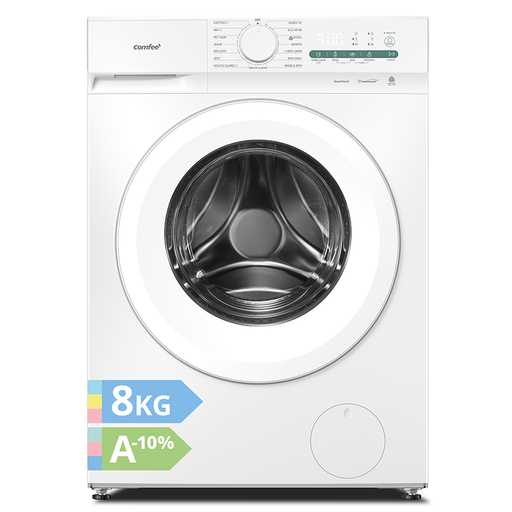
Why it's a great fit: With an 8 kg capacity, this machine is ideal for small to medium-sized families. It combines an excellent Class A energy rating with practical functions that genuinely simplify daily life without breaking the bank.
Instead of unnecessary app functions, it offers a dedicated pet hair programme and a steam function for germ reduction—these are tangible benefits, especially for families with pets or allergy sufferers.
Energy Efficiency Class A (-10%); reload function for forgotten laundry items; hygienic steam cleaning.
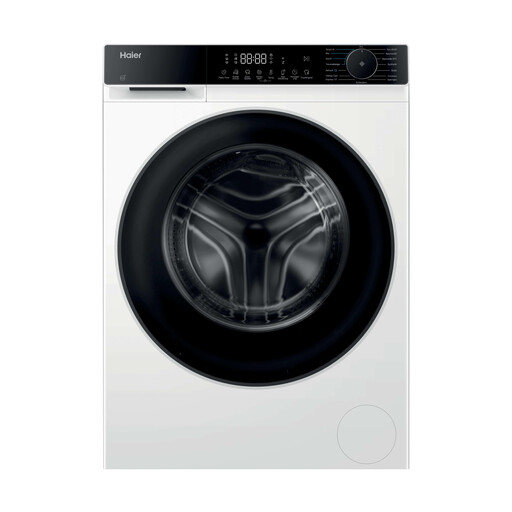
Why it's a great fit: This appliance is designed for large families who wash and dry a lot of laundry. With a 12 kg washing and 8 kg drying capacity, it handles duvets and large laundry loads in a single cycle.
The brushless AI direct drive motor directly addresses the issues of noise and longevity. At just 72 dB during the spin cycle, it is remarkably quiet and low-vibration for its size, making it a solid long-term investment.
Very high capacity; quiet and durable motor; useful app control (hOn App) for monitoring and programme selection; AquaStop safety feature.
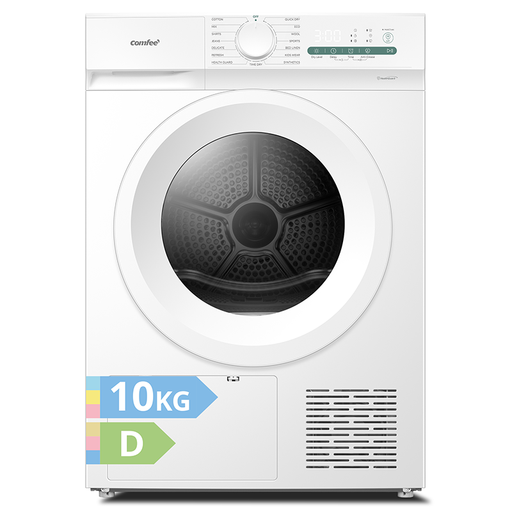
Why it's a great fit: This **heat pump dryer**, with its large 10 kg drum and special hygiene functions, is tailored to the needs of pet owners and allergy sufferers. The heat pump technology also ensures gentle drying at low temperatures.
This appliance focuses on a "smart" feature with direct added value: integrated UV light helps to eliminate bacteria and allergens, according to the manufacturer. The double-layer lint filter is also designed to effectively remove pet hair.
Hygienic drying with UV light; effective pet hair removal; energy-saving heat pump technology; large capacity.
We've curated a complete, up-to-date list of products that fully meet these strict selection criteria and comply with German safety regulations.
The average lifespan of a modern major household appliance is between 8 and 12 years. Factors such as frequency of use, regular maintenance (e.g., cleaning filters and seals), and the quality of the components play a crucial role. Models with brushless or direct drive motors are often designed for greater durability as they have fewer wearing parts.
As a rule of thumb, if the repair costs exceed 50% of the price of a comparable new appliance, a new purchase is often the more economical choice. Also, consider the potential energy savings of a new, more efficient model. A ten-year-old refrigerator can have significantly higher electricity costs compared to a current Class A or B appliance, meaning a new purchase can pay for itself more quickly.
No Frost technology prevents the build-up of ice and frost in the freezer compartment. A circulation system draws moist air out of the interior, cools it centrally, and returns the dry, cold air. This saves you from manual defrosting, ensures consistent cooling performance, and keeps energy consumption permanently low, as there is no insulating layer of ice to impair efficiency.