Families making several glasses
If you want to pour out breakfast smoothies for everyone, compare the recipe quantity with the jug’s stated usable or working capacity.


For several breakfast glasses, a jug blender is a good choice if its stated usable or working capacity is large enough for your recipe. Tefal gives the BL91HD a usable capacity of 1.75 l, while Braun lists a working capacity of 2 l for liquids for the JB 9040 Black. For individual portions, a blender with a drinking cup can save you having to transfer your smoothie; WMF lists a capacity of 0.6 l for the Kult X Mix & Go, so you may need to blend in batches if you want to make several glasses. Texture, cleaning and suitability for frozen ingredients depend on the specific model.
If you want to pour out breakfast smoothies for everyone, compare the recipe quantity with the jug’s stated usable or working capacity.
If you plan to use frozen ingredients, the specifications and blending results for the particular model matter more than general assumptions based on individual features.
If you use your blender often, check before buying which parts can be removed for cleaning and which the instructions say are dishwasher-safe. The space you have available is also a factor when choosing a design.
First, compare the amount you plan to make with the usable capacity. Then check which ingredients the blender is approved for and how well it blends them, as well as how much cleaning it requires and how much space you have.
| What matters | What to look for | Who is it particularly important for? |
|---|---|---|
| Several portions | Compare your recipe quantity with the explicitly stated usable or working capacity. | If I need several glasses for breakfast, I want to be able to blend them all in one go if possible. That’s why around 36% of consumers put portion size first. |
| Texture and ingredients | Check the information about blending results and whether the blender is approved for the ingredients you’ll actually use. | If a smooth texture matters to me or I want to use frozen fruit, I check the specific blending results and which ingredients the blender is approved for. Around 29% of consumers prioritise texture and ingredients. |
| Cleaning | Check the instructions for the exact model variant to see which parts are removable and dishwasher-safe. | If I use my blender often, I want to be able to remove any breakfast residue without unnecessary effort. Around 21% of consumers say cleaning is their main concern. |
| Space and noise | Check the appliance dimensions against the space available; if noise is a concern, only compare like-for-like sound measurements. | If my kitchen has limited worktop space or appliance noise bothers me in the morning, I take both into account when choosing a design. Around 14% of consumers put space or noise first. |
For the Tefal InfinyMix BL91HD, the manufacturer lists a total capacity of 2.6 l but a usable capacity of 1.75 l. The usable capacity is therefore the more relevant figure when comparing it with the amount of smoothie you plan to make.
Compare the total quantity in your recipe with the stated usable or working capacity of the exact model variant.
CHIP’s practical test shows that results can’t be judged by motor power alone.
Also check how well the blender handles the ingredients you actually want to use.
For the JB 9040 Black, Braun’s statement about dishwasher-safe food-contact parts does not include the jug.
Check the instructions separately to see whether the container, lid and blade assembly can be washed in the dishwasher.
The German Federal Institute for Risk Assessment warns of poisoning risks from bitter apricot kernels, particularly for children.
Remove the stones from apricots and don’t blend the kernels.
The InfinyMix BL91HD is a jug blender that the manufacturer also lists with a to-go cup.
The PowerBlend 9 JB 9040 Black is a jug blender with texture programmes and a manufacturer-stated working capacity for liquids.
The Kult X Mix & Go is a compact personal-blender alternative if you don’t need to blend the whole family’s portions at once.
The 3000 Series HR2291/41 is another jug blender.
This selection includes jug blenders whose product details say they are suitable for smoothies. Compare the stated container capacity with the amount in your recipe; it isn’t automatically the same as the usable capacity.
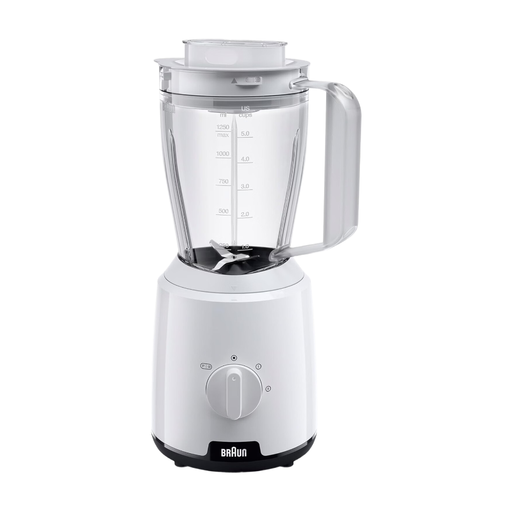 Image unavailable
This jug blender is listed as suitable for smoothies, making it an option if the blending jug can hold the amount you’re planning to make for breakfast.
The product name lists a capacity of 1.5 l, 600 W, two speeds and an ice-crush function. Removable parts are described as dishwasher-safe.
 Image unavailable
The product description lists smoothies as one of its uses; compare the stated container capacity with the amount you want to make for breakfast.
Features listed include a 1.5-l container, 600 W, three speed settings and an ice-crushing function. The description also says it can be easily dismantled for cleaning.
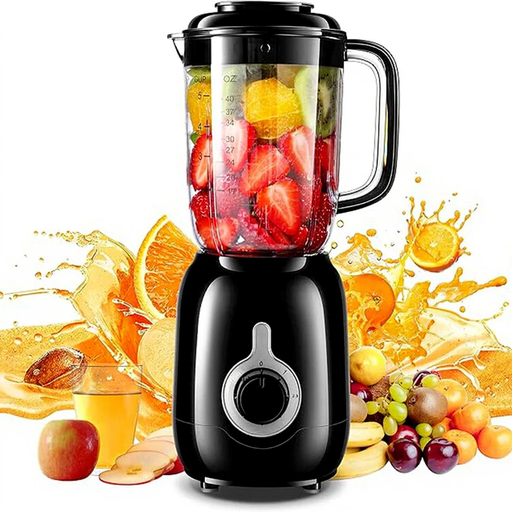 Image unavailable
The product details list smoothies as one of its uses; check that the stated jug capacity is right for the amount in your recipe.
Features listed include a capacity of 1.2 l, 500 W, two speeds, a Pulse function and four stainless-steel blades. The product information recommends warm, soapy water for cleaning.
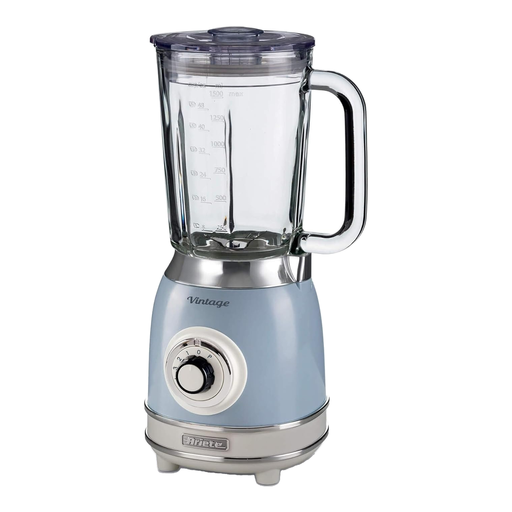 Image unavailable
The description lists smoothies as one of its uses; compare the container capacity with the total amount you plan to make.
Features listed include a capacity of 1.5 l, four speeds, a Pulse function and an ice-crushing function. The product description says some components are dishwasher-safe.
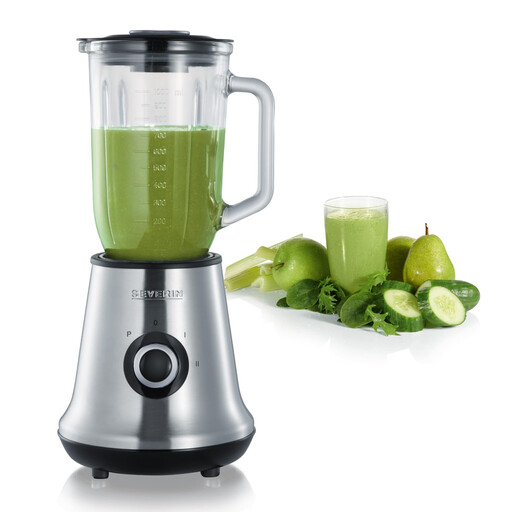 Image unavailable
This model is described as a stand blender and smoothie maker; compare the jug capacity with the amount you plan to make for breakfast.
Features listed include a 1.0-l glass jug, 500 W, two speeds and a Pulse function. The instructions say the jug and lid are not dishwasher-safe.
Add together the amounts you plan to pour, then compare the total with the usable or working capacity of the specific blending container, not just its total capacity. For example, Tefal lists a usable capacity of 1.75 l and a total capacity of 2.6 l for the BL91HD.
No. Remove the stones before blending and don’t put apricot kernels in the blender. The German Federal Institute for Risk Assessment warns of risks from bitter apricot kernels; remove the whole stone and kernel, but you can still use the flesh.
You can’t assume that based on a general statement about the appliance. Check the instructions for the container, lid and blades individually; Braun’s statement about dishwasher-safe parts that come into contact with food does not include the jug for the JB 9040 Black.
Not necessarily. An ice-crush function alone doesn’t prove that a model is suitable for every frozen ingredient. Check the manufacturer’s guidance for the specific ingredient and bear in mind that blending results vary by model.
No. Wattage alone doesn’t tell you for certain what the blending result will be. CHIP’s practical test highlights differences in results that can’t be explained by motor power alone, so check how well the blender handles the ingredients you want to use too.