If you want a smooth result
If a smooth consistency matters to you, compare the results from specific models rather than looking only at wattage. COMPUTER BILD and CHIP describe general blending tests, not tests specifically for apricot smoothies.


For a small portion of prepared apricots, a hand blender with a suitable blending beaker is a good place to start. Focus on the blending results of the specific model and its care instructions, rather than wattage alone. Variable speed gives you more control, but doesn’t guarantee a particular apricot texture. A larger set is worth considering mainly if you’ll use the extra attachments regularly.
If a smooth consistency matters to you, compare the results from specific models rather than looking only at wattage. COMPUTER BILD and CHIP describe general blending tests, not tests specifically for apricot smoothies.
After blending, check the instructions to see how to clean the blending foot, beaker and motor unit. According to COMPUTER BILD, the blending foot of the Kenwood HDP106WG they tested was not dishwasher-safe.
Choose a beaker that suits the amount you plan to make and the storage space you have. Kenwood lists a 700 ml beaker for the HDP106WG; Severin also specifies 0.7 l for the SM 3773. These are model-specific details, not general serving recommendations.
First, check that the beaker and cleaning requirements suit your short break. Then compare the blending results of the specific model and consider whether you really need variable speed or extra attachments.
| What matters | What to look for | Who is this important to? |
|---|---|---|
| A smooth blend | Compare model-specific blending tests and speed settings. | If I want the smoothest possible consistency, I compare results from the specific model rather than looking only at wattage; around 31% of consumers put blending performance first. |
| Cleaning up after a break | Check the care instructions for the blending foot and beaker separately. | After making a single portion, I want to clean the blending foot and container without unnecessary hassle. For around 31% of consumers, cleaning is the top priority. |
| Portion size and storage | Check that the beaker size and what’s included suit the amount you plan to make and the space you have. | For my break, I want a beaker that suits a small portion without taking up unnecessary space; approximately 23% of consumers prioritise portion size and storage. |
| Extra features | Check the attachments, plug requirements and, where applicable, battery for the specific model. | If I regularly do other kitchen tasks as well as making smoothies, or blend somewhere without an easily accessible socket, suitable attachments or cordless operation matter; around 15% of consumers prioritise these additional uses. |
Wattage alone doesn’t show how smoothly a particular model will blend apricots. Braun’s product page for the MQ 55001 M gives conflicting power ratings in the product description and technical specifications.
Compare results and ease of use for the specific model instead of assuming its wattage guarantees a particular consistency.
A removable part isn’t necessarily safe to clean in a particular way. COMPUTER BILD described the blending foot of the Kenwood HDP106WG they tested as not dishwasher-safe.
Check the care instructions for each part of the exact model variant.
Extra attachments mean more parts to store and clean.
Choose what’s included based on whether you’ll regularly use the extra functions.
The German Federal Institute for Risk Assessment warns against bitter apricot kernels, which can release hydrocyanic acid during digestion.
Remove the stone and don’t add it or apricot kernels to your smoothie. Use fresh fruit with no signs of spoilage and wash it before preparation.
The Triblade HDP106WG is a relatively simple model supplied with a 700 ml beaker.
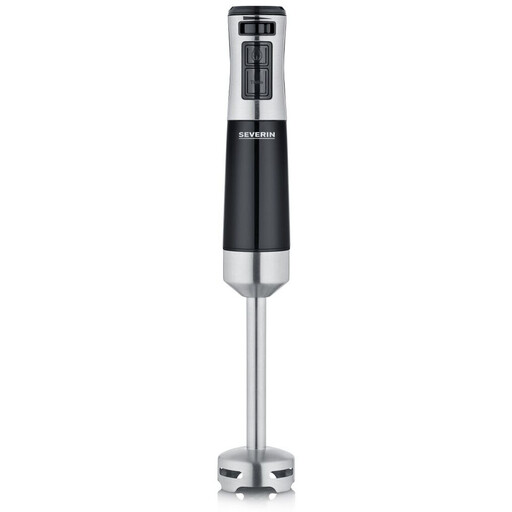
The SM 3773 combines a stepless speed control with a 0.7 l beaker and lid.
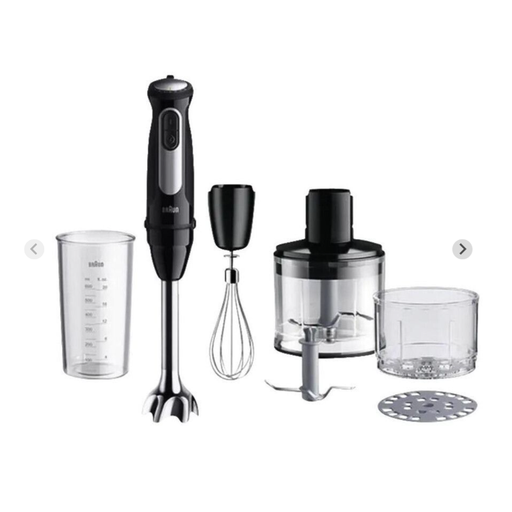
The MultiQuick 5 Pro MQ 55001 M is an example of a model with variable speed control and a measuring beaker included.
The ErgoMaster MSM6M8X1 comes with more features than a blender designed purely for blending.
The cordless Go 5KHBRV75BM is an option if there’s no easily accessible socket where you blend and you’ll use the extra attachments.
This selection includes hand blenders for smoothies with variable speed, as well as models supplied with extra accessories.
 No image available
Variable speed control is useful if you want to control how you blend fruit for smoothies.
600 W; stepless speed control; removable stainless steel blending shaft.
 No image available
If you do other kitchen tasks as well as making smoothies, the extra attachments could come in handy.
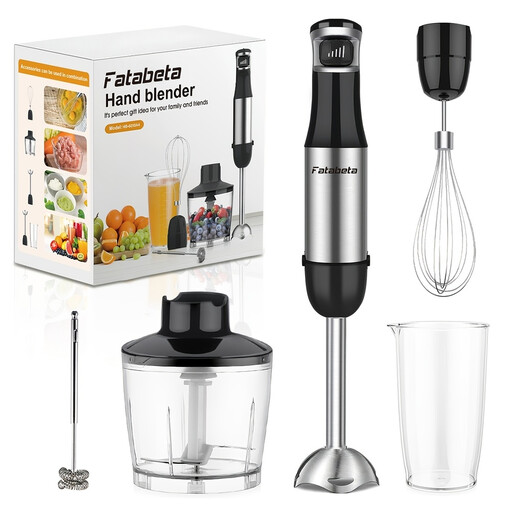
5 speed settings; stainless steel blending shaft; listed as including a chopper, whisk and milk frother.
 No image available
Adjustable speed settings are useful if you want to vary how you blend.
25 adjustable speed settings and a Turbo function; metal blending shaft. The product description says the accessories are dishwasher-safe.
 No image available
The ice crusher attachment is a handy extra if you want to crush ice as well as make smoothies.
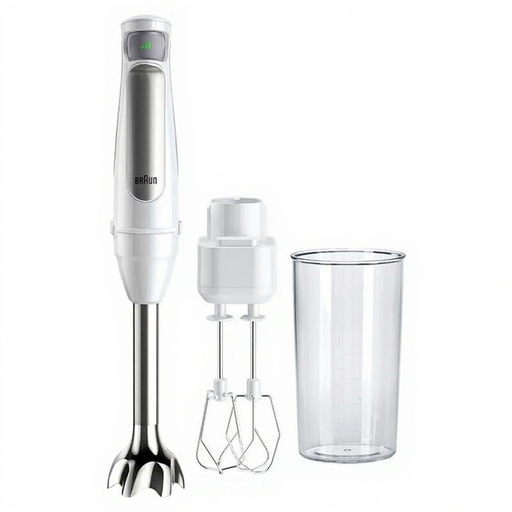
The product description lists removable components and dishwasher-safe parts.
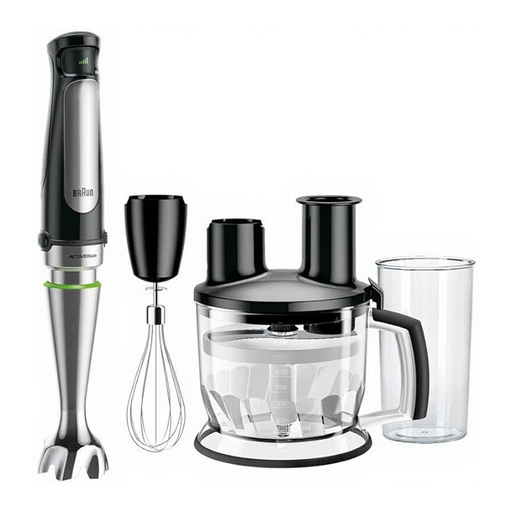 No image available
This set is better suited to you if you regularly prepare more than just smoothies.
SmartSpeed for adjusting the power; 600 ml measuring beaker; 1.25 l food processor with slicing discs; whisk.
Wash fresh apricots and don’t use any fruit that shows signs of spoilage. Remove the stone and don’t blend it or the kernels. The German Federal Institute for Risk Assessment specifically warns against bitter apricot kernels, which can release hydrocyanic acid during digestion.
It depends on the part and the model. COMPUTER BILD says the blending foot of the Kenwood HDP106WG is not dishwasher-safe. Unplug a corded appliance before cleaning it or changing parts, and follow the instructions for the exact variant.
No, a large set isn’t essential for blending a single portion. First compare the beaker, blending results and care requirements of the specific appliance. Extra attachments are most useful if you’ll use their functions regularly.
Your statutory rights are separate from a voluntary guarantee. The Verbraucherzentrale explains that if a product is faulty, you can initially request that the seller puts things right by repairing or replacing it; any additional guarantee is subject to its own terms.
No. For products that must carry a CE mark under EU rules, the manufacturer uses it to declare that the product meets the relevant requirements. It is not an independent certification mark and does not replace following the safety instructions for the specific appliance.