What should you look for when buying?
When several people share the same laundry schedule, it helps to decide what matters most to you first: having aprons ready on time, space for several aprons, storage, room humidity or ongoing electricity use.
Heated rail airer
A good fit if: you want to hang several aprons side by side and have a shared time slot available for drying after the wash.
Worth considering: the appliance needs clear floor space, and moisture from the laundry initially remains in the room air.
Compact heated airer
A good fit if: you only need to hang a few smaller aprons and a narrow floor or suitable wall space matters more than a large drying area.
Worth considering: a compact design does not tell you how many wide aprons will fit at once.
Warm-air dryer with cover
A good fit if: you want to hang aprons on hangers and timed operation suits the space you have and your laundry schedule.
Worth considering: this design works differently from heated rails; the rated power does not indicate a specific drying time.
Unheated airer or cool-air circulation
A good fit if: you have plenty of time or want to avoid applying heat to the aprons.
Worth considering: drying time still depends on the fabric, amount of laundry and room conditions; an airer with cool-air circulation is not a heated rail airer.
| What matters |
What to check before buying |
Who is it most important to? |
| Having aprons ready on time |
Check that the time slot, timer and appliance type suit the number of aprons you actually need to dry. |
If I need my aprons ready again by my next appointment, it matters whether the time slot and hanging arrangement work together. Around 28 % of consumers are mainly concerned with having their aprons ready on time. |
| Space for several aprons |
Check the usable rails or hanger spaces, apron dimensions and the specific model's stated load capacity. |
If several aprons are washed at once, I want to hang them with enough space between them. For around 22 % of consumers, capacity is their main buying priority. |
| Storing the airer |
Compare the dimensions when assembled and folded, or check the requirements for wall mounting. |
If the drying area needs to be clear again between laundry days, the dimensions when assembled and stored are key. Around 17 % of consumers prioritise the space available. |
| Managing room humidity |
Plan a suitable location and ways to ventilate the room; monitor humidity if needed. |
If I dry aprons indoors, I want to keep an eye on the extra moisture in the room. Room conditions are a priority for around 17 % of consumers. |
| Estimating electricity use |
Use the rated power, actual hours of operation and your own electricity tariff to make an estimate. |
If the appliance is used regularly as part of a shared laundry schedule, I want to be able to estimate its energy use over time. Around 16 % of consumers pay particular attention to ongoing electricity costs. |
Ventilation remains important when drying indoors: Germany's consumer advice centre points out that moisture should be regularly removed from the room. Also check whether the care label on your apron allows the type of drying you have in mind; it is not possible to make a general recommendation for an unfamiliar material.
Joybuy products
The options below include folding heated rail airers and portable warm-air clothes dryers. Compare their design with the space available, the hanging arrangement you need and your laundry schedule. Before buying, check the safety information for the specific appliance and the care labels on your aprons.
 No image available
Folding heated clothes airer, 144 × 53 × 96 cm
May suit you if heated rails and putting the airer away after washing fit your shared schedule.
The product name lists a temperature range of 45–55 °C and dimensions of 144 × 53 × 96 cm. Check that it will fit in the intended location.
View at Joybuy
 No image available
Portable clothes dryer, 600 W, 1, 2 or 4-hour timer
May suit you if a portable warm-air appliance works better for your space and available time than heated rails.
The product name lists 600 W, a touchscreen and timer settings of 1, 2 or 4 hours. The timer setting does not guarantee a particular drying time for aprons.
View at Joybuy
 No image available
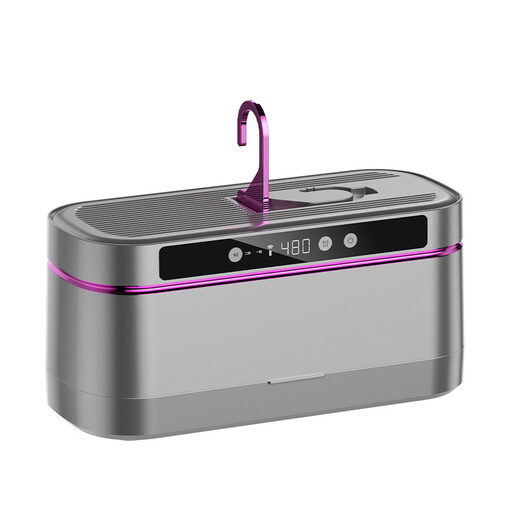
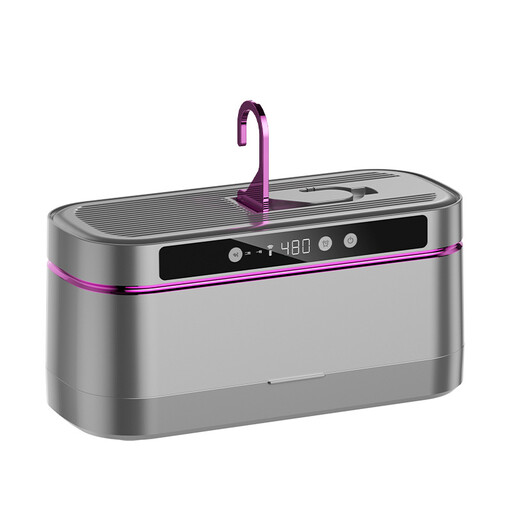
Compact portable clothes dryer with timer
May be worth considering if a portable warm-air appliance suits your laundry schedule for a small load.
The description lists several timer modes. The air outlet and nozzle can become hot: do not cover them, touch them directly or expose them to water.
View at Joybuy
 No image available
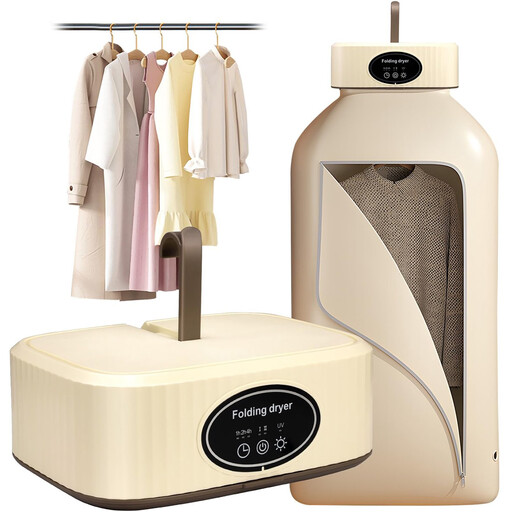
Folding portable clothes dryer
May suit you if a portable warm-air appliance is an option instead of a rail airer and you want to put it away after use.
The product name describes a folding design, and the description lists small spaces as a possible use. Check first that it suits the intended location and the care instructions for your aprons.
View at Joybuy
Frequently asked questions
Can I tell from the wattage whether my aprons will be dry in time?
No. The wattage describes the rated power, not how long your aprons will take to dry. To estimate electricity costs, you also need the actual hours of operation and your electricity tariff. Be sure to distinguish between heated rails and a warm-air appliance.
What should I bear in mind when using an appliance in a shared room?
Position or install the specific appliance in accordance with its instructions, allow enough space for the aprons and remember to ventilate the room. Germany's consumer advice centre recommends regularly replacing damp air and checking room humidity if needed.
What electrical marking must a mains-powered model have in Germany?
For electrical equipment within the scope of 50 to 1,000 V AC, the EU Low Voltage Directive requires CE marking. CE marking is the manufacturer's declaration of conformity, not an independent safety test; check the information and safety instructions for the specific appliance.
Who should I contact if the appliance develops a fault after purchase in Germany?
If a product is faulty, the seller is generally responsible for handling your statutory consumer rights, not the manufacturer. Germany's consumer advice centre states that this period is generally two years from delivery; a voluntary manufacturer's guarantee is separate.


