Drying aprons in time for the start of the working week
You regularly wash aprons before your first working day and choose a dryer based on the time available, a suitable way to hang them and their care instructions.


A heated clothes airer may be a good option if you regularly wash aprons shortly before the start of the working week and the extra heat is compatible with their care instructions. Heated rails and warm-air dryers mainly differ in how you hang the aprons; there is no reliable evidence here of a specific drying time for aprons with either design. If you have enough time, a non-electric airer dries your washing without using extra electricity.
You regularly wash aprons before your first working day and choose a dryer based on the time available, a suitable way to hang them and their care instructions.
You want to hang several longer items with enough space between them, while also taking into account the room you have available and where you can store the airer.
You want to consider together how well your aprons tolerate heat, the extra electricity required and the moisture produced when drying indoors.
First, compare the hanging space and footprint with your aprons, then check heat compatibility and how much time you have. Non-electric models avoid extra electricity use, but don’t provide active heat.
| Consideration | What to look for | Who is it important to? |
|---|---|---|
| Aprons dry in time | Check how many hours you have, how the aprons will hang and the space between them; a timer alone doesn’t tell you how long they’ll actually take to dry. | If I wash aprons shortly before the working week starts, it matters to me whether they can dry in time. Around 33% of consumers say the time available for drying is their top concern. |
| Space to hang them | Check the dimensions when open, the height and usable hanging space against the length of your aprons and the room available. | If several aprons need to hang separately, the airer must fit comfortably in the room. Around 27% of consumers put hanging space and floor space first. |
| Fabric care | Follow the care label on each apron, as well as the appliance’s temperature range and instructions. GINETEX GERMANY explains that care labels specify the maximum permitted treatment. | If looking after my aprons matters more than speed, I check the care instructions before using a heated appliance. Around 20% of consumers say fabric care is their top concern. |
| Electricity and room humidity | For electric appliances, take the power consumption and planned running time into account; when drying indoors, also choose a suitable place and plan how you’ll ventilate the room. The German Environment Agency recommends paying particular attention to regular ventilation when drying wet laundry in living spaces. | If electricity use and moisture in the home are especially important to me, I also consider a non-electric airer. Around 20% of consumers put running costs and indoor air quality first. |
The rated power and timer setting don’t tell you how quickly an apron will dry. Fabric, residual moisture and how you hang it all affect the drying process.
Compare the hanging arrangement, heat compatibility and time available separately. Don’t estimate the running time based on the power rating alone.
A large number of rails doesn’t guarantee that aprons can hang at full length, with space between them and without touching the floor. The airer also needs to fit in the room when fully open.
Measure your aprons and the space where you plan to put the airer, then check the actual hanging arrangement, height and footprint of the model.
Heating your laundry as it dries doesn’t mean you can ignore the moisture it releases into your home.
Choose a suitable place to dry your laundry and plan how to remove the moisture. This applies to non-electric airers too.
The models listed use different hanging arrangements: Warmmat has heated rails, while Dupledry Blue is a separate warm-air dryer.
The BH16 is described as a folding clothes airer with an electric heating function.
The Pegasus Slim 15m is a non-electric alternative to consider if hanging space matters more to you than active heat.
The 2500 folding clothes airer is a non-electric, extendable option for larger loads of laundry.
This selection includes electric clothes dryers and a freestanding clothes airer. For aprons, compare the hanging arrangement, length and space needed with the room you have at home. The EU explains that CE marking is required only for products covered by relevant harmonised legislation. So, for an electric model, check the conformity information and required markings that apply to that specific appliance.
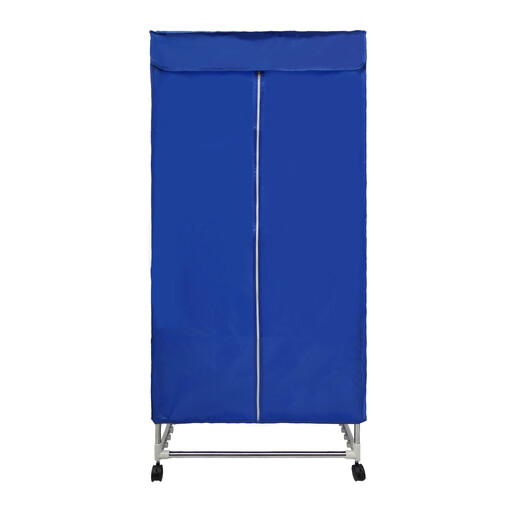 No image available
Could work for aprons if the hanging arrangement and available space suit their length.
Described as a folding electric clothes dryer with a timer. Check your aprons’ care instructions before use.
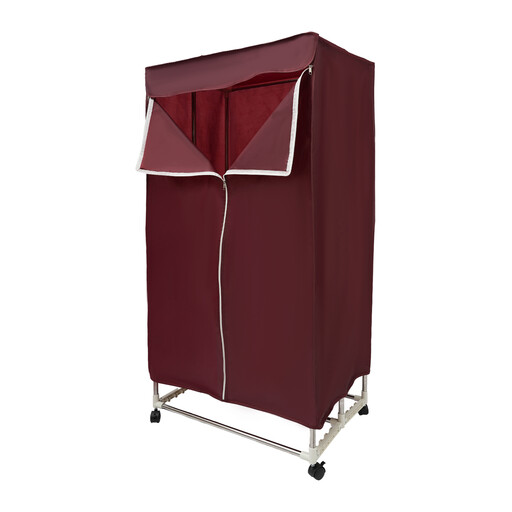 No image available
Could be suitable if you’re looking for a folding electric dryer and your aprons can hang in it with enough space between them.
The product name specifies 1200 W and a stated load capacity of 66.14 lb. Check your aprons’ care instructions and the hanging details.
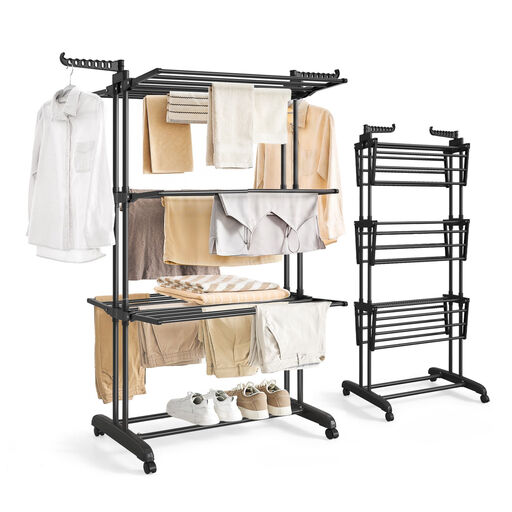 No image available
A non-electric drying option could work if you have enough time between washing and the start of work, and the aprons fit on the airer.
The product name lists four tiers and open dimensions of 64.2 × 126.6 × 169.2 cm. Check these against the space where you plan to put it.
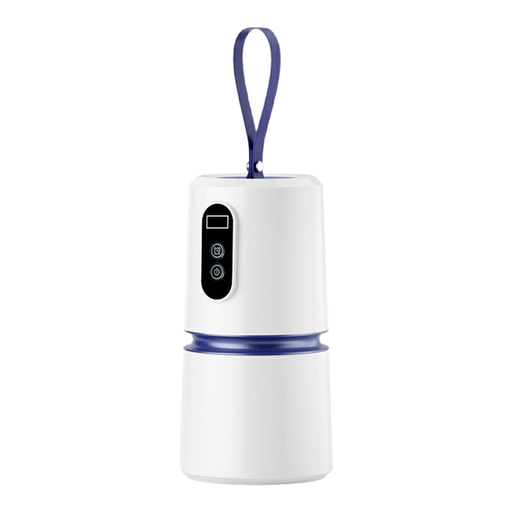 No image available
Could be worth considering as a compact electric drying option if your aprons fit inside the drying bag provided.
The product name lists a power rating below 500 W, a timer of up to 240 minutes and a capacity of 5–10 kg. Check that the intended use is compatible with your aprons’ care instructions.
First, read the care instructions for that particular apron and check them against the appliance’s instructions. According to GINETEX GERMANY, care symbols specify the maximum permitted treatment. A symbol prohibiting tumble drying doesn’t automatically mean that heated rails or warm air are suitable.
Hang your laundry with space between items and make sure you can ventilate the room properly. The German Environment Agency recommends paying particular attention to regular ventilation when drying wet laundry in living spaces; a heating function doesn’t replace it.
Whether CE marking is required depends on the relevant EU rules for the product in question; it isn’t an independent quality mark. For electric models, check the applicable conformity information and required markings. Your Europe, the European Union’s consumer portal, says that goods bought from professional sellers generally come with a minimum two-year legal guarantee from the date you receive them; this is separate from any voluntary guarantee.