Apron wearers short on storage space
If you need to put the airer away after use, check its dimensions both in use and when folded. Adler lists the AD 7821 as measuring 148 × 52,5 × 90 cm when open and 113 × 52,5 × 8 cm when folded.


If you want to put your clothes airer away after use, a heated folding airer is a suitable option, provided its dimensions in use and when folded work for your home. If you need to dry several aprons, a tower airer or a wall- or ceiling-mounted solution may make better use of the available hanging space; the latter requires a suitable place to install it. Heat is no substitute for checking the care label or airing the room: Adler lists different dimensions for its folding and tower models, while GINETEX says the care instructions on each textile are the ones to follow, and the German Environment Agency recommends regular ventilation when drying damp washing indoors.
If you need to put the airer away after use, check its dimensions both in use and when folded. Adler lists the AD 7821 as measuring 148 × 52,5 × 90 cm when open and 113 × 52,5 × 8 cm when folded.
If you have several items to dry, usable hanging space and sufficient height matter more than the number of heated bars alone. Compare your aprons with the hanging areas available on the specific model.
If your aprons are made from different fabrics or have different coatings, check the type of heat and temperature settings against the care label on each one. GINETEX says the label is the authoritative guide to how the textile can be treated.
A good fit if: You have somewhere to store the airer flat after drying and enough floor space to set it up while it’s in use.
The trade-off: The wings need space, and there’s no evidence here of a specific drying time for individual aprons.
A good fit if: You need to hang several aprons and a smaller footprint matters more than keeping the folded airer low.
The trade-off: A tower can still be tall when folded, so check that you have enough storage space vertically.
A good fit if: Keeping the floor clear is a priority and you have a suitable place to install it with access to a power socket.
The trade-off: Once installed, it permanently takes up space on the wall or ceiling.
A good fit if: You’d rather hang aprons on hanger supports inside a covered, vertical structure.
The trade-off: This design isn’t a flat-folding heated-bar airer, and the care label remains the key guide.
A good fit if: Your aprons can dry without a deadline and you don’t need optional heat.
The trade-off: You’ll still need somewhere suitable to set it up and store it, as well as a way to remove moisture from the air while drying clothes indoors.
| What matters | What to check before buying | Who is it most relevant to? |
|---|---|---|
| Floor space and storage | Compare the dimensions in use and when folded; measure the height, depth and length of the space where you’ll set it up and store it. | If I have to put the airer away after every use, I want to be sure it fits both the drying area and the storage space. Around 31% of consumers put available storage space first. |
| Usable hanging space for aprons | Compare the length and width of your aprons with the hanging height, distance between bars or hanger positions. | If I want to dry several aprons at once, I need separate spaces where the fabric won’t overlap. Around 25% of consumers care most about having room for several items. |
| Use of heat and electricity costs | Consider the rated power, timer and intended running time; the rated power alone doesn’t tell you how much energy one drying cycle will use. | If I only want to use the heating function when needed, the operating mode and running time matter too. Around 19% of consumers put potential heat and electricity costs first. |
| Suitability for the apron material | Read the care label and compare its temperature and contact-heat or warm-air requirements with the appliance instructions. | If my aprons are made from different fabrics or have different coatings, I want to check that the type of heat is suitable for each item. Around 13% of consumers prioritise suitability for the textile. |
| Moisture in the home | Plan where you’ll dry items and how you’ll ventilate the space; heat is no substitute for removing moisture. | If I’m drying aprons indoors, I need somewhere I can remove the moisture from the air. Around 12% of consumers pay particular attention to indoor humidity. |
A winged airer that folds flat can still take up a lot of floor space when in use. Tower and ceiling-mounted solutions use space in different ways.
Check the dimensions in use and when stored separately. If you’re considering a mounted solution, factor in the exact installation spot too.
The rated power doesn’t tell you how much energy is used to dry a particular apron. Running time and the selected operating mode matter too.
Compare the power rating with how long you expect to use the appliance. To estimate your own energy use, multiply the power in kilowatts by the number of hours it runs.
When damp aprons dry, moisture is released into the air. The German Environment Agency lists damp washing as a source of moisture indoors.
Choose a drying spot where you can remove the moisture effectively.
Adler offers heated airers in different designs, including the flat-folding AD 7821 winged airer and the taller AD 7831 tower airer.
The Warmmat and Dupledry Blue product ranges differ in design and type of heat: Warmmat is a heated airer, while Dupledry Blue is a vertical warm-air dryer with a cover and hanger supports.
According to the manufacturer, Foxydry Pro is a height-adjustable, mounted warm-air solution; a separate wall-mounted version is also available.
The Joybuy products below are designed for heated drying, fold-away appliances or compact solutions for small loads of washing.
 No image available
This folding design may suit you if you want to put a heated airer away after drying.
Temperature range according to the product name: 45–55 °C. Check that the temperature is suitable for the care label on each apron.
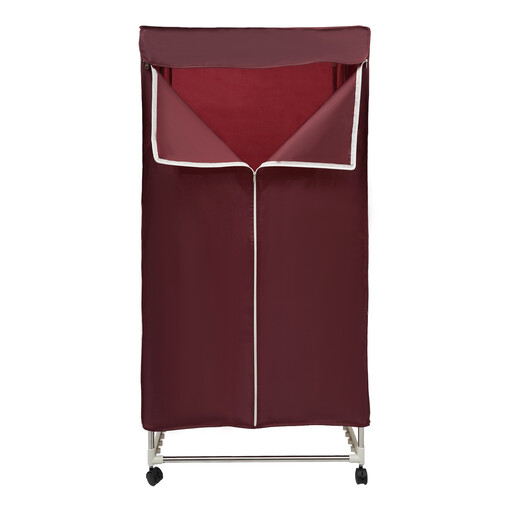 No image available
This folding design may suit households looking for a portable drying solution that can be put away after use.
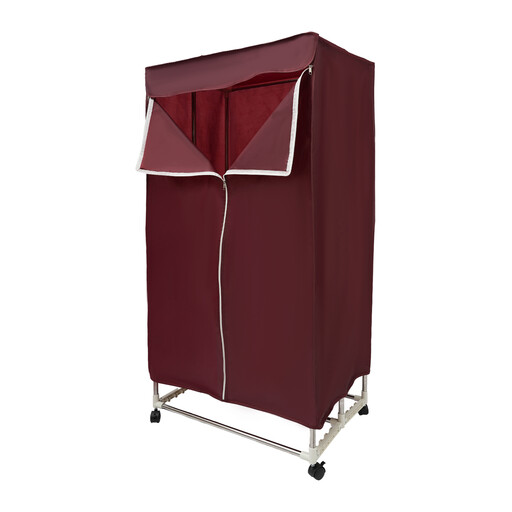 No image available
This foldable model is one option if you need to put the appliance away after drying.
The product name lists 1200 W and a load capacity of 66.14 lbs; a timer is also mentioned. These details don’t measure drying time or energy use per apron.
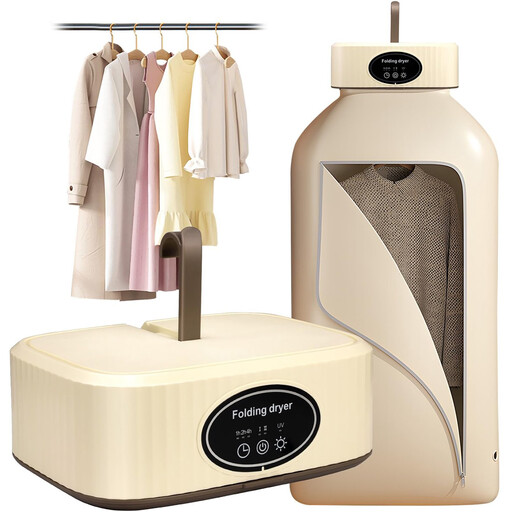 No image available
The product name lists a timer with 1-, 2- or 4-hour settings; its foldable design may be useful if storage space is limited.
Check that the type of heat and running time are suitable for the apron’s care instructions.
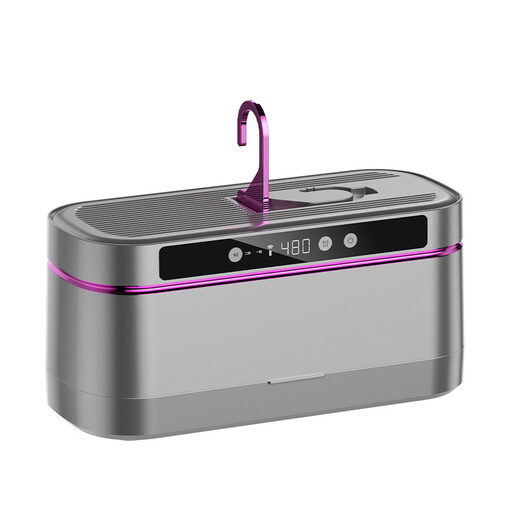 No image available
This compact design may work for small loads of washing if a clothes airer isn’t suitable; it isn’t a conventional airer for hanging several aprons.
The air outlet and nozzle become hot during use: don’t cover them or touch them directly. Unplug the appliance before cleaning or moving it, and keep it away from water, naked flames and flammable materials.
Measure the space for the airer when open and the actual space where you’ll store it. Also check whether you can ventilate the drying area; the German Environment Agency lists damp washing as a source of moisture indoors.
There’s no one-size-fits-all answer. Check the care label for each textile against the appliance’s temperature, type of heat and instructions; GINETEX says care symbols indicate how an item may be treated.
For a rough estimate, multiply the power in kilowatts by the number of hours the appliance runs and your electricity price per kilowatt-hour. This isn’t a measurement of one drying cycle; the timer, heating mode and actual running time can all affect the result.
Your statutory rights are generally against the seller and are not the same as a voluntary manufacturer’s guarantee. If a product is faulty, repair or replacement may be the first remedy; the consumer advice centre explains the difference between statutory rights and a guarantee.
For electrical appliances covered by the EU Low Voltage Directive, the manufacturer must carry out the applicable conformity assessment, draw up an EU Declaration of Conformity and affix the CE marking. The European Commission makes clear that the CE marking is not an approval by a government authority. For a specific appliance, check the relevant manufacturer documentation.