For fixed-layout architecture PDFs, a larger screen is a sensible starting point, but it doesn’t guarantee that small labels will be readable without zooming. If you want to assess colour plans or photographs, check how they look on the device you’re considering. For longer reading sessions in bed, weight, grip and adjustable lighting may matter more. Also check the file format, copy protection and note-taking features using a specific title.
Who reads architecture e-books?
Readers of plans and PDFs
If you want to check floor plans, cross-sections and small captions with as little zooming as possible, try a sample page on the model you’re considering. The screen sizes of the devices described by BOOX and reMarkable may help you narrow down your options, but they can’t replace a readability test.
Readers of illustrated books
If photographs, colour drawings or colour codes are important to understanding the content, how they appear on the specific display matters. PocketBook lists different resolutions for colour and black-and-white content on the InkPad Color 3.
Readers who read one-handed in the evening
If you’ll be holding your e-reader for a long time in bed, consider its weight, grip, page-turn buttons and adjustable reading light together. The manufacturer lists a grip edge and page-turn buttons for the tolino epos 3; its stated weight of 232 g is for the device, not a case.
What should you look for when buying?
Start by checking a page from one of your own books. Then weigh up colour, ease of use and file compatibility against your actual reading and note-taking needs.
| What matters |
What to check before buying |
Who it matters to |
| Plan readability |
View one of your own PDF pages with small labels at full-page size and zoomed in; check the model’s screen size and orientation. |
If I’m reading a floor plan with small labels on a fixed-layout PDF page, I want to take it all in without having to zoom constantly. Around 33% of consumers are likely to consider plan readability their main concern. |
| Colour for illustrations |
View a typical colour photograph and a colour-coded plan on the actual device; check the difference between colour and black-and-white resolution. |
If colour photographs or colour codes are important to understanding the content, I want to assess them on the actual display. Around 25% of consumers are likely to make colour their top buying priority. |
| Ease of use and lighting |
Check the weight with your chosen case, the grip position and how adjustable the reading light is on the exact model. |
When reading in bed for a long time, I want to hold the device comfortably and adjust the light to suit me. Around 25% of consumers are likely to focus primarily on ease of use and lighting. |
| Files and notes |
Check the file format and copy protection on a title of your own; if you need to write on it, test annotation and export using a suitable sample file. |
If I want to annotate my own files, the copy protection, stylus features and export option I need must all work together. Around 17% of consumers are likely to consider file format and note compatibility their main concern. |
Common misconceptions
-
A colour display automatically makes fine plan labels easy to read
Colour alone tells you nothing about the available screen area or how easy small details are to read. For the InkPad Color 3, PocketBook lists 150 dpi for colour content and 300 dpi for black-and-white content.
Before deciding, view a plan with fine colour labels on the exact model you’re considering.
-
PDF support means unrestricted stylus and export features
Rakuten Kobo notes that you can’t write on DRM-protected PDFs or files with locked annotations using the stylus.
Check the copy protection and writing permissions, then test the workflow you want using a suitable sample file.
-
The device’s weight tells you how heavy it will feel with accessories
reMarkable lists the Paper Pro at 525 g, while tolino lists the epos 3 at 232 g. These figures don’t include a case, and they don’t tell you how the complete set-up will feel when you’re holding it for a long time.
When comparing devices, consider how you actually plan to hold yours and which accessories you want to use.
Key brands at a glance
BOOX
The Note Air6 C is aimed at readers who want to combine a large colour display and stylus features with apps for working with documents.
- BOOX lists a 10.3-inch colour display, front light and stylus features for the Note Air6 C.
- Manufacturer claims about PDF editing aren’t an independent performance test. Check your own files and how easy the device is to use in bed.
PocketBook
The InkPad Color 3 is a more compact colour option for illustrated e-books and supported PDF files.
- PocketBook’s specifications list a 7.8-inch screen, SMARTlight and PDF support.
- The specifications list 150 dpi for colour and 300 dpi for black-and-white content. Check fine labels on a page from one of your own books.
tolino
The epos 3 is aimed at readers who want a grip edge and page-turn buttons when reading in bed.
- tolino lists an 8-inch screen, adjustable reading light and a device weight of 232 g for the epos 3. It also has a grip edge and page-turn buttons.
- The display shows greyscale. If you’re reading fixed-layout architecture PDFs, check the page size and zoom using your own material.
reMarkable
The Paper Pro offers a large colour workspace for importing PDFs and EPUBs and working with handwritten notes.
- According to reMarkable Support, the Paper Pro has an 11.8-inch display, reading light and device weight of 525 g; PDF and EPUB are listed as import formats.
- Its stated weight may matter if you’re holding it for a long time in bed. Support for importing these formats doesn’t automatically mean every copy-protected e-book will work.
E-readers at Joybuy
This selection includes a more compact colour e-reader for colour content. Its small screen may mean more frequent zooming when viewing large, fixed-layout plans.
 No image available
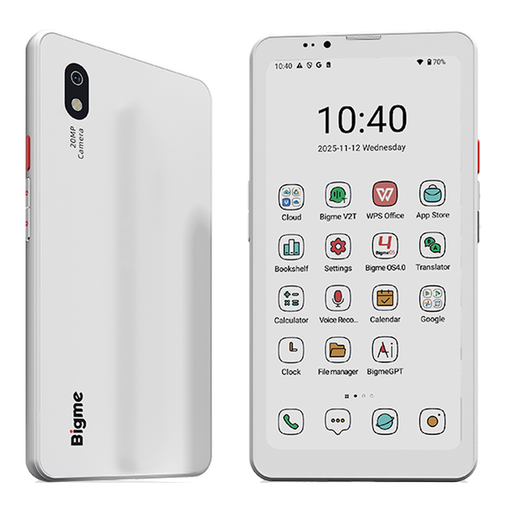
Bigme HiBreak Pro Color Display, 6.13 inches
The compact colour display is a better fit if easy handling and colour content matter more to you than a large area for viewing plans.
Kaleido 3: according to the product specifications, 300 PPI for black-and-white content and 150 PPI for colour content.
Android 14; 8 GB RAM and 256 GB storage; 5-MP and 20-MP cameras.
The 6.13-inch display offers little screen space for large, fixed-layout architecture plans, so you may need to zoom more often.
View at Joybuy
Frequently asked questions
Is a large display enough to read an architecture PDF without zooming?
Not necessarily. Whether small plan labels are readable in the full-page view depends on the page and the specific display. Check a sample page of your own; if the content relies on colour, make sure to assess the colour display as part of your test too.
Can I annotate a PDF by hand on a Kobo e-reader and export my notes?
According to Rakuten Kobo, handwritten notes can be exported from unprotected PDFs using compatible e-readers. Kobo says you can’t write on DRM-protected PDFs or files with locked annotations using the stylus. So check the specific book before choosing a device for this purpose.


