For a comfortable breeze by your armchair, look for a stable base, an adjustable direction and a low, comfortable speed setting. If you want to cover several seats, a suitable oscillation range also matters. A fan moves air, which can make you feel cooler, but it does not lower the room temperature itself, as the Verbraucherzentrale explains.
Who is an air circulator by the armchair for?
A focused breeze for your armchair
If you sit in one spot, you’ll want to direct the airflow towards yourself rather than constantly blowing it towards other seats. Direction and low speed settings are important things to consider; the Verbraucherzentrale notes that moving air can have a cooling effect.
Several seats in the living room
If you want to circulate air between your armchair and other seats, the oscillation range and height should suit your seating arrangement. Meaco lists horizontal and vertical airflow for the MeacoFan 1056 P; the manufacturer’s room-size claim does not guarantee comfort at any particular seat.
A noise-sensitive seating area
Whether you’re reading, talking or watching TV, it’s important to know if you can get the airflow you want at a setting that’s quiet enough for your seating area. ZVEI identifies noise levels as an important consideration when choosing fans and air-conditioning appliances.
What should you look for when choosing one?
First decide whether you mainly want the airflow to reach one armchair or cover several seats. Then check that the height, direction and speed setting you need are right for your room.
| Priority |
What to look for |
Who is this particularly important to? |
| Directing air towards your armchair |
Check the tilt, height, distance from the seat and whether the lowest usable setting is suitable. |
If I’m sitting right by the armchair, I want to direct the airflow towards my spot and fine-tune it. This is the top priority for around 36% of consumers. |
| Circulating air around the living room |
Check that the horizontal and, where applicable, vertical oscillation range suits your seating arrangement. |
If several people are sitting in different places, the airflow should circulate between the seating areas. Around 29% of consumers prioritise this room-wide circulation. |
| Noise and airflow |
Assess the noise and airflow at the same setting and from a comparable distance. |
When reading, watching TV or talking, I want to find a setting that’s as unobtrusive as possible while still moving enough air. Around 21% of consumers prioritise a quiet seating area. |
| Space and running costs |
Check the base footprint, oscillation path, cable route and power consumption of the specific model. |
If there’s little room next to the armchair or the fan will be running for longer periods, I’ll look for a suitable spot and check its power consumption. Around 14% of consumers prioritise these space and running requirements. |
Which buying mistakes should you avoid?
-
Assuming room coverage means comfortable airflow at your armchair
How the airflow feels at your seat also depends on its direction, distance and the setting you choose. A stated range doesn’t automatically tell you how the airflow will feel by your armchair.
Decide where you’ll sit and where to place the fan, then check that you can direct the airflow towards you and turn it down to a suitable setting.
-
Assuming the quietest setting and strongest airflow are achieved at the same time
Manufacturer specifications may refer to different operating conditions. Rowenta lists a maximum airflow of 60 m³/min and 21 dB(A) in night mode for the Turbo Silence Extreme VU5677F0; these figures are not confirmed as simultaneous. IMTEST also reported more noise at a high setting when testing the Dreo 502S.
Only compare noise figures when the operating settings and measurement conditions are comparable.
-
Assuming a similarly named model variant is the same product
IMTEST gives the reference DR-HPF002 for the Dreo 502S it tested, while Dreo lists DR-HPF002S on its product page. The test result therefore cannot automatically be applied to this different reference.
Before comparing models, check the full reference number and the specifications for each one.
Which brands are worth considering?
Meaco
The MeacoFan 1056 is available as a desk or floor-standing fan, while the 1056 P is a height-adjustable pedestal version. This may help you decide between a compact set-up and positioning the airflow at seat height.
- Meaco specifies horizontal and vertical airflow for the 1056 P and says it is suitable for rooms up to 50 m².
- The room-size claim is not an independently measured guarantee of comfort by your armchair. The pedestal version also needs a suitable amount of floor space.
Dreo
The 502S pedestal fan is worth considering if you want adjustable airflow for a particular seating area.
- When testing the 502S with reference DR-HPF002, IMTEST measured an air speed of 1.1 m/s on the lowest setting and 4.6 m/s on the highest, both at a distance of 1 m.
- IMTEST criticised the stability of the fan it tested. Dreo lists the reference DR-HPF002S for the 502S; the test results cannot automatically be applied to this variant.
Levoit
The LPF-R432-WEU pedestal fan is an option if you want to adjust the airflow across several settings.
- Levoit lists 12 settings for this model and gives figures of 20 dB and 2465 m³/h in its product description.
- It’s not specified whether the noise and airflow figures refer to the same operating conditions. Check which setting and measurement conditions the figures relate to.
Rowenta
The Turbo Silence Extreme VU5677F0 is a pedestal fan with adjustable height, oscillation and a remote control.
- Rowenta lists a maximum airflow of 60 m³/min and 21 dB(A) in night mode for this model.
- These figures refer to different operating conditions and should not be understood as features available at the same time.
Joybuy products for your seating area
This selection includes tower, desk and floor fans for directing airflow towards your armchair or circulating it between seats.
 No image available
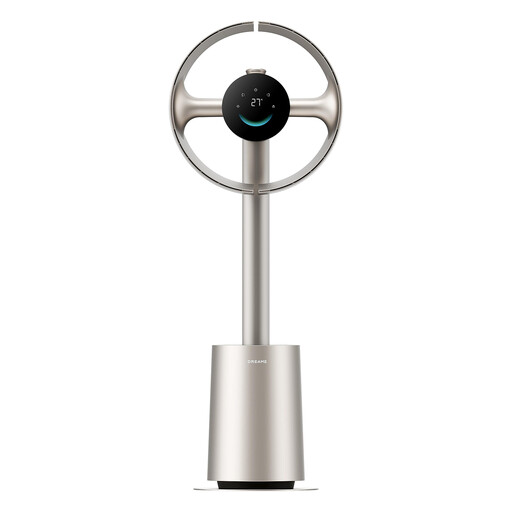
Dreame MF10 Air, Titanium Gold
Horizontal and vertical adjustment may be useful if you want the airflow to reach different seating areas.
Described as a bladeless fan with 180° horizontal and 90° vertical oscillation; 55 W, Wi-Fi app control, touchscreen display and magnetic remote control.
View at Joybuy
 No image available
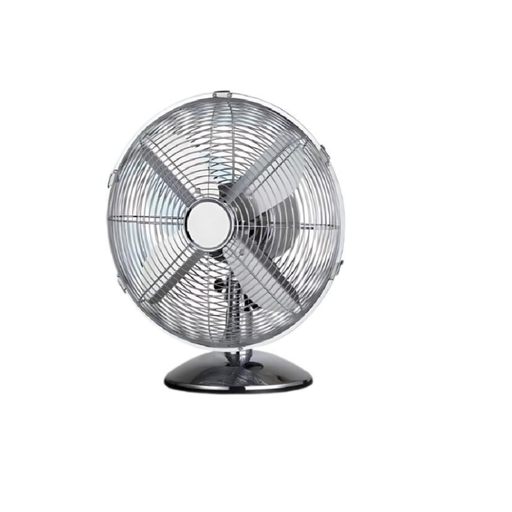
AKAI desk fan, 30 cm, 35 W
This model could be a good choice if you have a suitable surface for it and want to direct the airflow towards a seat.
Three speed settings, four aluminium blades, left-to-right oscillation and manually adjustable tilt; metal housing with carry handle.
View at Joybuy
 No image available
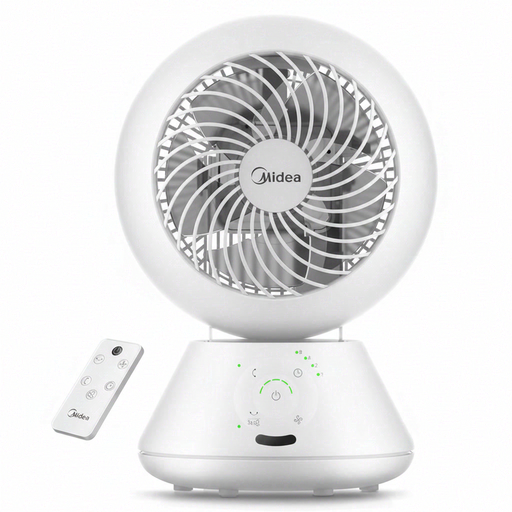
Midea MDF24JRW, desk and floor fan, 30 W
The stated desk or floor set-up gives you different options for positioning the fan in your seating area.
30 W, five speed settings, oscillation function and remote control.
View at Joybuy
 No image available
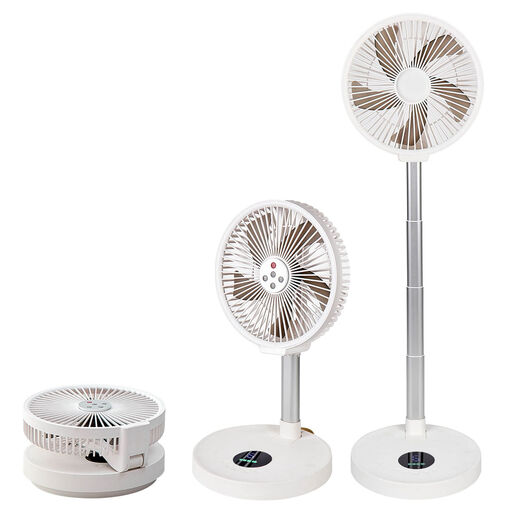
Foldable floor fan, 7200 mAh, white
Adjustable height and manual tilt may be useful when directing airflow from beside a seat.
Six speeds, remote control and timer. The stated run time of up to 13.5 hours applies to the lowest setting.
View at Joybuy
 No image available
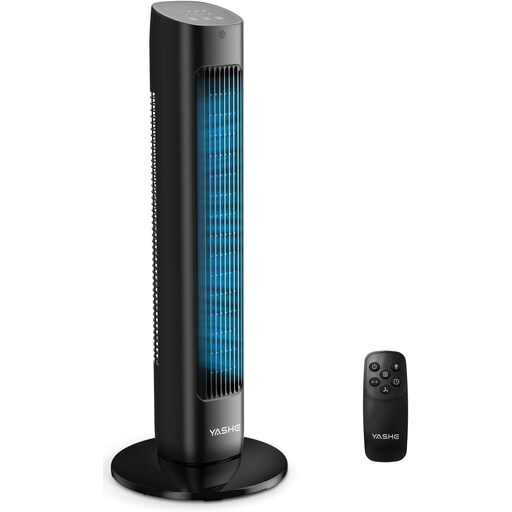
YASHE NDTFT21R tower fan, 80 cm
A tower fan could suit a seating area; check whether you can direct the airflow to work with your seating arrangement.
The product name lists 28 dB and a remote control. Check which operating setting and measurement conditions the noise figure relates to.
View at Joybuy
Frequently asked questions about air circulators
Does an air circulator cool the living room or replace opening the windows?
No. A fan doesn’t lower the room temperature, even if moving air can feel cooling. You should still ventilate the room to let fresh air in; when it’s hot, the Verbraucherzentrale recommends opening the windows preferably when it’s cooler outside than indoors.
Where should you place a fan right next to your armchair?
The MeacoFan 1056 instructions call for a stable, level surface and unobstructed air inlets; keep it away from water and avoid using damaged mains cables. For other fans, follow the relevant instructions, including the cleaning and safety guidance.
How can you estimate a fan’s running costs?
They depend on the power consumption of the setting you actually use and how many hours the fan runs. Compare the power consumption of the specific model with how you expect to use it; the wattage alone doesn’t tell you how much air the fan moves.
What are your rights when buying a fan online in Germany?
For a typical online purchase by a consumer, you generally have a 14-day right to cancel, starting from the day you receive the goods, as the Verbraucherzentrale explains. You must notify the seller that you wish to cancel; check for possible exceptions and the specific returns conditions before placing your order.
What should I check to make sure an electric fan complies with regulations?
The Bundesnetzagentur lists a correct CE mark, manufacturer details and German-language instructions among the checks within its remit. The BAuA describes the scope of the Low Voltage Directive for new electrical equipment rated at 50 to 1000 V AC or 75 to 1500 V DC; the requirements for a particular model depend on its design. A visible CE mark alone is not an independent safety test.


