
Lieferung heute & morgen

Qualitätsgarantie

Willkommens-Angebote freischalten: KOSTENLOSE Lieferung | Bis zu 80 % RABATT | Kostenlose 30-Tage-JoyPlus-Testphase
App herunterladen
An armchair can serve as a reading chair, TV chair, chair with armrests or decorative accent chair. The options range from compact upholstered chairs to spacious recliners with a reclining function. But design isn’t the only thing that matters: the wrong dimensions, unsuitable materials or unclear weight limits can make an armchair impractical for everyday use.
This buying guide explains what to look for before buying an armchair and which styles suit different needs.
A modern armchair may look appealing, but a low back, shallow seat or lack of armrests won’t suit every use. If you regularly read or watch TV, pay particular attention to support for your back and arms. An accent chair for shorter periods of sitting can be more compact.
An armchair’s overall dimensions don’t tell you how much room it will actually need. You’ll also need to allow space for movement around a swivel chair or recliner. Extending footrests and adjustable backrests can significantly increase the depth required.
Before buying, measure doorways, stairwells and the space where you plan to put the chair. Make sure it won’t block radiators, windows or wardrobe doors either.
Descriptions such as ‘hard-wearing’, ‘breathable’ or ‘easy-care’ only tell you so much without specific product details. Check the maximum weight capacity, frame material, upholstery and care instructions.
Bouclé, velvet, linen and faux-fur upholstery each need different cleaning methods. Water, direct heat and abrasive cleaning products can damage the surface.
For a living room armchair, these dimensions are particularly important:
A dining chair with armrests has different requirements from a lounge chair. At a dining table, the seat height and armrest height need to work with the clearance beneath the table.
A metal frame can provide a stable base for compact chairs with armrests. Decorative armchairs often have wooden frames or legs. Whatever the material, make sure all the joints are properly assembled and the chair is placed on a level surface.
Also check:
The stated weight capacity isn’t a recommendation for dynamic loads. Don’t stand or jump on an armchair.
An upholstered armchair may have a foam seat in a range of densities. Descriptions such as ‘high-density foam’ explain how it’s made, but don’t replace checking the seat height and width or considering your own comfort.
Common materials compared:
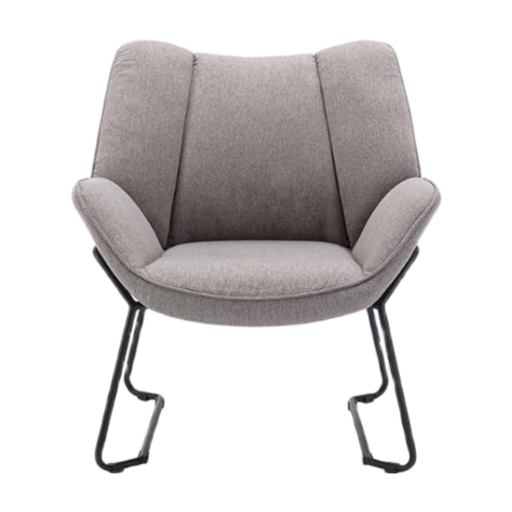
Why this product suits this profile: This compact chair with armrests measures 67 × 71,5 × 80 cm and works well as an armchair for the living room, bedroom or a small reading nook.
The product details list its dimensions, a seat height of 40,5 cm, a metal frame and a maximum weight capacity of 120 kg. This makes it easier to assess whether it will fit your space and suit your needs.
Linen upholstery, high-density foam padding, armrests and non-slip feet.
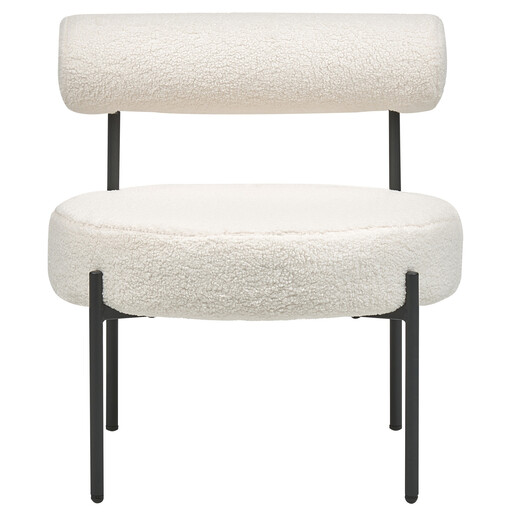
Why this product suits this profile: This accent chair combines a compact shape with bouclé upholstery and a retro look. It works well as a standalone piece in a living room or bedroom.
The product details specify a foam density of 28 kg/m³, dimensions of 60 × 60 × 66 cm and a maximum weight capacity of 150 kg. The upholstery should only be cleaned gently.
Wood-based seat construction, metal legs, felt floor protectors and a stated weight of 7 kg.
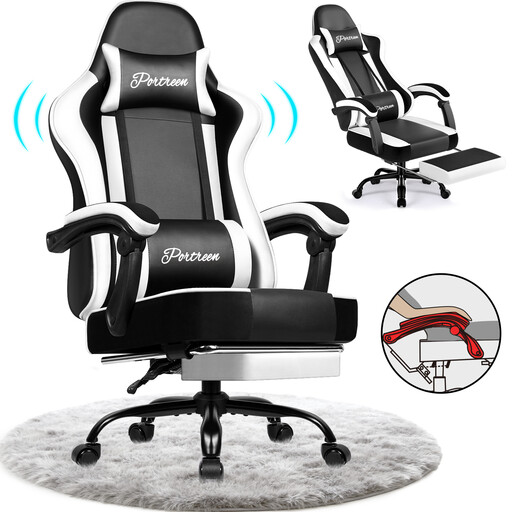
Why this product suits this profile: This gaming chair is designed for people who spend long periods gaming, working or reading and need adjustable features.
According to the product details, the adjustable backrest reclines from 90 to 170 degrees and the seat height can be adjusted by 10 cm. The maximum weight capacity is 150 kg.
Retractable footrest, PU leather upholstery, head and lumbar cushions, and a steel frame.
We’ve put together a complete, regularly updated list of products that meet these strict selection criteria and fully comply with the safety regulations applicable in the EU.
To help your armchair last as long as possible, follow the manufacturer’s instructions:
A recliner or TV chair with a mechanism should also be positioned so that the backrest and footrest can move freely.
Models around 60 to 72 cm wide, with a compact depth, are well suited to smaller rooms. Leave at least a few centimetres of clearance from walls and furniture too. A swivel chair or recliner needs more space.
A chair with armrests is often designed for use at a dining table or desk, or for shorter periods of sitting. An armchair usually has more padding and a larger seat. However, there’s some overlap: an upholstered chair with armrests can also be used as a dining chair or accent chair.
Its lifespan depends on how it’s used, as well as its construction, upholstery, fabric and care. Without knowing how it will be used, it’s not possible to give a reliable lifespan in years. The maximum weight capacity, sturdy joints, suitable care and intended use are more useful indicators.