
Lieferung heute & morgen

Qualitätsgarantie

Willkommens-Angebote freischalten: KOSTENLOSE Lieferung | Bis zu 80 % RABATT | Kostenlose 30-Tage-JoyPlus-Testphase
App herunterladen
An armchair should do more than look good: it needs to suit the size of your room, the way you like to sit and how you’ll use it day to day. Product photos, soft fabrics and terms such as “ergonomic” can often seem more persuasive than the details that really matter. If you choose based only on colour or style, you may not notice potential drawbacks until after assembly.
Three common buying mistakes are worth watching out for:
A considered shortlist can help you avoid a poor purchase and find a model that’s genuinely suited to its intended use, whether as an accent chair, living room armchair, reading chair or armchair with armrests.
Measure the available space before you buy. As well as the width, depth and height, take into account:
A compact model may suit a bedroom or guest room, while a larger upholstered armchair will need more space in the living room. If you’re choosing an armchair with a footstool, remember to allow room for the footstool when it’s pulled out.
The construction has a greater impact on everyday practicality than appearance alone. Look for clear information about:
The stated maximum weight capacity is a safety limit, not a measure of comfort. It should not be exceeded. After assembly, check all screw connections and, for models with moving parts, regularly make sure the mechanism is secure.
A velvet armchair or one with a teddy or faux-fur cover can make a striking statement, but care requirements vary by material. Before you buy, check:
Marks show up more quickly on light-coloured upholstery. Faux fur and textured fabrics can usually be carefully vacuumed or brushed; excessive moisture and harsh cleaning products may alter the surface. Always follow the manufacturer’s care instructions.
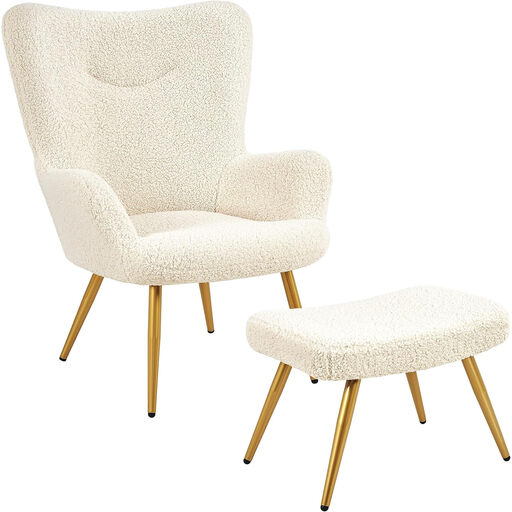
Why it suits this type of user: This set pairs a padded armchair with a separate footstool. It’s well suited to a living room, bedroom or guest room if you like to put your feet up while sitting.
The product details list separate weight limits of 136 kg for the chair and 98 kg for the footstool. This makes it easier to judge whether they’re suitable for you than an armchair with no specific weight capacity stated.
Berber fleece upholstery, a metal frame, a high back and an additional footstool. The armchair measures 70 × 67,5 × 97,5 cm.
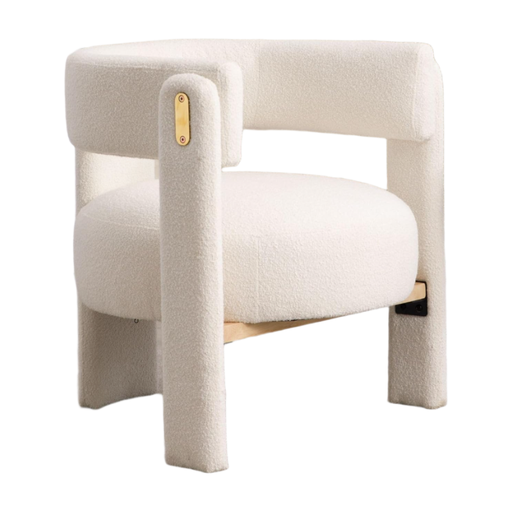
Why it suits this type of user: Its semi-circular back and enveloping armrests make it a good choice if you want an accent chair with a well-defined seating shape and a distinctive design.
The chair is described as having a solid wood frame and legs, plus a supportive wooden beam beneath the seat. Its maximum weight capacity is 120 kg.
Faux-fur upholstery, foam cushioning up to 22 cm thick and compact dimensions of 67 × 71 × 70 cm. Suitable as a lounge chair, dressing table chair or reading chair.
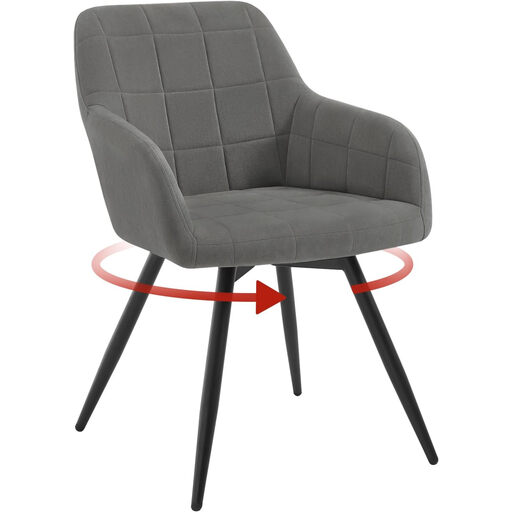
Why it suits this type of user: Its 360-degree swivel mechanism makes it a practical option for the dining area, home office or living room if you often need to change direction without moving the chair.
Alongside the swivel mechanism, the product details state a maximum weight capacity of 150 kg and adjustable, non-slip feet. That gives you important information for frequent use.
Velour upholstery, a padded back and armrests, and a metal frame. It measures 57 × 63 × 78 cm.
We’ve put together a complete, regularly updated list of products that meet these strict selection criteria and the safety regulations in force across the EU.
Many armchairs require some simple assembly. Put the chair together on a level surface and initially tighten the screws by hand. Once all the parts are correctly aligned, tighten the connections fully. Then check that the armchair stands securely and won’t tip over.
For care:
As well as the product dimensions, allow enough room to sit down and get up comfortably. A swivel armchair or a model with a footstool needs extra clearance. Marking out the dimensions on the floor to scale can help you decide before you buy.
Its lifespan depends on the frame, cushioning, upholstery, level of use and care. It’s not possible to give a general estimate without standardised testing conditions. Clear details about materials, maximum weight capacity, assembly and care are more useful.
The price depends on factors such as the materials, construction, cushioning, features and what’s included. So don’t compare just the purchase price: also consider included items such as a footstool, the assembly required and the care involved.