
Lieferung heute & morgen

Qualitätsgarantie

Willkommens-Angebote freischalten: KOSTENLOSE Lieferung | Bis zu 80 % RABATT | Kostenlose 30-Tage-JoyPlus-Testphase
App herunterladen
An armchair can serve as a reading chair, TV chair, occasional chair or decorative accent. But looks aren’t the only thing to consider before you buy. Many models look spacious and comfortable in product photos, yet take up more floor space than expected or are difficult to clean.
Three common buying pitfalls are worth looking out for:
Compact lounge chairs around 65 to 75 cm wide are a good choice for a small living room or bedroom. You should also leave enough clear space around the chair so it doesn’t block drawers, doors or walkways.
Seat height affects how easy it is to get up and how well the chair works with your existing tables. A seat height of around 40 cm is typical for many living spaces. Seat depth is also important for a TV chair or reading chair: a deep seat can feel relaxing, but isn’t always practical for shorter people.
Check the frame material, maximum weight capacity and leg construction. Metal frames, solid wood frames and engineered wood frames each have different properties. The maximum load is a specific figure provided by the manufacturer and should not be exceeded.
If the chair has metal legs, check the screwed joints regularly. Chairs with wooden legs should be placed on a level, dry surface. Non-slip feet or a suitable protective mat can be useful on smooth floors. Do not use the chair as a step or ladder.
Polyester velvet has a smooth, decorative look, but should be protected from direct sunlight and harsh cleaning products. Faux fur and teddy chairs have a softer surface, but need regular vacuuming or gentle brushing. If you have pets, hard-wearing, tightly woven fabrics and easy spot cleaning are practical things to look for.
Always follow the specific care instructions. Test cleaning products on an inconspicuous area first. Too much moisture can damage the upholstery, cover and frame.
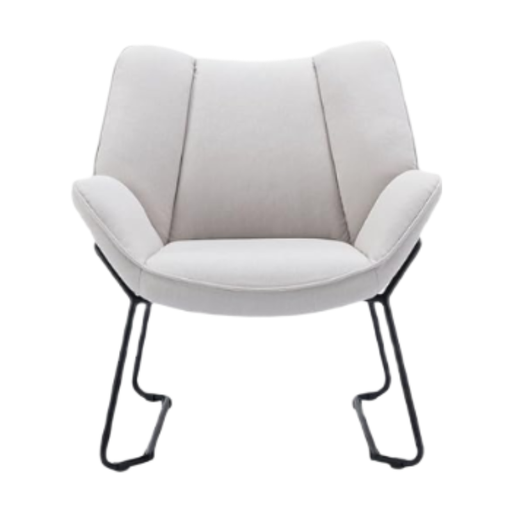
Why this product suits this profile: This compact armchair is designed for living rooms, bedrooms or balconies. It pairs neutral beige linen upholstery with a black metal frame.
The product details give external dimensions of 67 × 72 × 80 cm, a seat height of 40.5 cm and a maximum weight capacity of 120 kg. The linen upholstery can be cared for by wiping it clean.
Metal frame, linen upholstery, armrests and high-density foam cushioning.
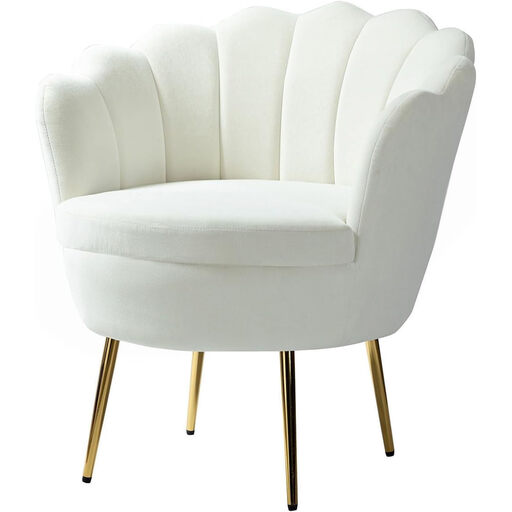
Why this product suits this profile: This white upholstered armchair combines a tufted back, padded armrests and polyester velvet upholstery with a decorative metal frame.
The dimensions are clearly stated as 71 × 76 × 78.7 cm. According to the product details, the weight capacity is 113 kg; the upholstery should only be spot-cleaned gently.
Polyester velvet, engineered wood frame, reinforced construction and metal legs with a gold-coloured finish.
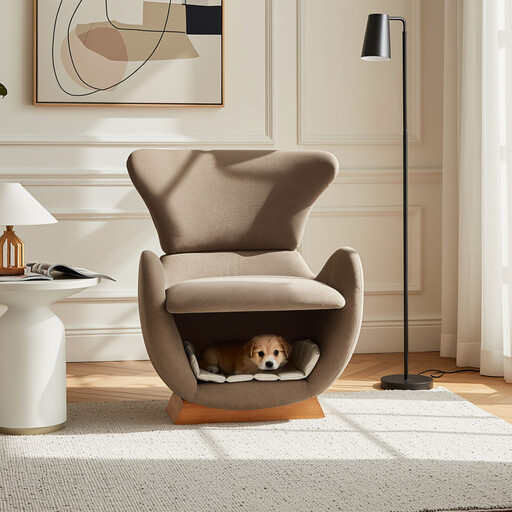
Why this product suits this profile: This lounge chair is designed for households with a cat or small dog. There’s a built-in space for a pet beneath the seat.
Its compact dimensions of 66 × 69 × 76 cm and stated weight capacity of 150 kg make it easier to plan where it will go. The fabric is described as scratch-resistant, although how well it holds up depends on the animal.
Solid wood frame, high-density foam, a 33 × 47 × 23 cm pet space and four wooden legs.
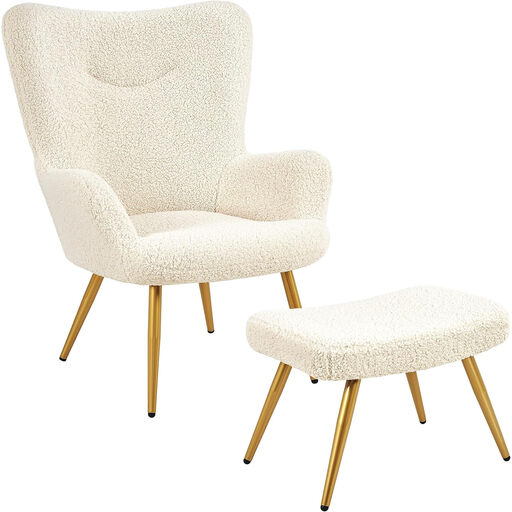
Why this product suits this profile: This teddy chair has a high back and a separate footstool, making it a good fit for a reading nook, living room or guest room.
The set lists separate weight capacities: 136 kg for the chair and 98 kg for the footstool. The dimensions are 70 × 67.5 × 97.5 cm.
Metal frame, Berber fleece upholstery, high back and separate footstool for a more relaxed leg position.
We’ve put together a complete, regularly updated list of products that meet these strict selection criteria and the safety regulations in force in the EU.
These questions can help you narrow down your options before ordering:
As well as the chair’s actual width and depth, allow room to move in front of the armrests and around the legs. An armchair with a footstool needs extra space to stretch out your legs. Marking out the dimensions to scale on the floor before you buy can help you check that walkways and access to other furniture will remain clear.
Its lifespan depends on the frame, cushioning, upholstery, amount of use and care. Regularly checking the screws and legs, and following the maximum weight limit, can help keep the chair safe to use. Stop using it if you notice visible damage to the frame or joints.
There’s no one-size-fits-all recommendation. Tightly woven fabrics can be more practical for everyday use than delicate surfaces, but suitability also depends on your pet’s behaviour. Treat claims of scratch resistance as a product feature, not a guarantee against all damage. Regular care includes vacuuming, gently removing hairs and keeping sharp objects away.