
Lieferung heute & morgen

Qualitätsgarantie

Willkommens-Angebote freischalten: KOSTENLOSE Lieferung | Bis zu 80 % RABATT | Kostenlose 30-Tage-JoyPlus-Testphase
App herunterladen
An armchair for the living room can complete a reading nook, provide an extra seat or serve as an accent chair in the bedroom. But lounge chairs, upholstered armchairs, cocktail chairs and club chairs differ in more than just design and price. The material, seat height, floor space and weight capacity all determine whether an armchair will be practical for everyday use.
A modern armchair with a striking shape can look impressive in a furniture shop or in product photos. But without precise details such as seat height, seat depth and overall width, it’s difficult to tell whether it will fit in your reading nook. In smaller homes, a few centimetres can make all the difference.
Descriptions such as “soft”, “ergonomic” or “extra comfortable” offer limited insight without technical details. Information about the upholstery material, backrest and seat height is more useful. If you’ll be using the chair for long periods, also check that the armrests and backrest are sturdy enough.
A light beige or white armchair goes with many interiors, but shows dirt more easily. Faux fur, linen and chenille all need different care. So if you’ll be using the chair regularly on a balcony, in a guest room or in a home with children, read the care instructions before you buy.
Start by checking the floor space available. A typical compact armchair might measure around 67 cm deep, 71.5 to 72 cm wide and 80 cm high. A seat height of around 40.5 cm suits many living spaces, but should work with the height of your side table or desk.
Also worth checking:
An armchair with armrests should stand on a stable, level surface. A coated metal frame can create a clean, understated look, but sturdy joints and a secure base are what matter most. Don’t mistake the stated maximum weight capacity for a recommended limit for dynamic loads. The chairus models featured here have a stated maximum weight capacity of 120 kg.
Check all screws and connections after assembly. An armchair is not designed to be used as a step or climbing aid.
When choosing a cover, consider how you’ll use the chair and how much care it will need:
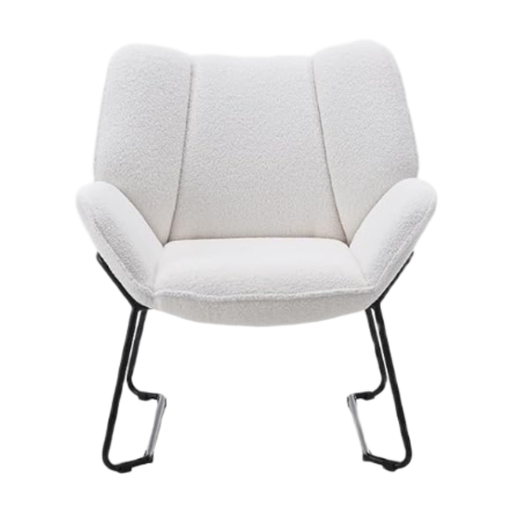
Why this product suits this profile: This compact white upholstered armchair is ideal for the living room, bedroom or balcony. Its stated dimensions of 67 × 71.5 × 80 cm and seat height of 40.5 cm make it easier to plan your space.
The product details specify the frame material, seat height, dimensions and maximum weight capacity. This means you don’t have to choose based on looks alone.
Black-coated metal frame, faux-fur cover, high-density foam cushioning and a non-slip base.
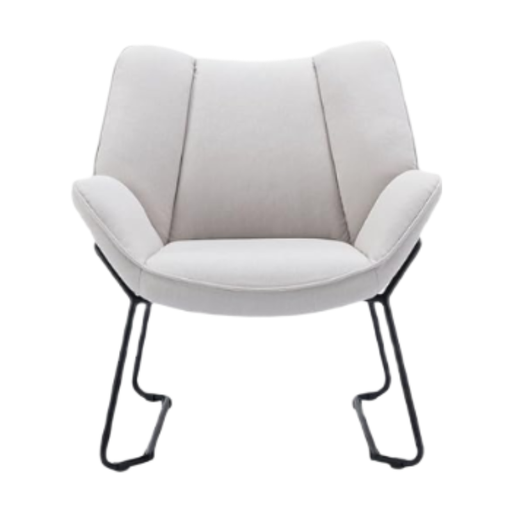
Why this product suits this profile: This beige accent chair combines a linen cover with a black metal frame. It complements neutral interiors and can be used as a reading chair or an extra seat.
The cover is specifically identified as linen. The care instructions recommend wiping it clean and warn against direct moisture – an important point for light-coloured seating.
Linen cover, high-density foam, metal frame, 40.5 cm seat height and a stated maximum weight capacity of 120 kg.
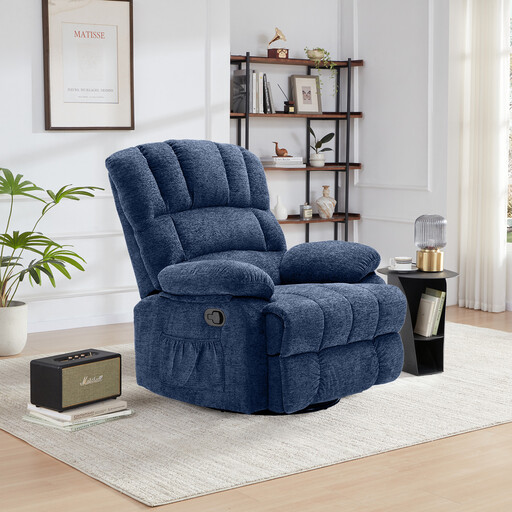
Why this product suits this profile: This large recliner is designed for anyone looking for an adjustable seating position, a rocking function and a wider seat. At 105 × 94 × 103 cm, it takes up more floor space than a compact armchair.
The fully reclined depth of up to 164 cm is clearly stated. This lets you plan ahead for the space needed to recline and move around the chair.
Manual recline to 160 degrees, 30-degree rocking function, swivel function and a stated weight capacity of 350 lb.
As well as the chair’s overall dimensions, consider space to move around it and access to doors. For a compact model around 72 cm wide, allow extra space at the sides so the armrests and seat are easy to access. With a recliner, you’ll also need to account for its fully reclined depth.
A seat height of around 40 to 45 cm is common for many living room chairs. The key is that your feet can rest flat on the floor and the armrests allow you to sit comfortably. When choosing a chair, consider your height, table height and preferred seating position together.
Place the chair on a level surface, keep it away from direct heat sources and follow the care instructions for its cover. Check the joints and screws regularly. If the fabric is delicate, don’t let liquids soak into the upholstery.