
Lieferung heute & morgen

Qualitätsgarantie

Willkommens-Angebote freischalten: KOSTENLOSE Lieferung | Bis zu 80 % RABATT | Kostenlose 30-Tage-JoyPlus-Testphase
App herunterladen
Choosing the right motorcycle armour jacket is crucial for your safety, whether you're on the motocross track, an enduro tour, or downhill mountain biking. The market is flooded with options, but not all of them deliver on their promises. Often, well-intentioned marketing claims lead to purchases that later prove to be impractical or inadequate. This guide will help you identify the essential features and avoid common pitfalls.
As a Joybuy Product Recommendation Officer, my job is to filter market information and provide you with objective, practical advice so you can make an informed decision.
Many riders invest in protective gear that appears robust at first glance but fails during actual use. Pay close attention to these three common problems:
To avoid the problems mentioned above, you should carefully examine three technical aspects before buying. These are the primary determinants of protective performance, wearing comfort, and durability.
A functional motorcycle protector vest is not made from a single material but from an engineered combination. Look for a mix of:
Complete protection covers more than just the back. A good Enduro protection jacket or motocross protector shirt should cover the following zones and be individually adjustable:
Freedom of movement is essential, especially in off-road riding. Rigid, armour-like constructions hinder riding dynamics. Modern protector jackets, therefore, rely on a flexible design. Segmented, scale-like back protectors allow the upper body to bend and twist without the jacket shifting or restricting movement. Elastic materials in the arm and torso areas also contribute significantly to comfort and active safety.
Based on the criteria above, we have identified several models that are suitable for different requirement profiles.
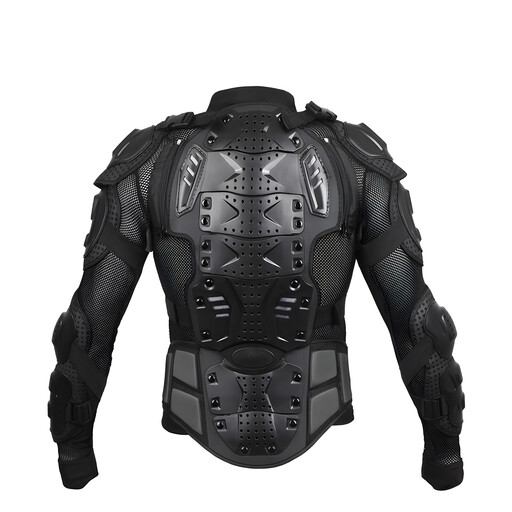
Why this model is a great fit: Ideal for riders who are new to motocross, downhill, or other extreme sports and are looking for comprehensive protection without a large investment. Its multifunctional design offers excellent practical value.
The base layer, made of highly breathable mesh fabric, and targeted ventilation openings counteract heat build-up (Pitfall 1). Numerous adjustment straps ensure a secure fit (Pitfall 2).
Removable protectors and pads make cleaning easy and allow you to adjust the level of protection as needed.
Why this model is a great fit: For riders who regularly tackle demanding enduro or motocross tracks. The design is focused on reliable protection and a secure fit during intense physical activity.
The segmented back plate with extended spine coverage offers gap-free protection (Pitfall 3). Elastic sleeves with thumb loops effectively prevent the protectors from riding up (Pitfall 2).
The combination of high shock absorption and abrasion-resistant nylon pads on the shoulders and elbows is designed for the demands of rough terrain.
Why this model is a great fit: For athletes who use their gear year-round for various activities like motorcycling, mountain biking, or skating. They need a versatile, durable, and comfortable solution.
The material mix of a PE shell, EVA padding, and mesh fabric offers a well-balanced combination of protection, low weight, and breathability for year-round use (Pitfall 1).
The unisex design and wide range of available sizes make the jacket suitable for different body types and sports. The removable pads increase its versatility.
A suitable protector jacket is just one part of your gear. Discover other functional apparel tailored to the needs of motorcycle and outdoor sports enthusiasts.
Yes, most of the protector jackets described here are designed as a base layer. They are worn directly over a thin technical base layer. An abrasion-resistant motorcycle jacket (textile or leather) or a weatherproof outer jacket can be worn on top. Make sure the outer jacket provides enough room so the protectors are not constricted and freedom of movement is maintained.
Proper care is crucial for longevity. On most models, the hard protector shells and foam pads can be removed. The textile carrier material (the actual jacket) should then be hand-washed in cold water with a mild detergent. Avoid machine washing, bleach, and tumble dryers. Let the jacket air dry, but not in direct sunlight or near heat sources.
Back protectors are typically certified according to the European standard EN 1621-2. This standard defines two protection levels: