
Lieferung heute & morgen

Qualitätsgarantie

Willkommens-Angebote freischalten: KOSTENLOSE Lieferung | Bis zu 80 % RABATT | Kostenlose 30-Tage-JoyPlus-Testphase
App herunterladen
Whether you’re shopping for school, journalling, watercolour painting or creative projects, art and drawing supplies should suit the task. A large set with lots of colours isn’t automatically the best choice. The key considerations are the nib, medium, paper compatibility, build quality and safe storage.
If you focus only on the number of items or eye-catching colour names, it’s easy to miss important details. The following criteria will help you compare art supplies, painting materials and drawing materials objectively.
A set of 50 or 65 pieces sounds extensive. But what matters is whether the set contains different colours, types of paper or nibs, or simply extra accessories. For technical sketches, a single pencil in the right grade may be more useful than a large set of coloured pencils. For children, easy-to-hold felt-tip pens and paper they can start using straight away are often more practical.
Watercolour pencils contain water-soluble pigments, but you’ll need a damp brush to use them. Without suitable watercolour paper, the sheet may buckle or become rough. A product with water-based ink isn’t automatically suitable for every mixed-media technique, either. Check the manufacturer’s guidance on paper, using water and cleaning before you buy.
With markers and gel pens, the shape and width of the nib affect the result. A 0.5 mm nib is suitable for fine notes and details, while a chisel tip fills larger areas more quickly. For brushes, different shapes such as round, flat and cat’s tongue brushes are useful because they create different strokes.
Smooth drawing or writing paper is usually fine for coloured pencils, graphite pencils and gel pens. For watercolour pencils and liquid paints, watercolour paper with a higher paper weight is a better choice. When using acrylic paints, choose brushes that can be cleaned according to the manufacturer’s instructions. Water-based paints can often be cleaned with water; other paint media may require a suitable cleaner.
With pencils, the grade indicates the balance between a dark mark and a precise line. HB is suitable for general writing and sketching. A 0.5 mm mechanical pencil lead allows you to draw controlled, narrow lines, while broad coloured pencil leads cover larger areas.
For markers, choose a nib that suits the task:
For children’s products, pay particular attention to age recommendations, small parts and fastenings. The EN 71 marking relates to European toy safety requirements, but it doesn’t replace adult supervision. Cap pens and clean brushes after use. Don’t leave brushes standing in water for long periods, as the handles and ferrules may become misshapen.
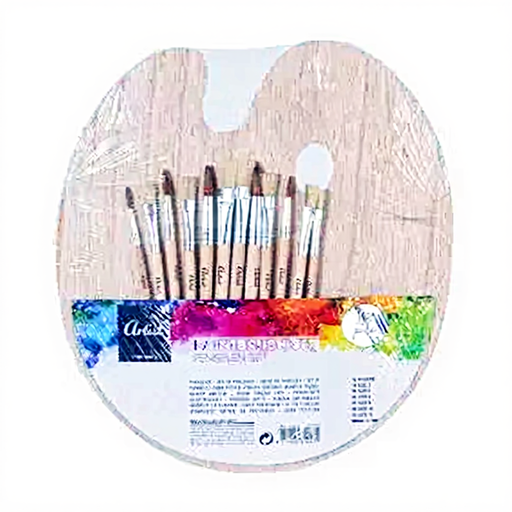
Why this product suits this profile: The set includes 12 brushes in fine, medium and larger sizes, along with a wooden palette. It lets beginners try different types of brush without having to buy several products individually.
The different sizes are clearly specified, so you can see before buying that the set doesn’t just contain brushes that are almost identical.
12 brushes across three size ranges and a wooden palette; suitable for home, school or painting projects with others.
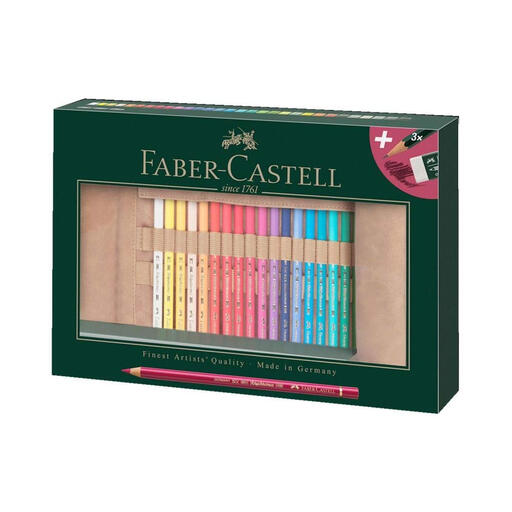
Why this product suits this profile: The set includes 30 oil-based coloured pencils, three graphite pencils in HB, 2B and 8B, and an eraser. The pencils are stored in a pencil case.
The product description specifies the lead diameter, medium, water and smudge resistance, and what’s included. That makes it easier to check the details that matter.
30 colours, 3.8 mm leads and additional graphite pencils for illustrations, colour layering and sketches.
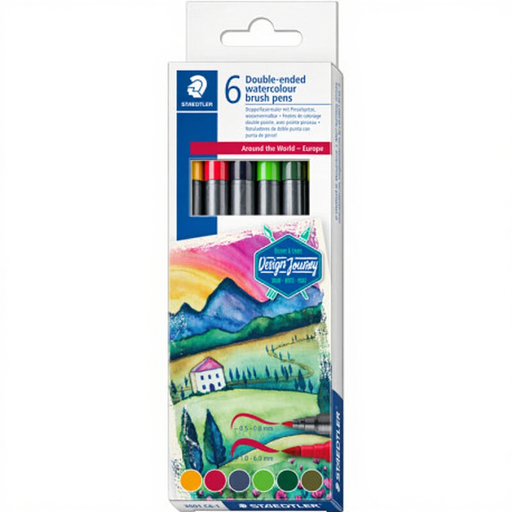
Why this product suits this profile: The six double-ended watercolour markers combine flexible brush tips with fine tips. They’re well suited to coloured sketches, lettering and controlled watercolour effects.
The two tips on each pen are clearly described. The guidance also explains how to use them with water and watercolour paper, rather than making a vague claim about a “watercolour look”.
Flexible fibre tip of approximately 1.0–6.0 mm and fine tip of approximately 0.5–0.8 mm; water-based ink.
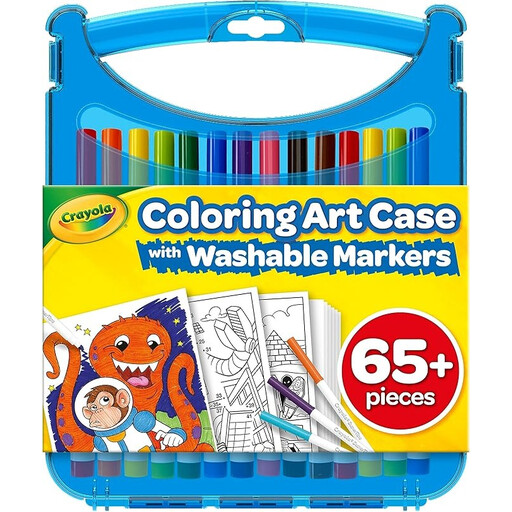
Why this product suits this profile: The set includes 25 markers, 20 colouring sheets and 20 blank sheets in a plastic case with a carry handle. It’s recommended for children aged four and over.
The contents clearly distinguish between markers and paper. The age recommendation and warning about small parts help families choose a suitable set.
25 washable SuperTips markers, 40 sheets of paper and a case with a carry handle for storage and transport.
We’ve put together a complete, regularly updated list of products that meet these strict selection criteria and fully comply with the safety regulations in force in the EU.
For craft supplies and school, classic HB pencils, erasers and sharpeners make a practical starting point. One example is the Noris Upcycled Wood Graphite Pencil HB, with its hexagonal barrel and HB lead. Mechanical pencils with 0.5 mm leads can be useful for fine notes and technical sketches. For journalling, try gel pens with retractable tips, such as a WRITECH set with 0.5 mm tips and several colours.
If you work with acrylic, gouache or watercolour paints, it’s also worth having a suitable brush set to hand. The ROLLINGDOG sets specify synthetic bristles, nickel-plated ferrules and wooden handles. Clean brushes straight after use and store them flat or with the bristles facing upwards.
A simple combination of an HB pencil, eraser, coloured pencils or felt-tip pens, and suitable paper is enough for beginners. If you want to blend colours with water, add watercolour pencils and a small round brush. A large art set for children is a good choice if storage and a wider range of colours are important.
How long they last depends on the amount of ink, how well they’re capped and how they’re stored. Replace caps firmly straight after use. For retractable gel pens, retract the tip after writing to protect it. For some products, storing pens horizontally can help keep the ink flowing evenly.
The cost depends on the medium, the number of items and what you need it for. For school, a basic set of pencils, coloured pencils and felt-tip pens is often enough. For illustration or watercolour painting, you’ll also need specialist paper, brushes and water-soluble paints. It’s a good idea to buy the materials you use regularly first, then add specialist products as needed.