
Lieferung heute & morgen

Qualitätsgarantie

Willkommens-Angebote freischalten: KOSTENLOSE Lieferung | Bis zu 80 % RABATT | Kostenlose 30-Tage-JoyPlus-Testphase
App herunterladen
Art and craft supplies for children should encourage creativity, but they also need to be practical, age-appropriate and as straightforward as possible in everyday use. Between craft kits for children, art materials for kids and individual supplies, there are significant differences in handling, cleaning effort and safety requirements. For parents, grandparents, nurseries and schools, it is therefore worth taking a close look at product details rather than flashy marketing claims.
Washable children's paints, wax crayons or felt-tip pens can often be removed from skin and certain fabrics. However, this does not automatically mean that every surface will come clean without issue. Untreated wooden tables, wallpaper, upholstered furniture or porous floors can absorb colour. Before use, make sure you have a protective mat, suitable clothing and appropriate cleaning products to hand.
Even with finger paints, it is worth checking whether they are intended for the surface you have in mind. According to the product description, KREUL Mucki fabric finger paints, for example, are designed for light and dark cotton fabrics as well as mixed fabrics with up to 20% synthetic content. After fixing, they can be washed at up to 40 °C. The process using an iron or oven must be carried out exactly according to the manufacturer's instructions.
48 wax crayons sounds impressive, but for younger children they are not always more practical than 24 easy-to-grip colours. For little hands, thick, ergonomic shapes are often more important than the largest possible colour palette. With felt-tip pens for ages 3 and up, you should also check the cap, tip shape and age labelling.
Products that involve water, brushes or small accessories require more supervision. A comprehensive gouache set may be suitable for children aged 4 to 12, but for a two-year-old it would demand a different level of supervision and preparation.
The age rating is a selection criterion, not just marketing information. Scratch-art sets usually contain a scratching tool, while craft kits with beads, sequins or small charms may include additional small parts. Products with relevant warning labels should not be given to children who might put items in their mouths.
Pay attention to the specific manufacturer's recommendation, any warning notices and the packaging information. For materials used in nurseries and schools, it is also sensible to consider group size, storage and the level of supervision required.
For toddlers, jumbo wax crayons or thick coloured pencils for children are often more suitable than slim artist pencils. The Jar Melo wax crayons are available in sets of 24 or 48 colours and are described as large-format, washable crayons designed for little hands. When choosing by number of colours, you can base your decision on actual use: 24 colours are enough for first drawings, while 48 colours offer more variety for group activities or as a creative gift for children.
From around age 3, depending on the product, felt-tip pens, school paints or simple scratch-art options may be of interest. For older children, watercolour pencils, gouache paints, foil art craft kits and more advanced drawing materials become suitable.
With paints, key factors include water-based formulation, opacity, packaging and cleaning instructions. The Pelikan school paint set 740/6EU contains six colours with 25 ml each, plus a brush and mixing palette. According to the product information, the gouache or tempera paints are intended for paper, cardboard, wood and ceramic, and can be diluted with water.
Watercolour pencils work dry like coloured pencils and are activated with a damp brush. The pigments can leave stains on clothing or furniture. A waterproof mat and a container for brush water are therefore essential practical accessories.
A set is only practical for everyday use if the accessories and storage suit the intended purpose. The Jar Melo Kids Paint Set contains 24 paint tubes, three brushes, a storage bucket, a palette in the lid and a rinsing cup. This kind of package reduces the need to hunt for individual items, but does require careful closing and drying after use.
For travel or school use, compact cases, roll-up pencil cases and carry boxes are useful. Products with tips, scissors or small parts should be stored out of reach of younger children.
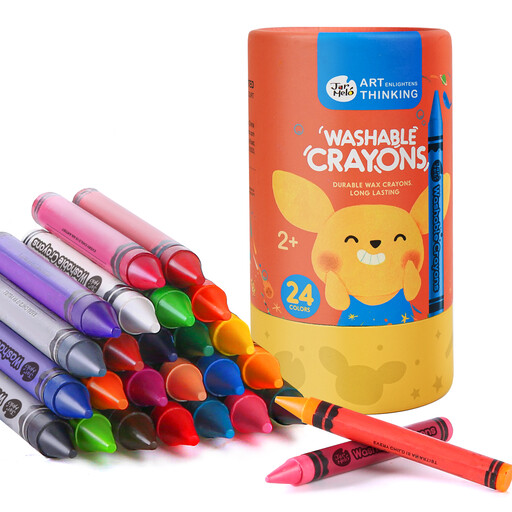
Why this product fits the profile: The 24-colour set offers a manageable basic selection for first drawings at home or in nursery.
The jumbo shape is designed for little hands; the product description mentions washable materials and cleaning with a damp cloth on suitable surfaces.
24 jumbo wax crayons, broad colour selection and storage all in one place.
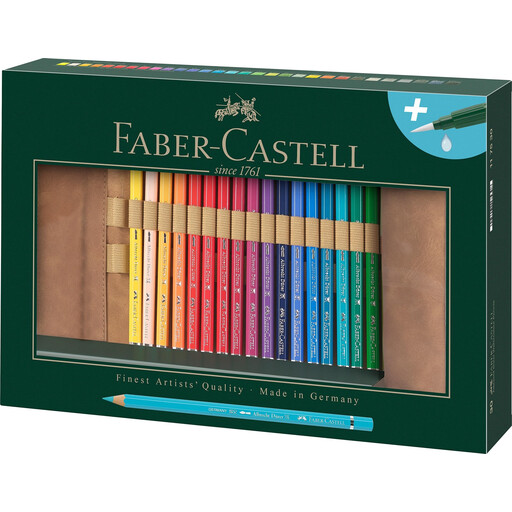
Why this product fits the profile: According to the product information, the 30-piece set is aimed at adult artists, illustrators and hobby artists interested in controlled colour gradients.
The application is clearly defined: draw dry or activate pigments with the included water brush. The note about non-waterproof pigments should still be observed.
30 water-soluble pencils, 3.8 mm lead, roll-up case and water brush.
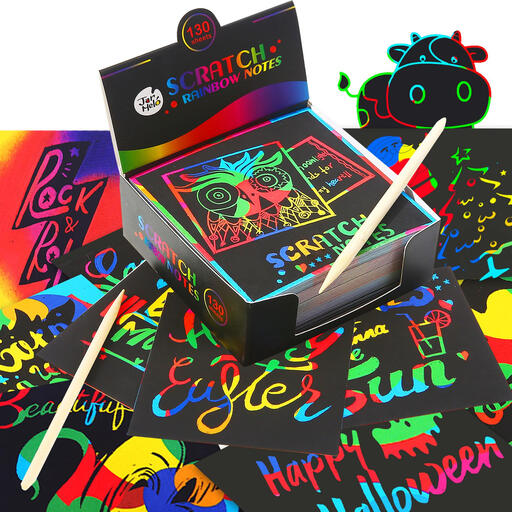
Why this product fits the profile: For classrooms, children's birthday parties, travel or quiet activities, 130 pre-cut note sheets are provided.
It requires neither paint nor water. The package contains 130 sheets and a wooden stylus; use from age 3 is recommended.
130 square sheets measuring 8.9 × 8.9 cm and a low-mess, dry application.
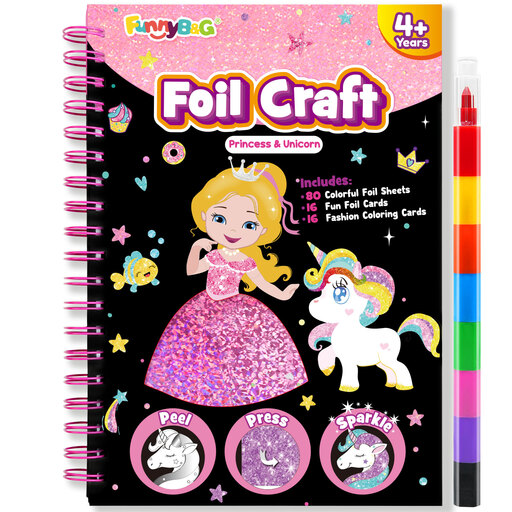
Why this product fits the profile: The set is recommended for children aged 4 to 10 and includes templates with princess, unicorn and mermaid designs.
According to the description, the intended use requires no glue or scissors. Nevertheless, the included parts should be sorted and used under supervision.
112 pieces, including 80 foil sheets, 16 picture boards, 16 cards and an 8-colour twist pen.
We have put together a complete, regularly updated list of products that fully meet these strict selection criteria and the safety regulations in force in the EU.
Age-labelled wax crayons, coloured pencils for children, felt-tip pens and simple school paints can all be suitable. What matters is the specific manufacturer's recommendation, an easy-to-grip shape and the exclusion of small parts that could be swallowed. Even from age 3, appropriate supervision is advisable.
Paints should be tightly sealed and stored dry after each use. Brushes should be cleaned with water and dried completely. Pens and scratch-art materials stay more organised when kept in cases or flat boxes. Products with small parts should be kept out of reach of younger children.
Beyond the purchase price, you should consider consumables, replacement pens, paper, water and cleaning effort. Sets with comprehensive accessories can bundle the initial outlay. For frequent use in school or nursery, refillability, quantity and robust storage are often more important than an especially large colour palette.