
Lieferung heute & morgen

Qualitätsgarantie

Willkommens-Angebote freischalten: KOSTENLOSE Lieferung | Bis zu 80 % RABATT | Kostenlose 30-Tage-JoyPlus-Testphase
App herunterladen
Art and marker pens vary considerably in terms of ink, nib, paper compatibility and intended use. A marker that adheres cleanly to glass and can be removed when damp is just as unsuitable for a watercolour illustration as a water-soluble brush pen is for permanent lettering.
If you focus only on the number of colours or the packaging design before buying, you risk choosing the wrong product. The following criteria are what really matter.
A set with 60 or 120 colours can look appealing. For beginners, students and journaling projects, however, it is often more important for the colours to be clearly sorted, numbered and compatible with one another. With larger sets, you should also create colour charts or test swatches, as colours displayed on screen may differ from the result on paper.
Water-soluble markers and watercolour pencils can be blended with water on suitable paper. However, this does not mean that every ink can be completely removed once dry. On absorbent paper, the colour may soak in permanently. With non-permanent markers, the removable property usually applies to smooth, non-absorbent surfaces such as film, glass or plastic.
Brush pens create variable lines through changes in pressure and are ideal for hand lettering, shading and expressive drawings. For technical details, small journaling sections or outlines, however, fineliners for drawing with a defined line width are better suited. A dual-tip marker can combine both requirements, but it does not automatically replace a specialist set.
First, consider whether you need water-based, water-soluble, waterproof or permanent ink:
With a Lumocolor marker, it is particularly important to distinguish between the non-permanent and permanent versions. According to the product description, the STAEDTLER Lumocolor Non-Permanent Markers featured here use water-soluble ink and are intended for smooth surfaces. On paper or textiles, removal may work differently.
The nib determines how much control you have while working:
When choosing dual-tip markers, it is worth checking the exact measurements. A set with a 0.4 mm fineliner tip and a flexible brush tip covers more applications than a marker with a broad tip only.
No marker performs identically on every type of paper. Thin exercise-book paper or standard paper can suffer from bleed-through when used with heavily pigmented or fluid ink. For watercolour markers and watercolour pencils, watercolour paper or mixed-media paper is usually recommended. When journaling, test the product on an inconspicuous area and wait a few minutes before fully decorating the front and back of the page.
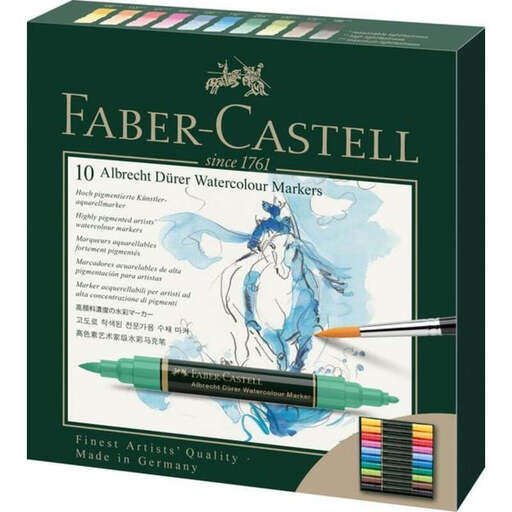
Why this product suits this profile: The compact set of 10 offers two nibs per marker and is ideal for first watercolour sketches, cards or drawings made while out and about.
The product description specifies water-based, water-soluble ink and both a brush and fibre tip. This makes its intended use clearer than that of a generic felt-tip pen set.
10 colours, two nibs per pen and compact packaging for drawing and watercolour techniques.
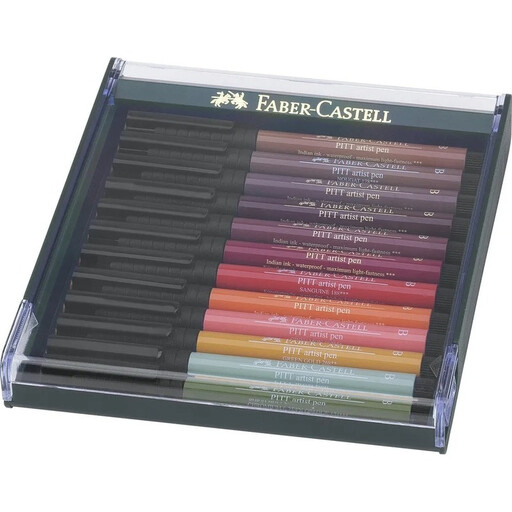
Why this product suits this profile: This set is aimed at illustrators, artists and lettering enthusiasts who want to work with earthy shades and a flexible brush tip.
The product description states that the ink is waterproof and permanent. This distinguishes it from water-soluble markers intended for short-term colour gradients.
Flexible brush tip, 12 earthy shades and, according to the product description, waterproof and lightfast drawing ink.
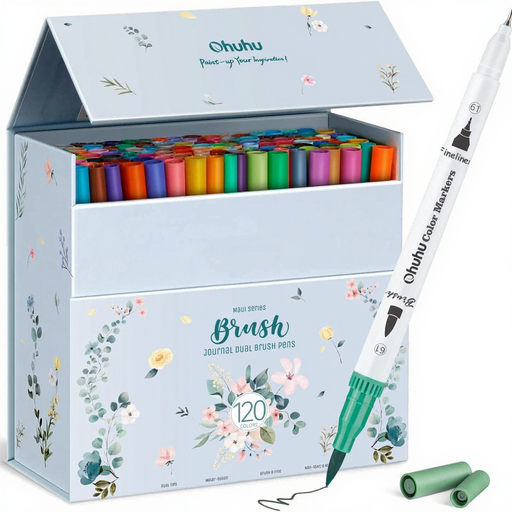
Why this product suits this profile: This extensive set is ideal for creative users who need a wide range of shades, lettering nibs and organised storage for regular projects.
The specific nib combination of a 0.4 mm fineliner and flexible brush tip makes the intended use easy to understand. A colour chart also helps reduce the risk of buying the wrong product based on on-screen colours.
120 numbered colours, two nibs per pen and a storage solution with replacement nibs, according to the product description.
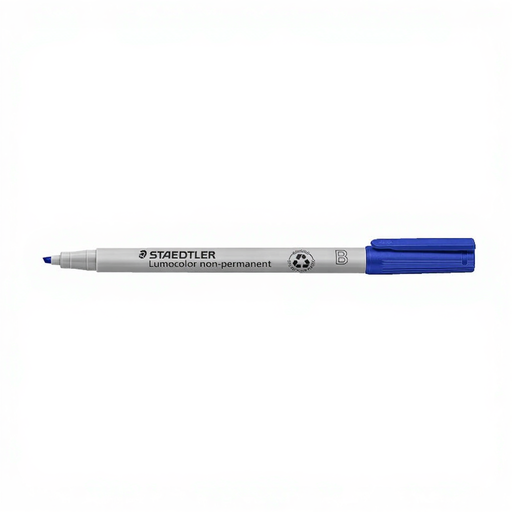
Why this product suits this profile: This marker is designed for smooth surfaces such as film, glass or plastic, where lettering needs to be removed later with a damp cloth.
The “Non-Permanent” designation and stated chisel tip distinguish it from permanent markers and fine drawing pens. On absorbent materials, removal should be tested beforehand.
Chisel tip with an approximate line width of 1.0 to 2.5 mm, water-soluble ink and refill capability, according to the product description.
We have put together a complete, regularly updated list of products that fully meet these strict selection criteria and the safety regulations applicable in the EU.
Replace the cap fully after every use. Depending on the manufacturer’s instructions, brush pens and water-soluble markers should generally be stored horizontally so that the ink reaches the nib evenly. Direct sunlight, intense heat and frost can affect the ink and casing.
For children, products with clear age recommendations and child-safe caps are suitable. Crayola felt-tip pens may be interesting for school and creative activities, but they should not be confused with art pens intended for archival work. Check the warnings about small parts and the recommended surfaces for every set.
Watercolour markers, watercolour pencils and other water-soluble markers are designed to be blended with water. Use suitable watercolour or mixed-media paper wherever possible, and test the colour intensity before starting on the actual design.
Brush pens have a flexible nib for varying line widths. Fineliners for drawing, on the other hand, produce a comparatively consistent, narrow line. For hand lettering and illustrations, combining both nib types can be a practical choice.
Longevity depends on how frequently the markers are used, how they are stored, the amount of ink, the paper and the cap. Frequent work on rough paper places greater strain on the nib. Refillable Lumocolor markers can extend their useful life with suitable refill ink; replacement nibs are also available for some sets.